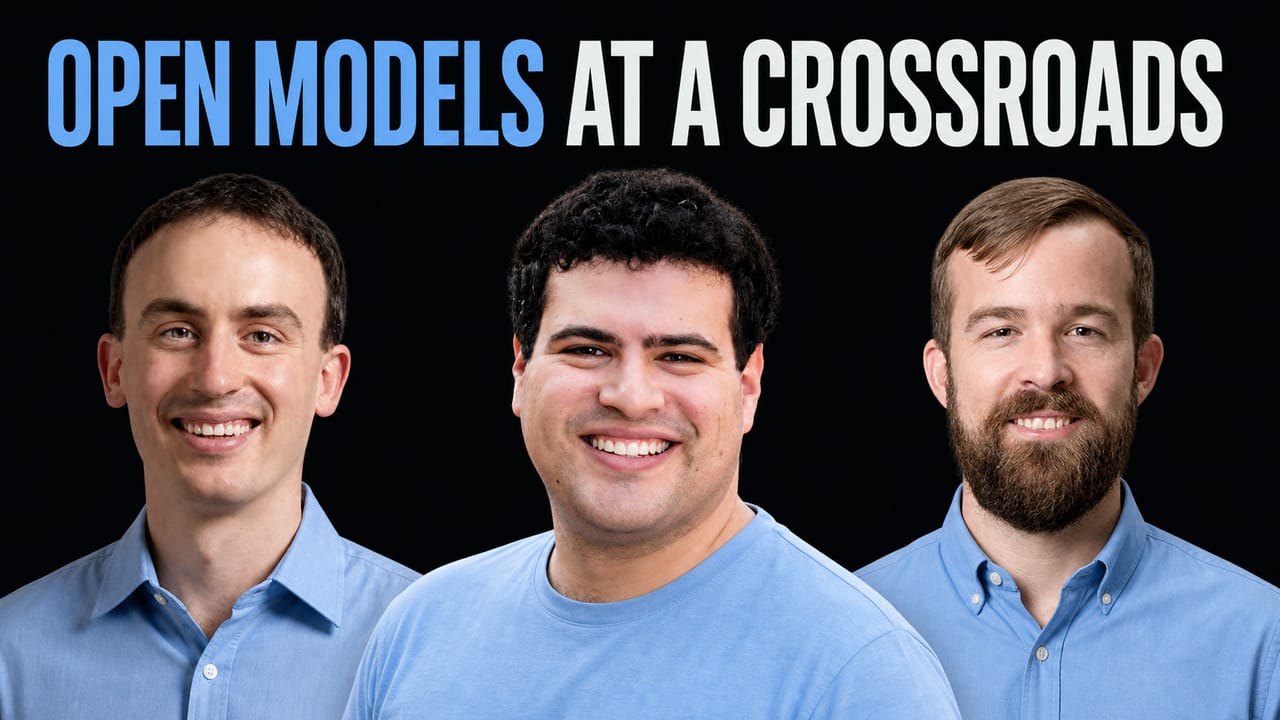
Jacob Effron, Ari Morcos and Rob Toews examine how capable Chinese open-weight modelsAn open-weight model makes its trained parameter values available so others can run or adapt it under the release's licence. change the economics and geopolitics of AI deployment. They distinguish access to weights from permissive licensing and argue that model origin, distillation pathsKnowledge distillation trains a smaller or different AI model to reproduce useful behavior learned from a stronger teacher model. and embedded dependencies matter alongside benchmark performance.
Jacob Effron, Ari Morcos and Rob Toews discuss containment as both a defensive research problem and a policy challenge. Open access can broaden scrutiny and defensive experimentation, but it also complicates control once capable systems can be copied and adapted.
Jacob Effron, Ari Morcos and Rob Toews use Cursor to illustrate why application companies may gain strategic leverage through real-world interaction tracesAn execution trace records the sequence of operations and results produced while a system carries out a task.. Coding workflows can produce on-policy data about where models fail, what users correct and which tasks generate durable value.
Jacob Effron, Ari Morcos and Rob Toews also consider AI labs moving up the application stack, infrastructure constraints and the roles of robotics and model-routing platformsAI model routing sends each request to a model chosen for that request's complexity, cost, speed, privacy, or other requirements.. The discussion frames control of distribution, proprietary data and deployment feedbackAn AI feedback loop occurs when AI outputs or their consequences become inputs that influence later model or agent behavior. as increasingly important sources of power.
 Watch on YouTube