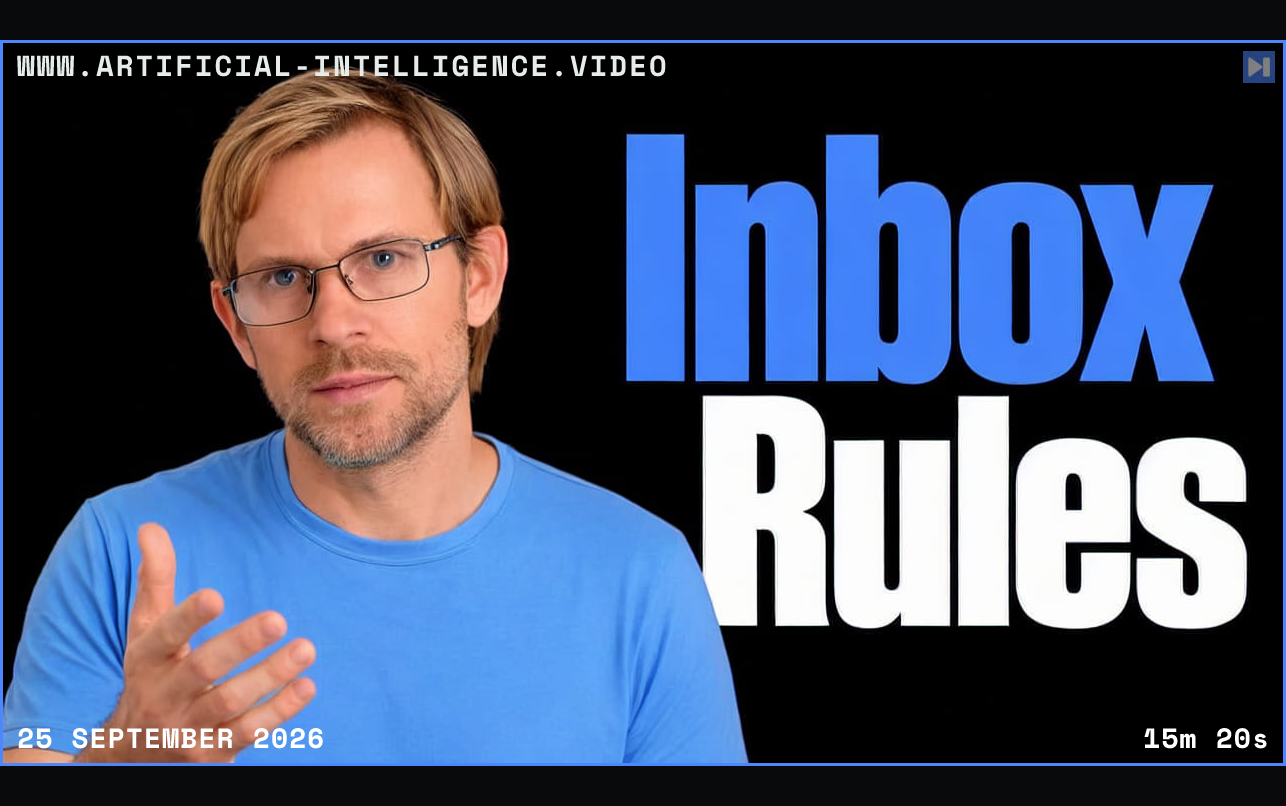
Alex Kerss begins by requiring a full email preview and explicit approval before sendingHuman-in-the-loop AI keeps a person involved in reviewing, correcting, approving, or guiding an AI system's work., including after revisions. He also distinguishes replying to a message from completing a requested form or booking. The demonstration then applies existing Gmail labels while preserving read status and clearing the inbox label.
The cleanup workflow uses an inspectable list with sender matchesWorkflow automation uses software or AI to complete a connected sequence of routine steps with less manual effort. and safeguards that preserve tickets, receipts and bookings. Proposed additions require approvalAn agent permission boundary limits the information, tools and actions an AI agent can use during a task.. Alex Kerss distinguishes rules applied by Muse from native Gmail filters and schedules recurring processingScheduled AI automation runs an AI-assisted workflow at defined times or recurring intervals without requiring a new manual start for every run., with matching messages moved to trash rather than immediately deleted permanently.
A separate correspondence log tracks incoming actions, sent messages, outstanding replies and explicit acknowledgment. The presenter corrects the initial log's assumptions and keeps unrelated medical correspondence outside its scopeData privacy governs how personal, confidential, or sensitive information is collected, used, shared, retained, and protected in AI systems.. Later scheduled outcomes are proposed for follow-up rather than demonstrated as already verified.
 Watch on YouTube