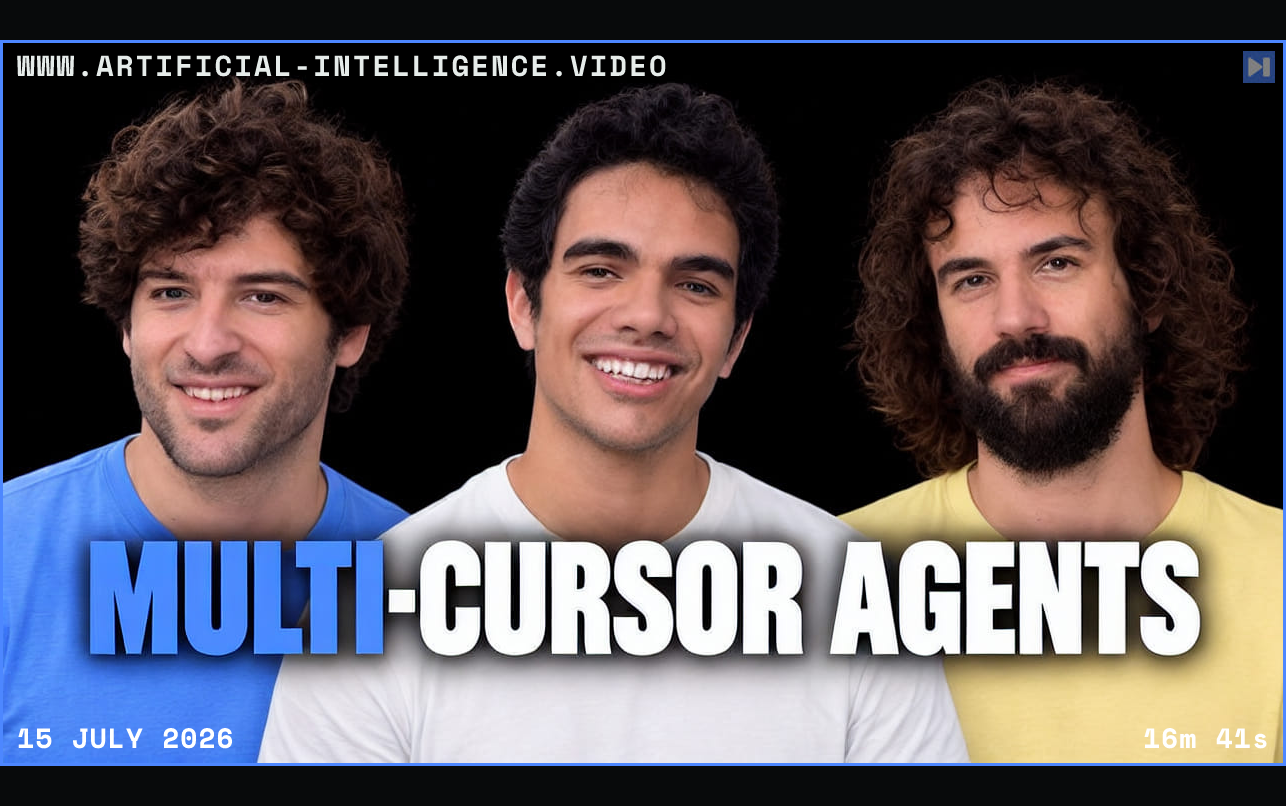
Francesco Bonacci contrasts the screenshot-and-click loop with a driver that can act on a chosen background window without taking over the user's hardware cursor. Accessibility actions are tried before pixel-based background interaction, with platform differences acknowledged rather than treated as identical behavior across operating systems.
Dillon DuPont describes CUABench tasks as setup, a reference GUI trajectory and an evaluator that checks the resulting environment. The team tests tasks for reward hacking before admitting them, and can fork recorded states to measure whether a model predicts the computer's state accurately. Reported benchmark gains from window-focused tooling remain results of the team's tests, while electrical-engineering tasks expose substantial limits, especially from a blank schematic.
Robert Wendt explains why slow sandbox startup can leave expensive GPU workers idle during reinforcement-learning rollouts. Demand-based warm pools shift that waiting cost into cheaper environment infrastructure and adjust capacity as workload needs change. The talk closes with Android background interaction and tool-use distinctions; it does not establish that every mobile application can be controlled unobtrusively.
 Watch on YouTube