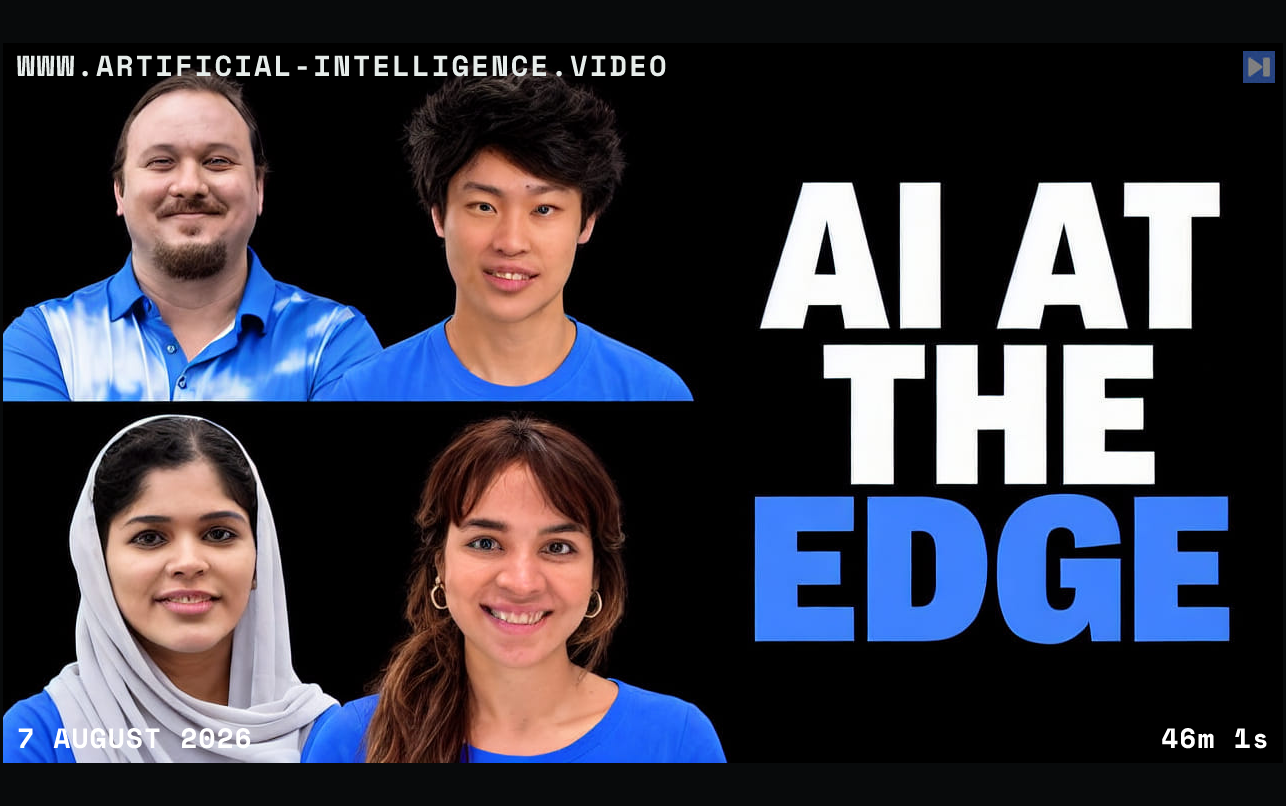
An AI Engineer moderator asks panelists from NVIDIA, Unsloth, Hugging Face, and Ollama what model compression makes possible on personal hardware. They focus on quantizationModel quantization represents AI model values with fewer bits to reduce storage, memory use and often inference cost., especially mixed precisionMixed precision uses multiple numeric precisions within a computation or model. that keeps sensitive parts at higher precision, and describe tradeoffs among model quality, memoryA model memory footprint is the total working memory required to load and run an AI model in a chosen configuration., throughput, latency, and the ability to run open models locally.
The discussion moves from DeepSeek R1 and low-memory fine-tuning to how teams test quantized models. Panelists describe layer sensitivity, benchmark suitesA benchmark is a defined test or collection of tasks used to compare a system's performance under specified conditions., hands-on use in agent workflows, and NVIDIA's NVFP4 format. They caution that numerical benchmarks can miss user-visible failures, especially when new attention architectures behave differently over long contexts.
For businesses, compression can support private deployment on employee machines and higher serving concurrency, while distillation can fit narrow tasks. The panel compares large compressed models with smaller models at higher precision, then looks toward more capable AI on phones and laptops. In the audience question, a panelist says there is no comprehensive resource comparing every compressed variant and describes output-distribution distance as one useful measure.
 Watch on YouTube