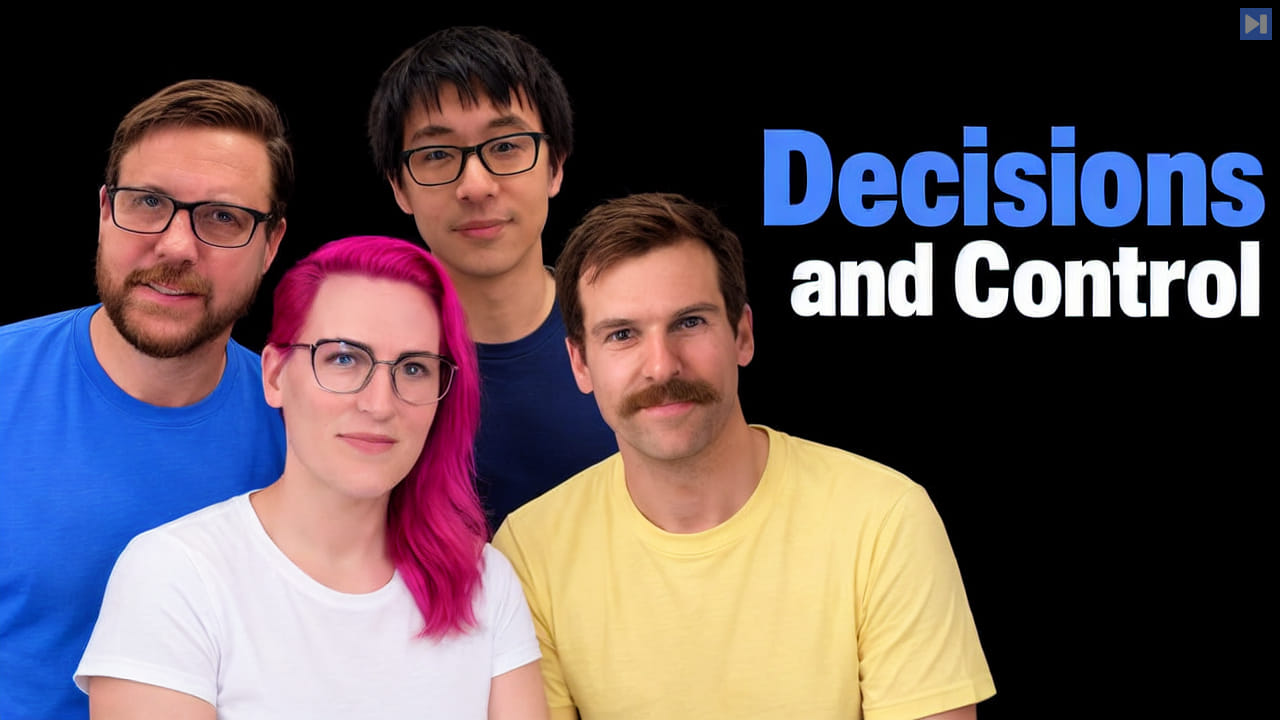
Allie Laabs describes Jev as a decision model that returns typed answers rather than conversational prose. The panel explores small judgments embedded in deterministic workflows, including moderation, model routingAI model routing sends each request to a model chosen for that request's complexity, cost, speed, privacy, or other requirements. and group-chat timing. A Doom demonstration illustrates fast repeated decisions, not a claim that this is the optimal architecture for a game-playing agent.
Josh Lehman discusses experimental integration with the OpenClaw harnessAn AI agent harness is the software framework that packages a model with tools, instructions, context management, execution controls, and user interaction. and plugin SDK. Clear atomic questions and explicit program state can be easier for coding agents to compose than a single large conversational prompt. Reliability and speed assertions remain the speakers' claims, with human review and application logic still important.
Kevin Lin introduces OpenClaw Enterprise as an open-source, vendor-neutral control plane for persistent agents. The discussion covers tenant separationAn agent permission boundary defines and enforces which resources and actions an automated agent is allowed to use., sandboxed executionAn AI agent sandbox is an isolated execution environment that limits which files, processes, networks, credentials, and external systems an agent can access., separate agent service accounts, auditabilityAn agent audit trail is an ordered, durable record of an AI agent's instructions, decisions, tool calls, state changes, identities, and outcomes. and fleet operations. Lin contrasts organization-controlled infrastructure with first-party hosted products. The project is still approaching its first release and running early pilots; security certifications and roadmap features are not presented as completed achievements.
 Watch on YouTube