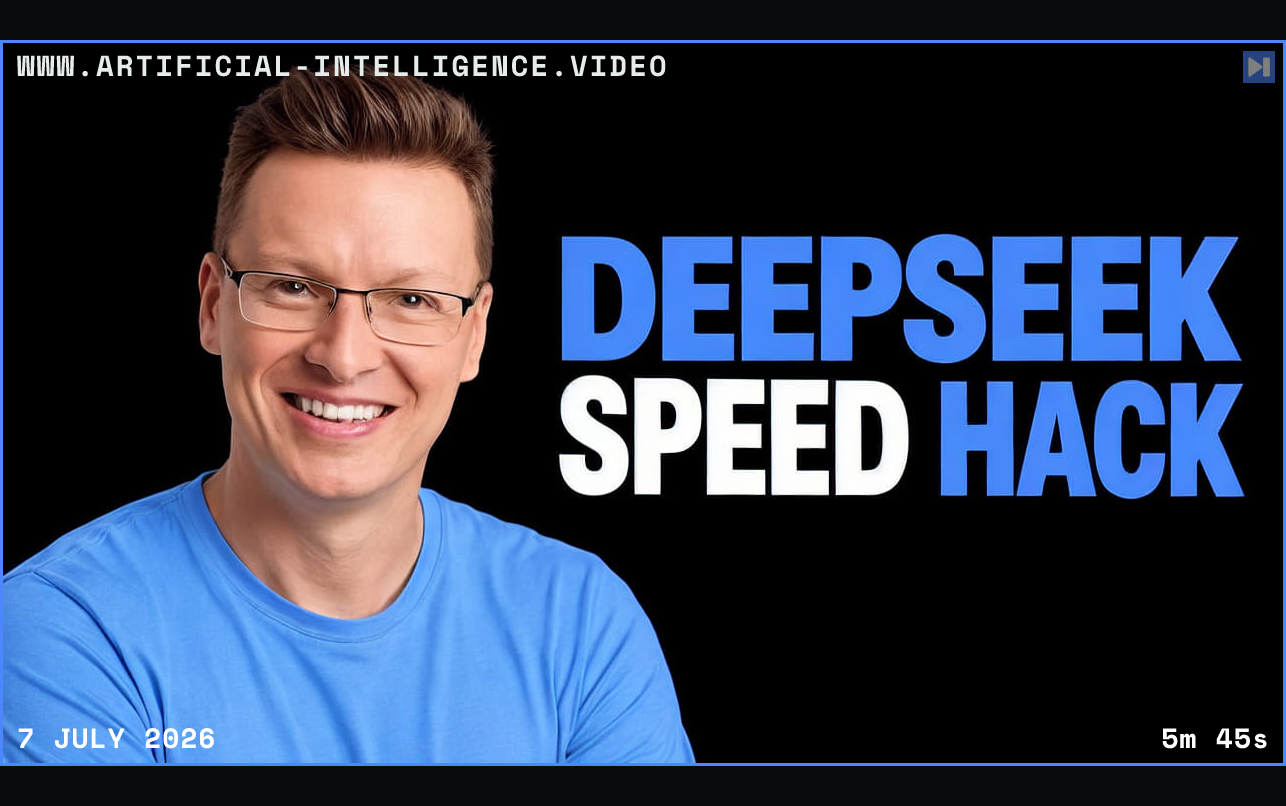
Károly Zsolnai-Fehér uses a junior writer and senior editor analogy to explain speculative decoding: a smaller model drafts several tokens and the target model checks them, retaining only the accepted prefix. The aim is faster generation without treating the draft model as a replacement for the stronger model.
Károly Zsolnai-Fehér describes three refinements in DeepSeek's DSpark research: preserving short-range context in drafts, identifying unlikely-to-survive tokens and deciding whether additional verification is worth the GPU work. Predictable code and mathematical tasks can benefit more than open-ended writing.
Károly Zsolnai-Fehér distinguishes the reported 60 to 85 percent gains against a previous multi-token baseline from an unusually large throughput figure in constrained cases. Those are the paper's reported results as presented in the video, not a guarantee for every workload. He emphasizes that deployment needs a matching draft model, access to target-model probabilities and suitable serving infrastructure, not a switch that can be added to any closed API.
 Watch on YouTube