The video explains why long-context inference can become limited by memory capacity and data movement rather than arithmetic alone. It distinguishes prefill from decoding and describes how storing and retrieving a large KV cache creates hardware and latency tradeoffs.
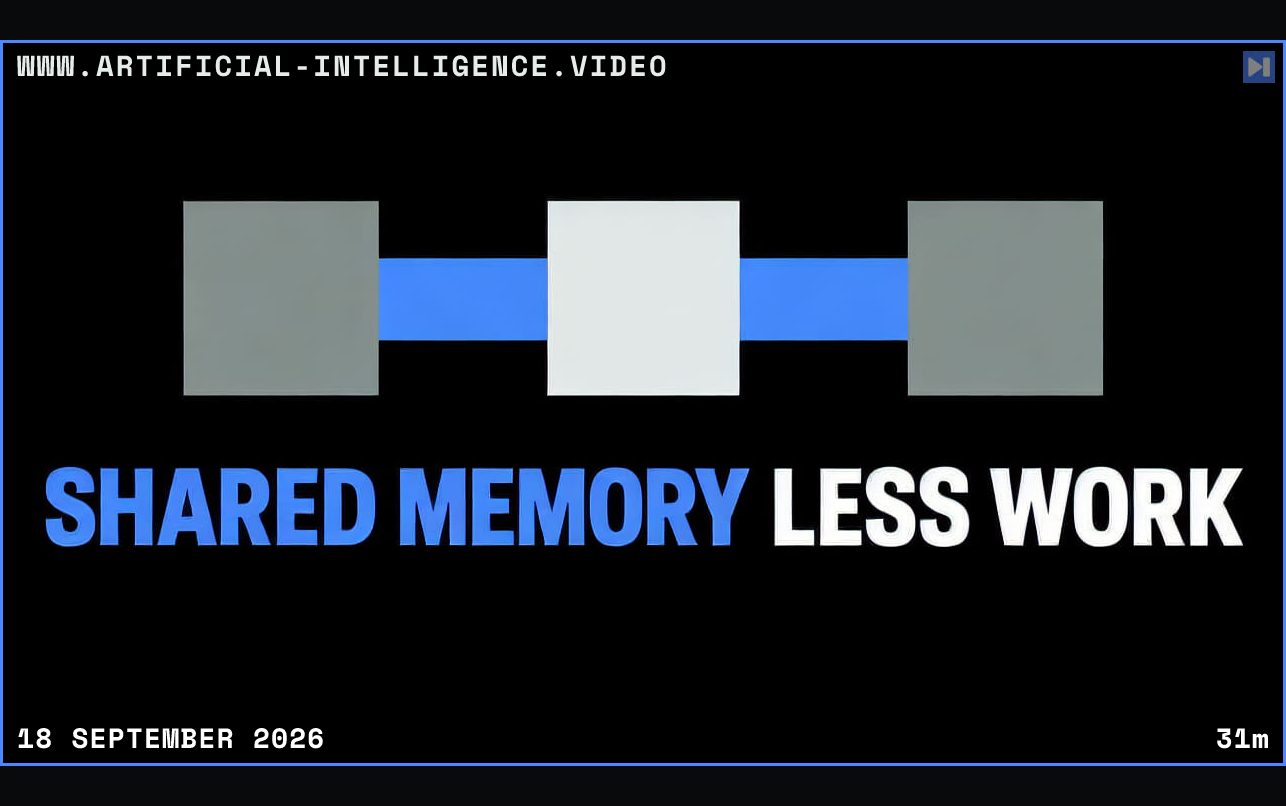
The video presents DeepSeek V4.1 Flash's encoder-decoder split and shared global memory. Full, reindex and reuse layers reduce duplicated state, while hierarchical sparse indexing narrows which parts of the context later decoder layers examine.
The video describes bounded replay as recomputing recent local context instead of repeatedly transferring it to slower storage. It also introduces supplementary mechanisms intended to reduce internal memory traffic, separate static fact storage and accelerate token generation.
The video interprets published efficiency charts and model benchmarks as evidence for this combined architecture. Its simplified analogies and reported comparisons are an explainer, not an independent reproduction, a guarantee of perfect retrieval or proof that a large model fits on ordinary consumer hardware.
 Watch on YouTube