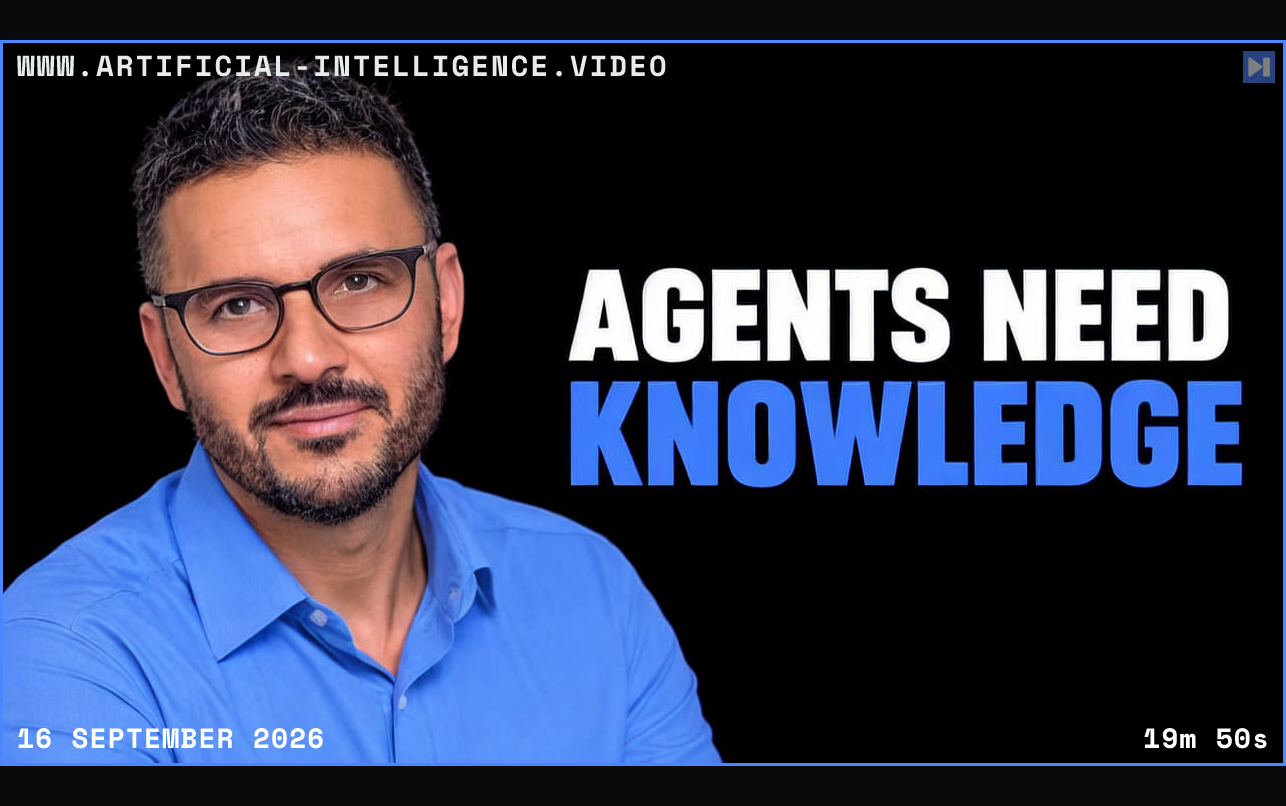
Edo Liberty distinguishes general knowledge, specific company documents and tribal knowledge about goals, processes and responsibilities. He compares a capable agent without persistent company context to a brilliant new hire on their first day, arguing that repeated retrieval alone does not reliably capture the organization's current understanding.
Edo Liberty describes Pinecone Nexus through connectors, specialized contexts, manifests and managed knowledge assets. These assets can include semantic maps, Markdown notes, SQL tables, vector indexes and entity relationships. Domain experts specify what matters, while import and curation processes update the context as new information arrives.
Edo Liberty explains an agent-facing query interface that includes time, token and output constraints, alongside a runtime coding agent that writes and executes code to obtain answers. He presents internal demonstrations and early-customer efficiency results as company-reported evidence, not independently established savings. The knowledge layer supplements models, tools and retrieval rather than replacing them.
 Watch on YouTube