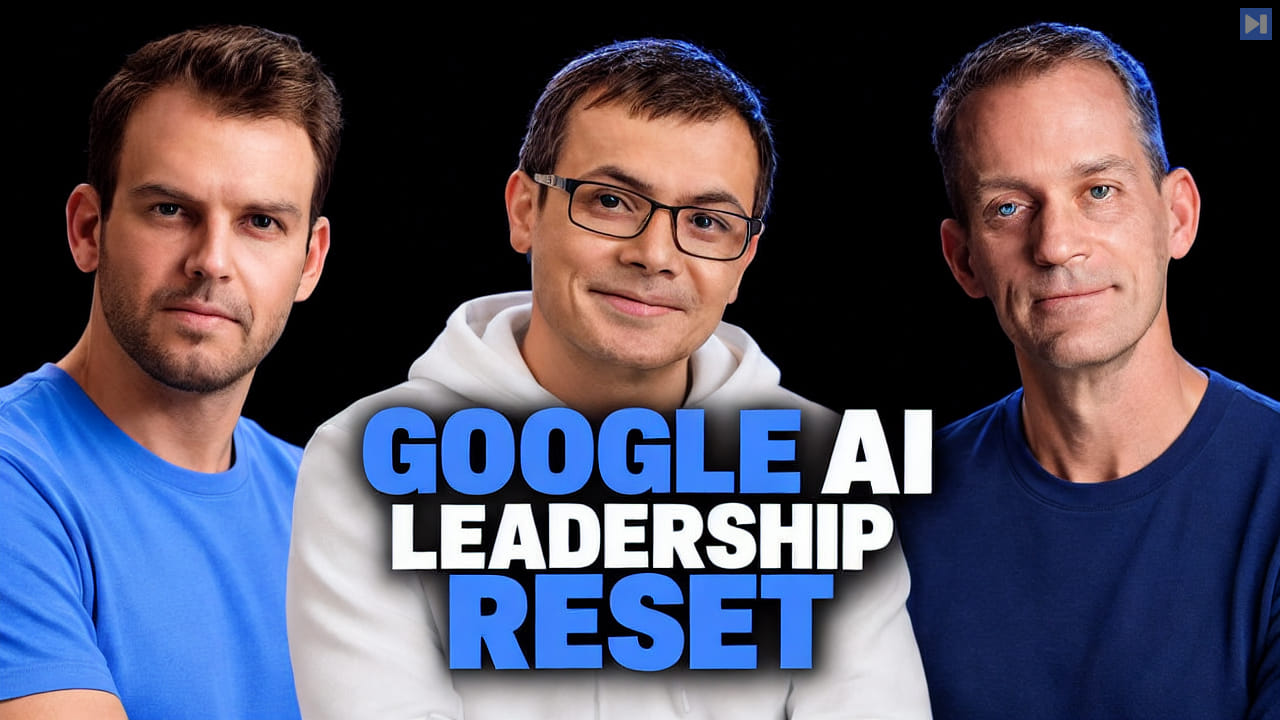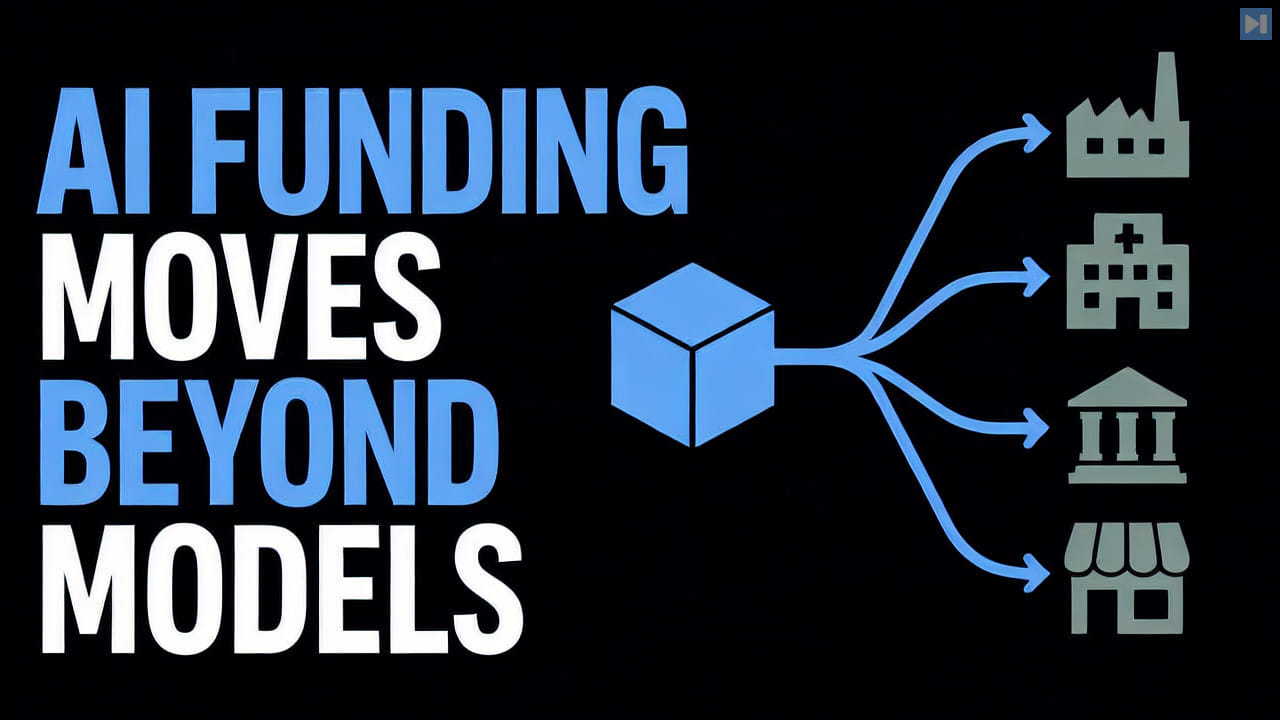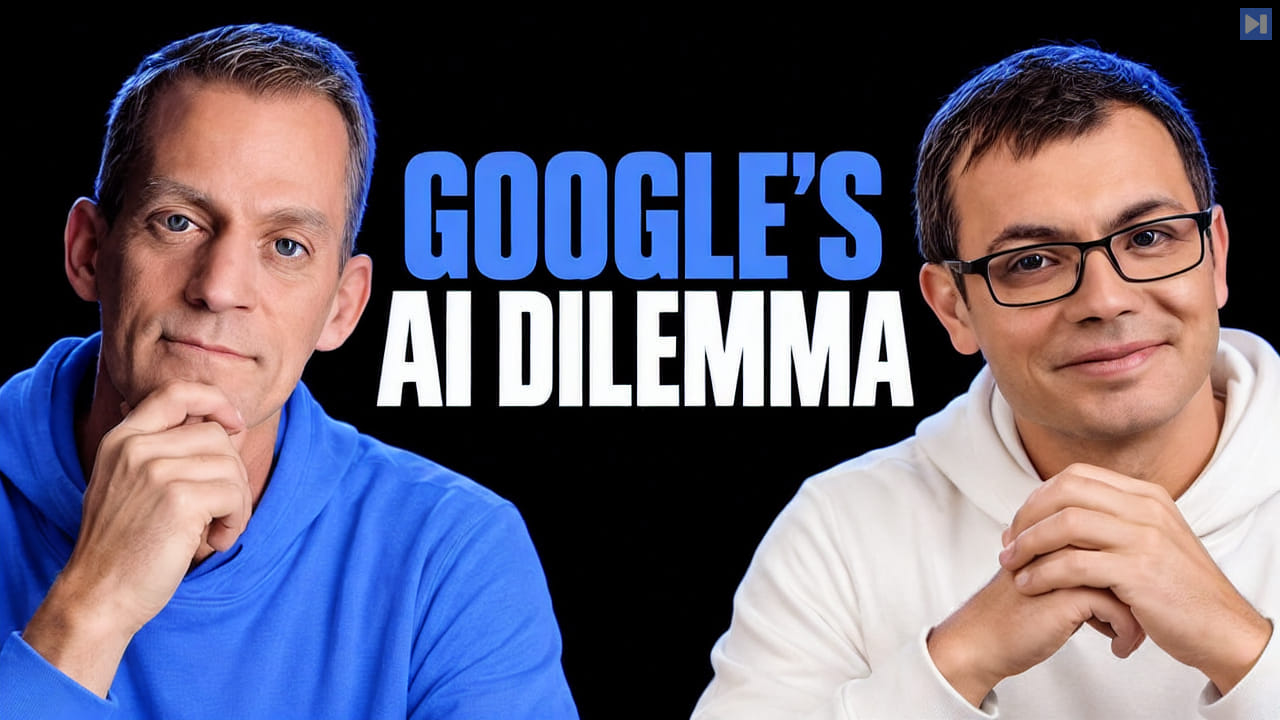
The video contrasts Google's long record of foundational AI work with its difficulty turning research into category-defining products. Google researchers introduced the transformer architecture, while Google DeepMind produced major systems for games and science, yet the company did not lead the public chatbot market when demand accelerated.
The proposed explanation is the innovator's dilemma. A conversational AI product could weaken the highly profitable search-and-advertising model, while nondeterministic outputs create reputational risk. Decisions that protected the existing business in the short term may therefore have delayed products capable of competing with that business in the long term.
According to the video, Demis Hassabis moved into chair and chief scientist roles to concentrate on long-term strategy and scientific work, while Jeff Dean left Google to build a new scientific-discovery company. The narrator treats these changes as possible evidence that frontier researchers wanted more freedom from quarterly product and business pressures, while clearly labeling some cultural explanations as speculation.
The analysis remains optimistic about Google because it retains proprietary data, custom Tensor Processing Units, Android distribution, substantial cash flow, and a deep technical workforce. Those assets reduce dependence on external accelerators and give the company multiple ways to distribute and operate AI systems at scale.
The suggested strategy is to push much harder on open-source AI rather than compete only for the top proprietary-model ranking. Building on the Gemma family while selling the infrastructure that efficiently runs open models could turn Google's TPU advantage into a platform strategy, even if its closed models are not always perceived as the frontier leader.
 Watch on YouTube