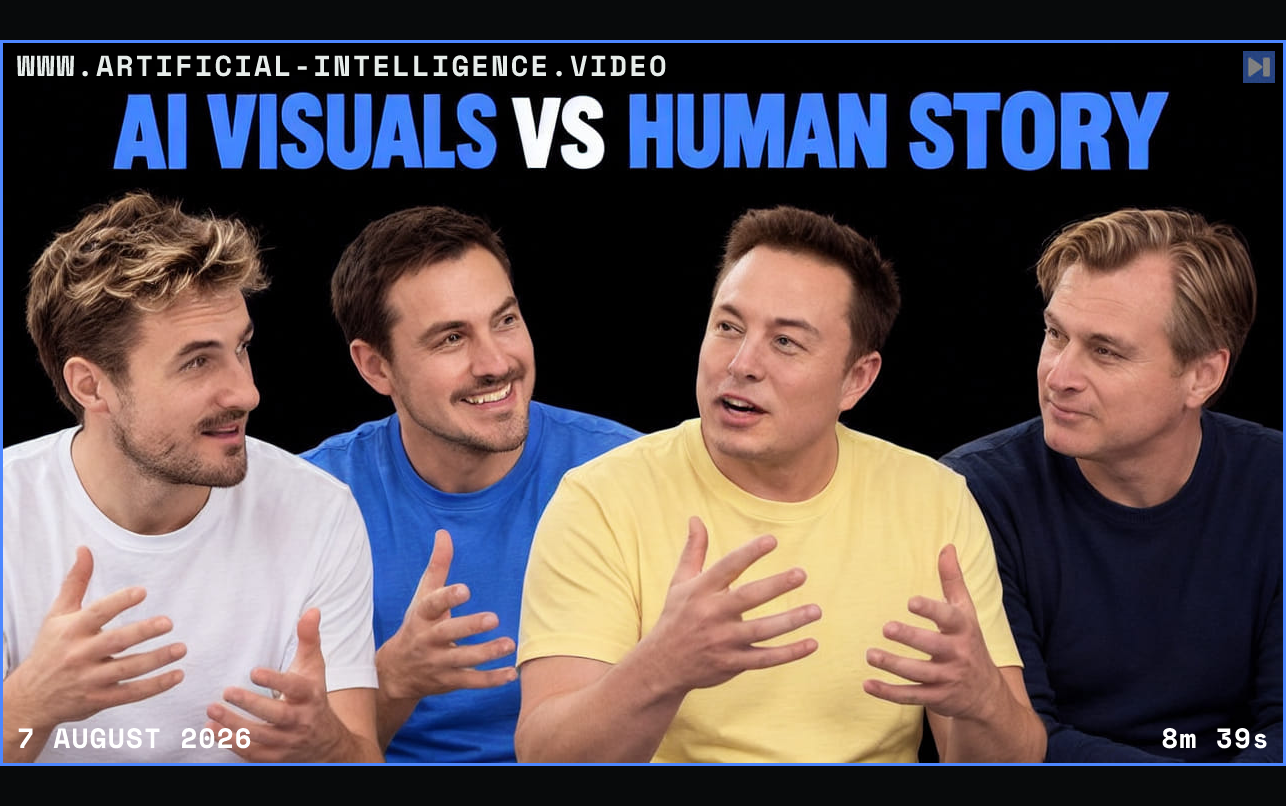
Pierce Freeman and Richard Diehl Martinez discuss an AI-generated Odyssey projectA video generation model creates or transforms moving images from text, images, video, audio, or structured controls. they attribute to Elon Musk, framing it against Christopher Nolan's adaptation. They play a short clip and describe both impressive character consistencyCharacter consistency is the ability to keep a character recognisable across multiple generated images or shots. and an unusual, older-video rendering style. Their reactions assess a demonstration, not a completed feature-length film.
Pierce Freeman and Richard Diehl Martinez point to skin, tears and the passage of time as places where convincing appearance can diverge from coherent detail. They acknowledge that a definitive continuity assessment would require closer frame-by-frame review rather than relying on first impressions.
Pierce Freeman and Richard Diehl Martinez argue that editing can combine short generated shots instead of requiring one uninterrupted hour of consistency. Even so, recurring characters and scene-to-scene continuityTemporal consistency is the coherence of information or generated content across time, including whether changes preserve the relationships and identities that should persist. remain important. Their explanations of possible training incentives are guesses, not disclosed details of Grok Imagine's architecture.
Pierce Freeman and Richard Diehl Martinez contrast technical visual progress with the emotional build-up, humor and relationshipsAI creative direction guides generative tools toward a coherent concept, visual language and audience effect. they value in human filmmaking. They close by considering creator tools and playful online responses, without establishing that the generated project is historically accurate or better than Nolan's film.
 Watch on YouTube