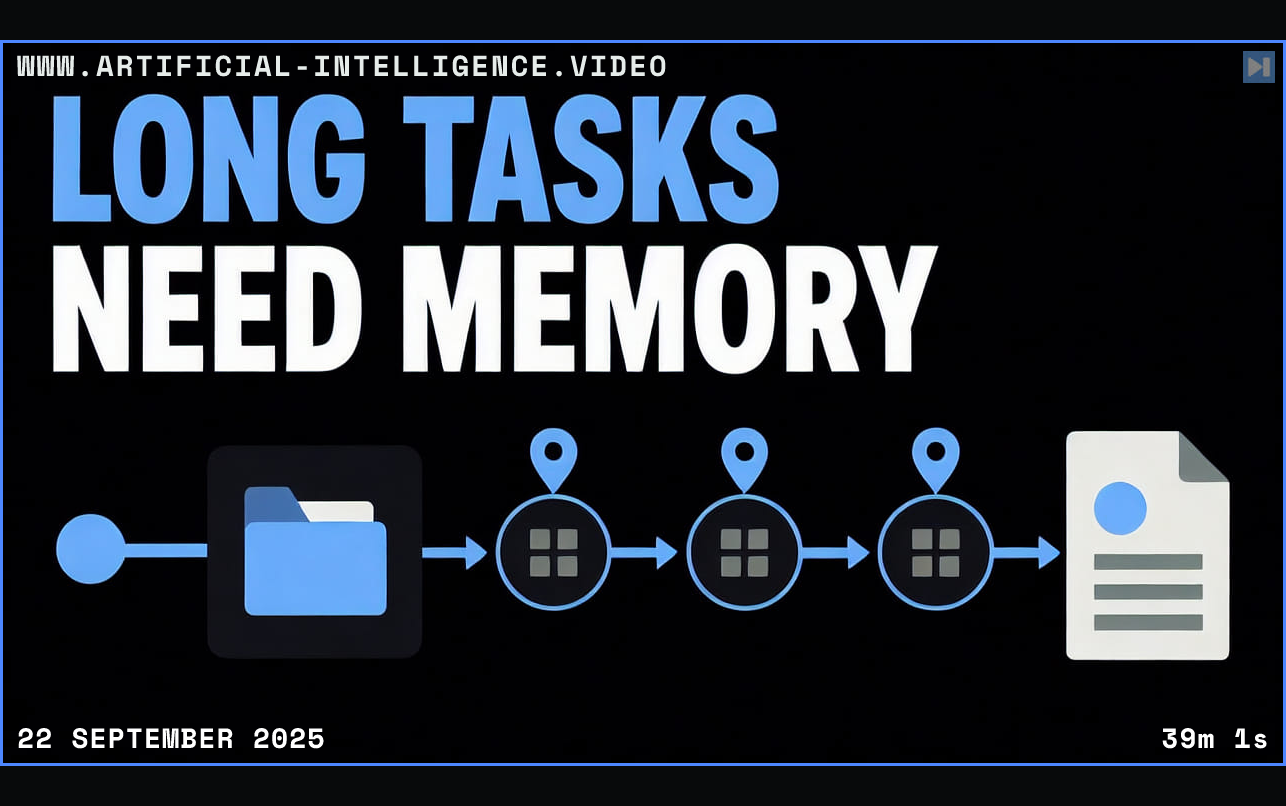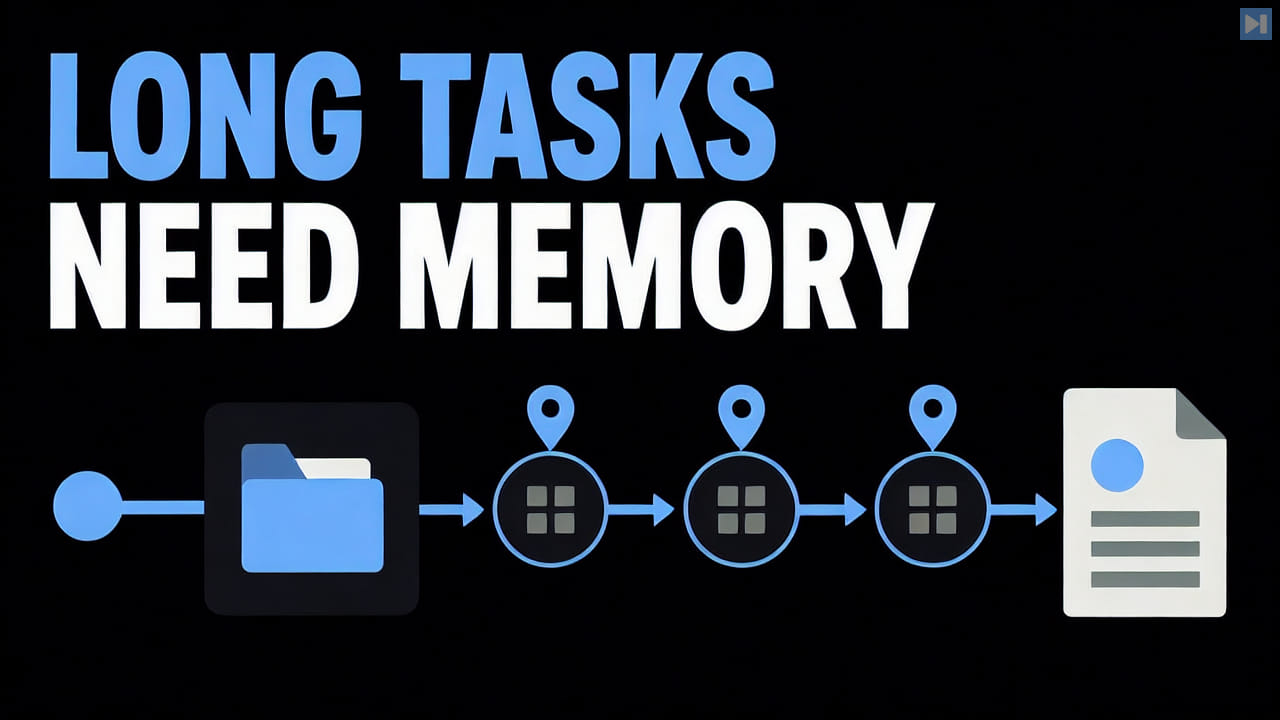
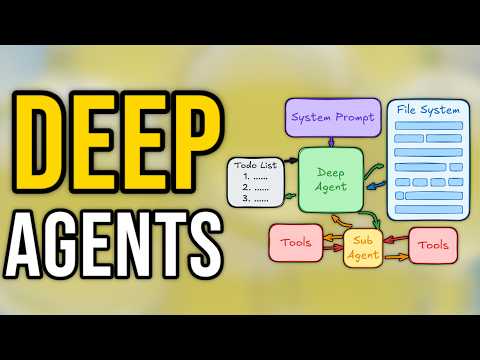
Long-horizon tasks require more steps, more context and more opportunities to drift than a normal chatbot exchange. The deep-agent pattern responds with a detailed system prompt that defines behavior and tool use, a frequently refreshed task list, a file system that can unload and restore context, and subagents that work in separate context windows.
The prompt examples emphasize hierarchy, explicit values, good and bad tool-use examples and enough detail to constrain behavior without forcing the model to imitate one exact scenario. Planning tools then keep the active objective near the front of the context, while file references preserve information that would otherwise overflow the model's working window.
Subagents act as specialized routines rather than a fixed committee. The orchestrator can create several in parallel, give each a narrow research or critique task and receive only its final result. This improves modularity and context isolation, but makes the quality of task decomposition and the completeness of each returned answer especially important.
The demonstrated competitive-analysis run lasted about 35 minutes, used 198 model calls, processed nearly seven million tokens, spawned 12 subagents and made 287 web searches. It produced two detailed profiles and a cited comparison after a critique pass, at a cost of nearly nine dollars. The example shows real value from sustained work while making its substantial compute, search and review costs visible.
 Watch on YouTube