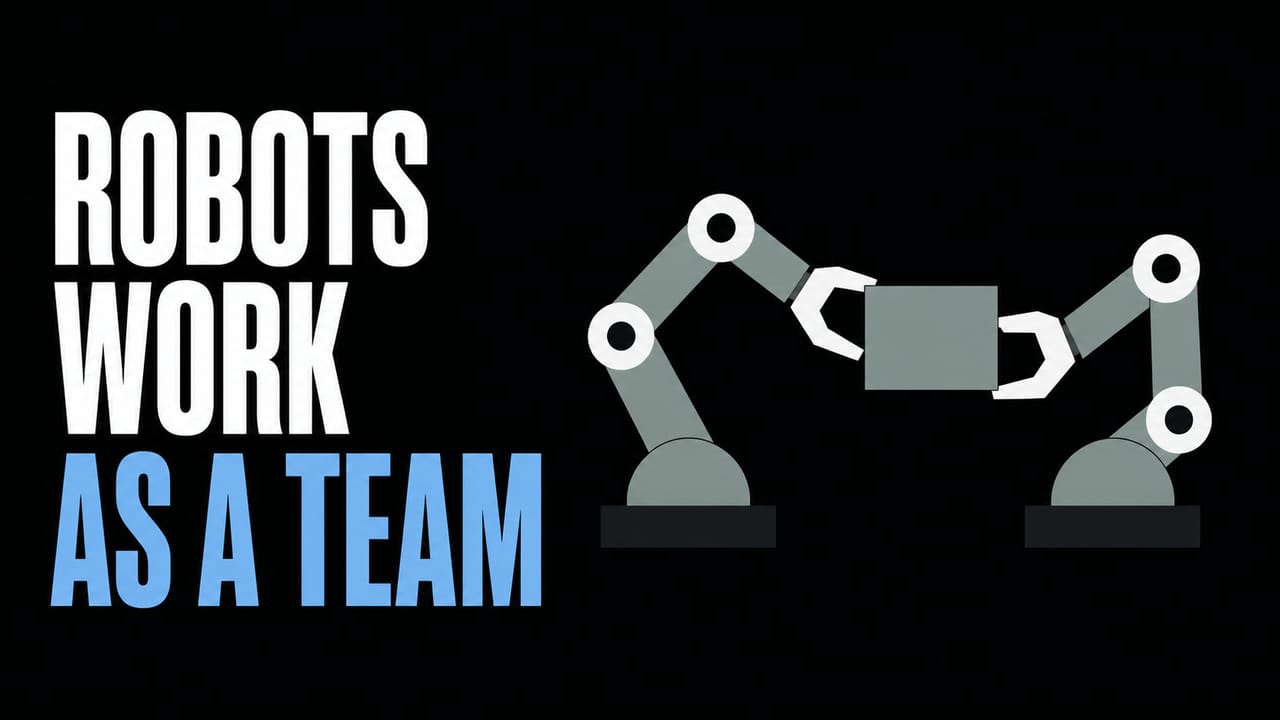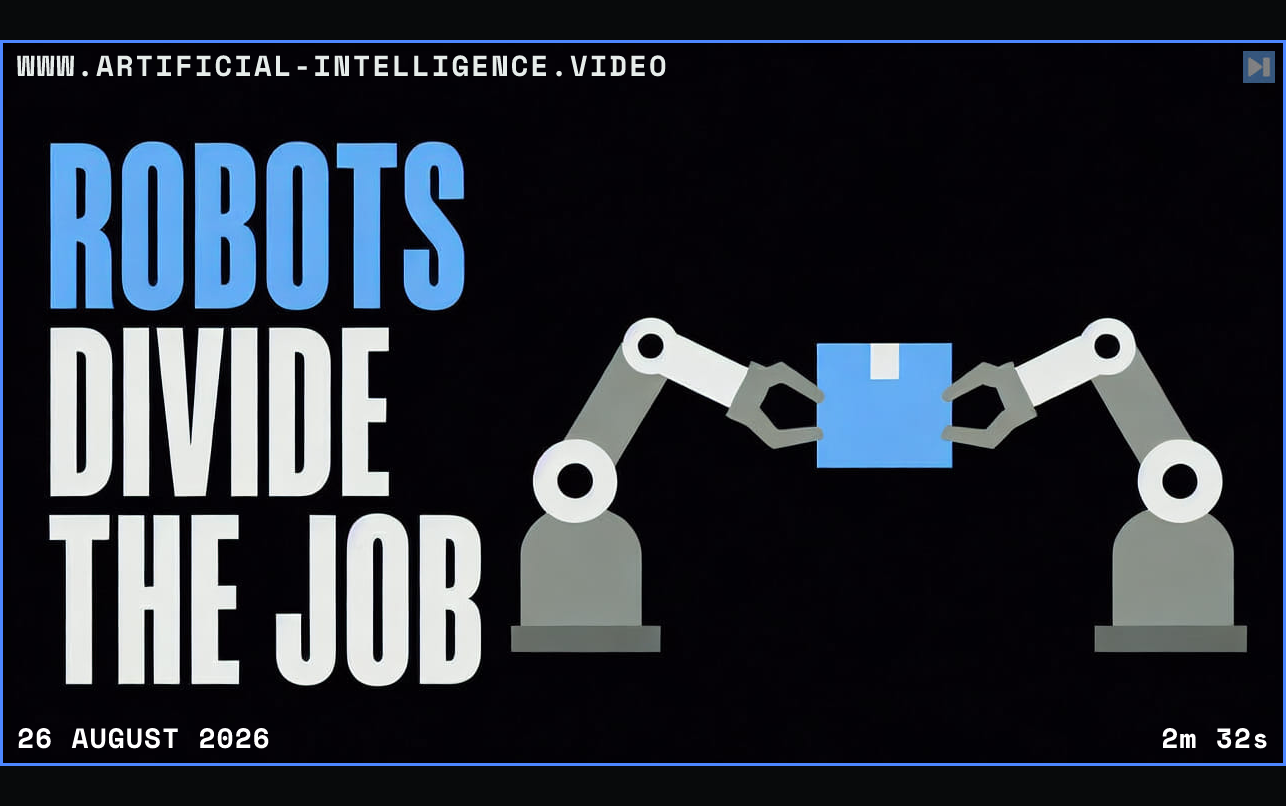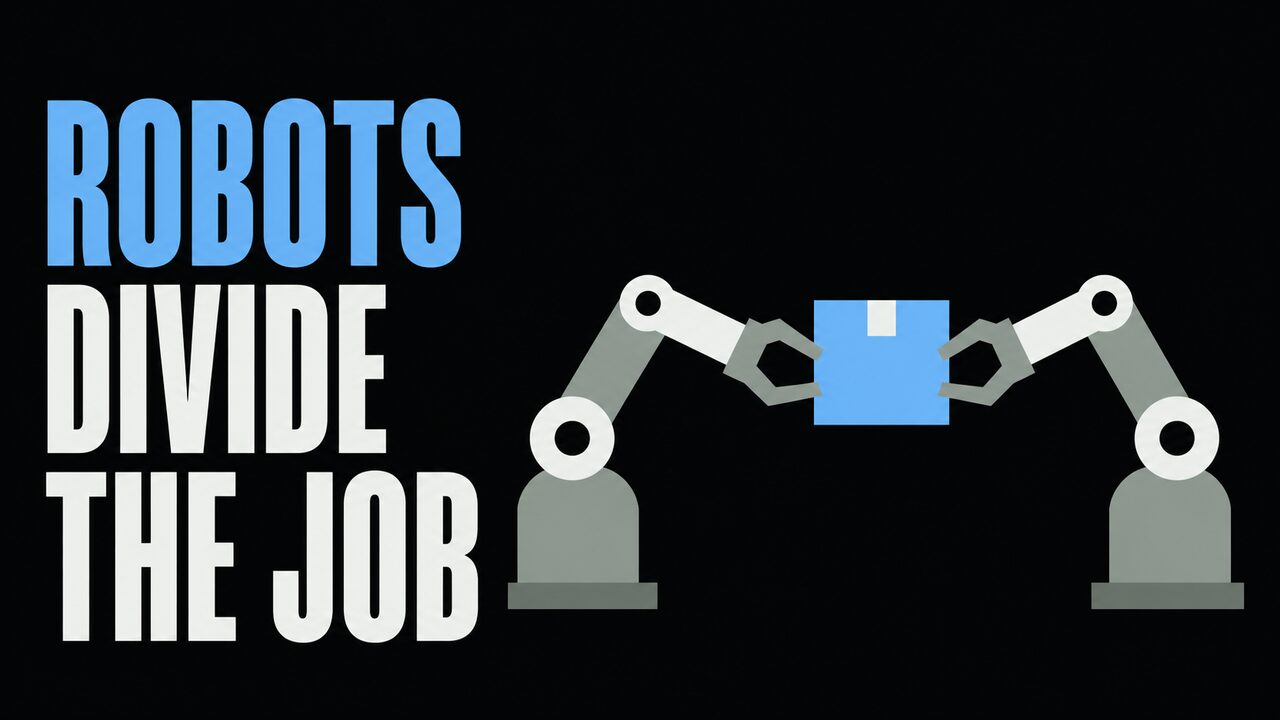
The demonstration asks an Apollo humanoid and a smaller two-arm robot to tidy a garage together. The high-level model breaks the request into actionsTask planning breaks an objective into ordered, bounded steps with dependencies, responsibilities and evidence for completion., locations and completion checks rather than treating the instruction as one indivisible sequence.
Apollo handles broad movement and calls the second robot when the task reaches a stage that needs more precise manipulation. The smaller system kits the tools, closes the container and returns it to the bin while both robots communicate about responsibility and completion.
Each robot runs its own copyDecentralized multi-robot control lets each robot make local decisions while coordinating with peers rather than receiving every action from one controller. of the reasoning and control stackA robot reasoning and control stack is the layered software that interprets goals, plans actions and controls a robot's physical execution.. Their collaborationMulti-robot collaboration is the coordinated use of two or more robots that communicate and divide work toward a shared objective. is orchestrated through languageLanguage-mediated multi-robot coordination uses structured or natural-language messages to organize responsibilities and handoffs among robots. and individual decisions, rather than one neural network directly controlling both machines, which could let teams cover a wider range of real-world tasks.
 Watch on YouTube