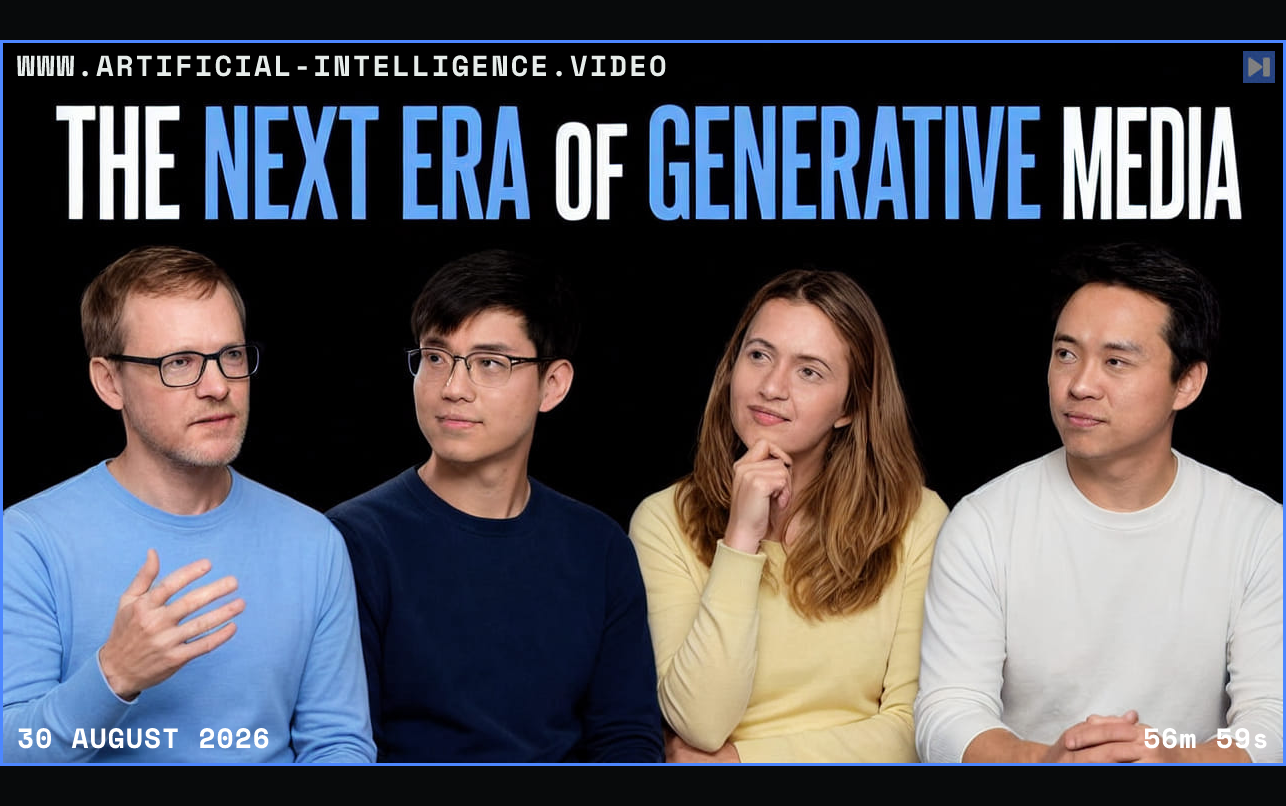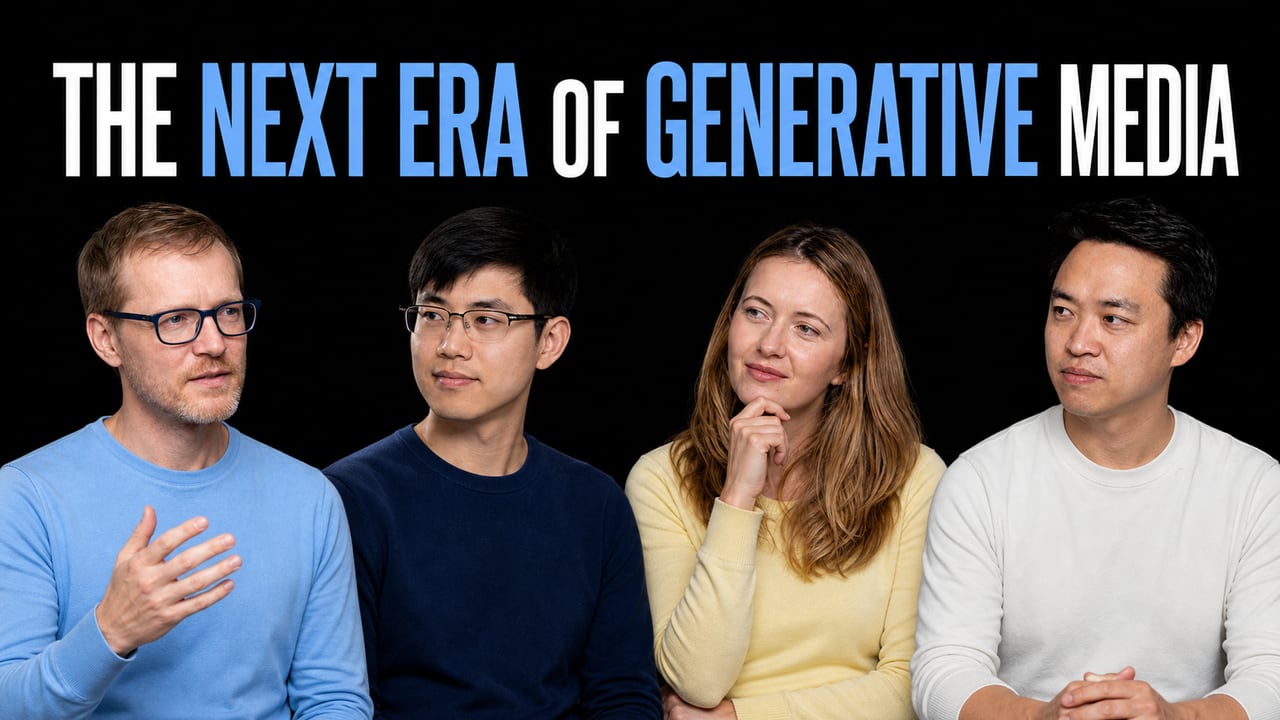
Nicole Brichtova begins with two new releases: Nano Banana 2 Light, a faster and cheaper image model that improves on the original Nano Banana, and new Gemini Omni Flash APIs for native video generation and editing. She argues that the most useful generative systems are moving from separate media tools toward models that can understand and transform images, video, audio and text in one workflow.
Dumitru Erhan connects generative video research with world modelsA world model learns how an environment is structured and how it may change in response to actions.. A model that predicts how scenes change over time must learn objects, motion, physical interactions and causal structure rather than merely reproduce attractive pixels. He describes language as an unusually useful bridge between modalities because it can express high-level intent while visual and audio representations preserve details that words leave out.
Shixiang Shane Gu explains why multimodal generation and reasoningA multimodal model can process or generate more than one kind of data, such as text, images and audio. are converging. Joint models can use the same underlying representations to generate, edit and understand media, while reinforcement learning and test-time reasoningTest-time reasoning lets an AI model spend additional inference work analyzing a specific request before it produces or finalizes an answer. help them follow complex instructions. The panelists expect future systems to move more naturally between perception, planning and generation instead of treating each capability as a separate product.
Evaluation remains a central difficulty. Automated metricsAn AI evaluation metric is a defined measurement used to quantify a particular aspect of an AI system's performance. can measure parts of fidelity, alignment and consistency, but human preference still captures qualities such as aesthetics, usefulness and whether an edit respects the creator's real intent. The speakers describe a layered approach that combines model-based graders, focused benchmarks, human reviewHuman evaluation asks people to judge AI outputs against criteria that may include correctness, preference, usefulness, aesthetics and intent. and qualitative testing across realistic workflows.
The discussion closes on the importance of data and product feedback. High-quality examples, careful curation and real user failures reveal problems that laboratory benchmarks miss, including exact sizing, identity consistency, brand language and repeated edits across many assets. Google DeepMind uses those practical constraints to decide where research progress must become more reliable before generative media can support everyday creative and commercial work.
 Watch on YouTube