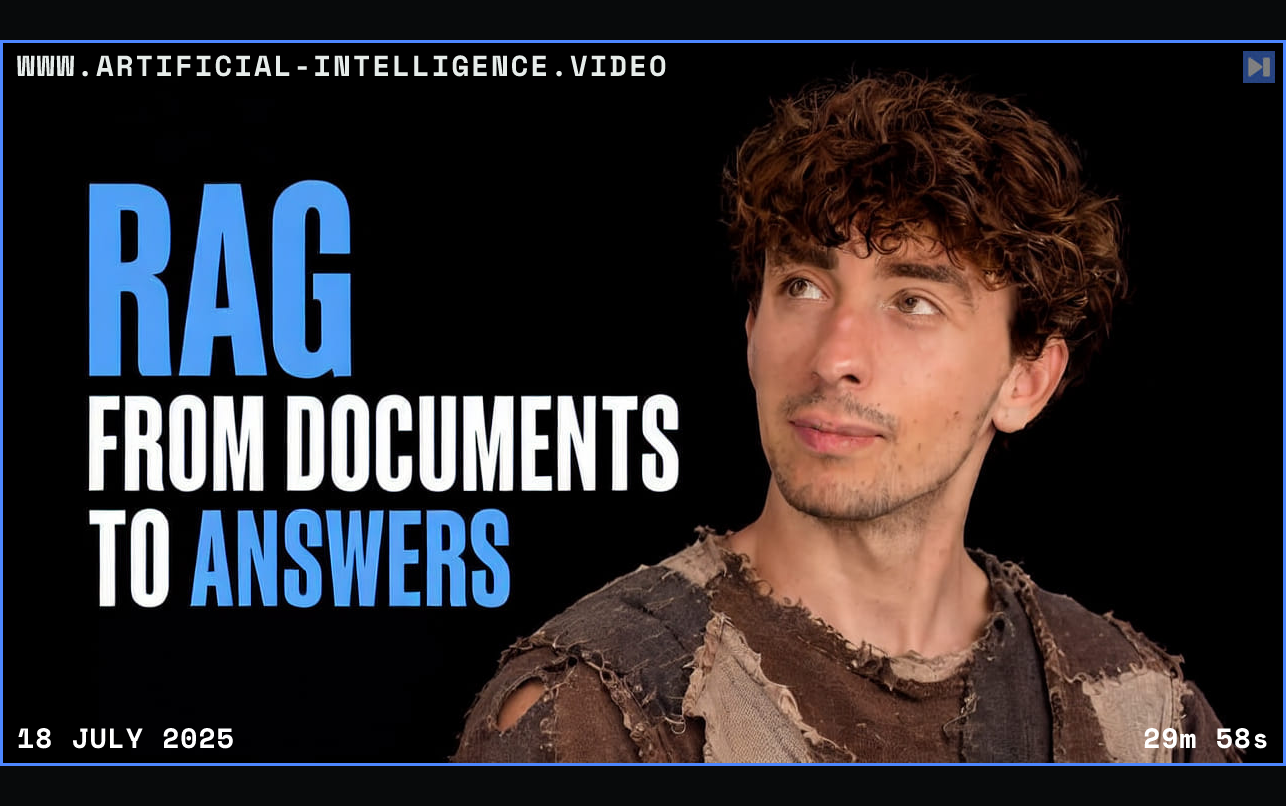
Retrieval-augmented generation adds external context before a language model produces its answer. Lucek shows why this matters with a newly released technical sensor: the model alone invents the wrong power figure, while the RAG system retrieves the correct specification from the product documentation.
Building the knowledge base begins with converting unstructured sources such as PDFs, presentations and images into usable text. The text is then split into coherent chunks that fit model limits without separating tables or related passages, often with overlap to preserve context across boundaries.
An embedding model converts both chunks and questions into numerical vectors that encode semantic meaning. A vector database compares those representations and returns several of the closest passages, accepting that the individually best match may not always contain the answer.
The final prompt combines the original question with the retrieved passages. Lucek's end-to-end example returns the documented sensor value and illustrates the core RAG tradeoff: preparation, chunking and retrieval quality determine whether the model receives enough trustworthy evidence to answer accurately.
 Watch on YouTube