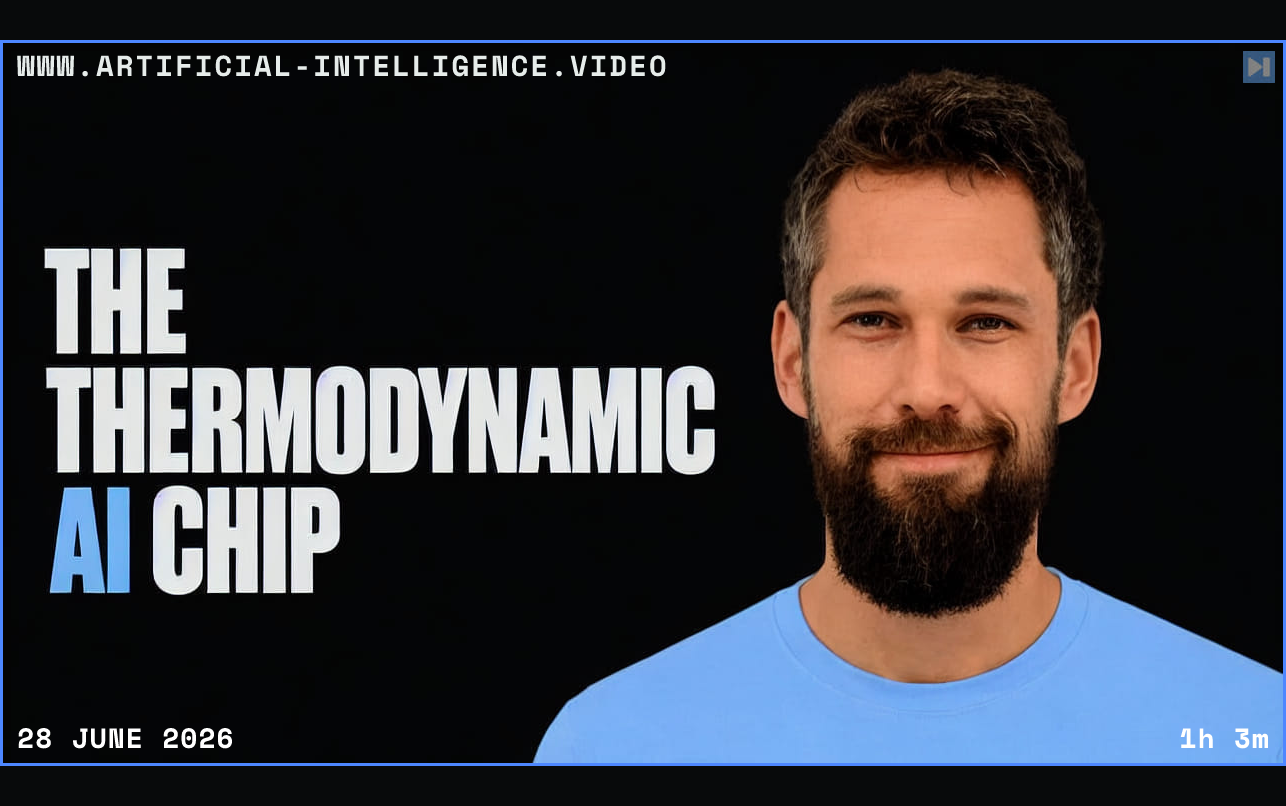
Thomas Ahle describes thermodynamic computing as a hardware approach that uses the natural noisy behavior of physical systems for probabilistic workloads. Rather than suppressing every fluctuation, the system can encode stochastic differential equations and use equilibrium behavior for operations such as sampling and linear algebra.
The discussion connects that hardware research to the software stack needed for chip design. Ahle explains how hardware-description languages, electronic-design automation tools, simulation and formal verification turn an idea into a design that can be tested before fabrication, where a missed error can be extremely costly.
Ahle's team used AI agents to extend an open-source Verilog simulator, producing a very large codebase in weeks. He treats that speed as useful but not self-validating. Passing a benchmark or a test suite can still hide gaps in specification, implementation and understanding, so stronger verification and clear ownership remain essential.
The conversation also covers continual learning, automated formalization, hardware and software co-design, and the difference between generating plausible work and possessing durable expertise. The episode's sponsor disclosure and promotional material are omitted from the editorial record.
 Watch on YouTube