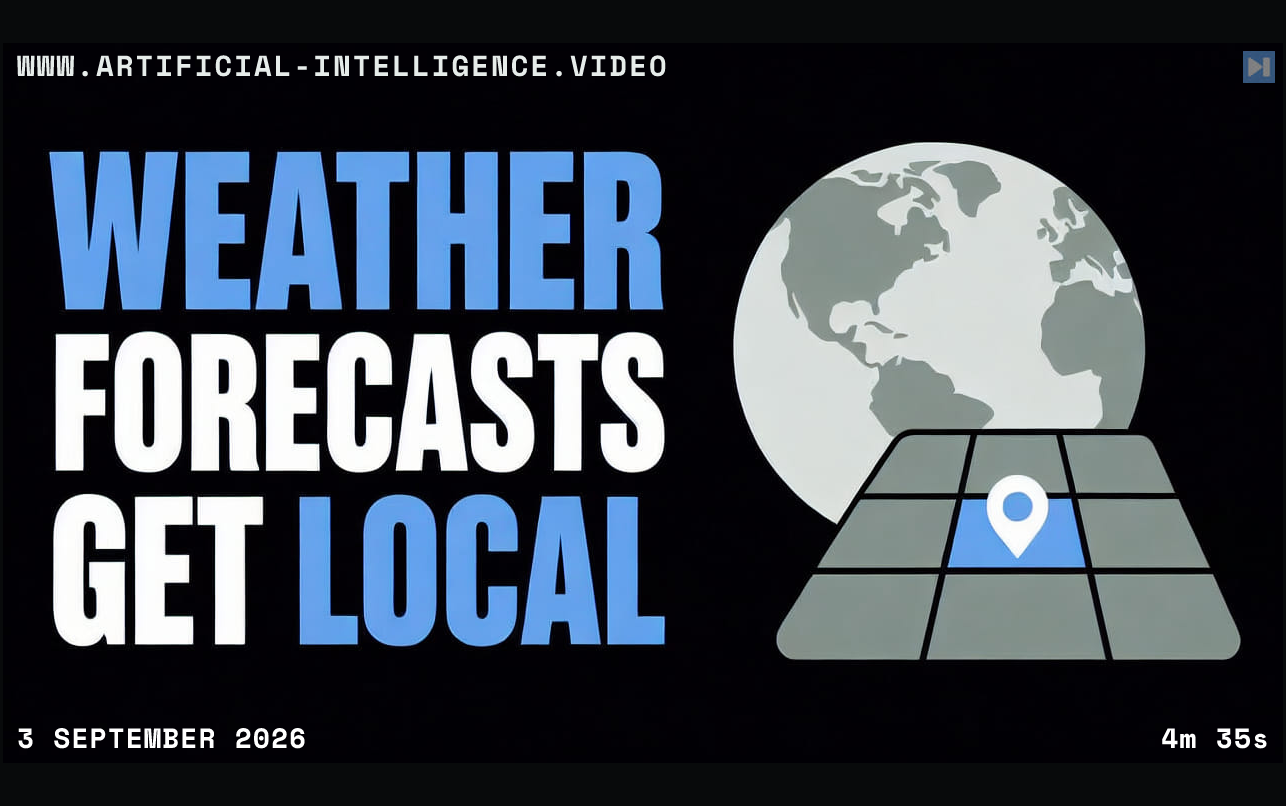
Google DeepMind contrasts physics-based forecastingA weather forecasting model uses observations and a representation of atmospheric behavior to estimate future weather conditions. with AI systems that learn atmospheric patterns from historical observations. WeatherNext 3 is presented as a global operational model that produces a new forecast every hour, with hourly time steps and stronger skill across common weather variables.
A major change is direct use of real-world observations from satellites and ground stations rather than waiting for a full analysis cycle that may refresh every six hours. The model produces three resolutions in one passInference is the use of a trained model to produce an output from supplied input.: broad atmospheric conditions at 25 kilometers, surface variables such as wind and pressure at nine kilometers, and temperature and humidity at up to five kilometers.
The extra detail matters near coasts and mountains, where conditions change over short distances. DeepMind also adds wind estimates at turbine height plus cloud and solar-radiation variables for renewable-energy planning. Google plans to surface the forecasts across Search, Gemini and Maps for decisions ranging from harvesting and flood response to everyday event planning.
 Watch on YouTube