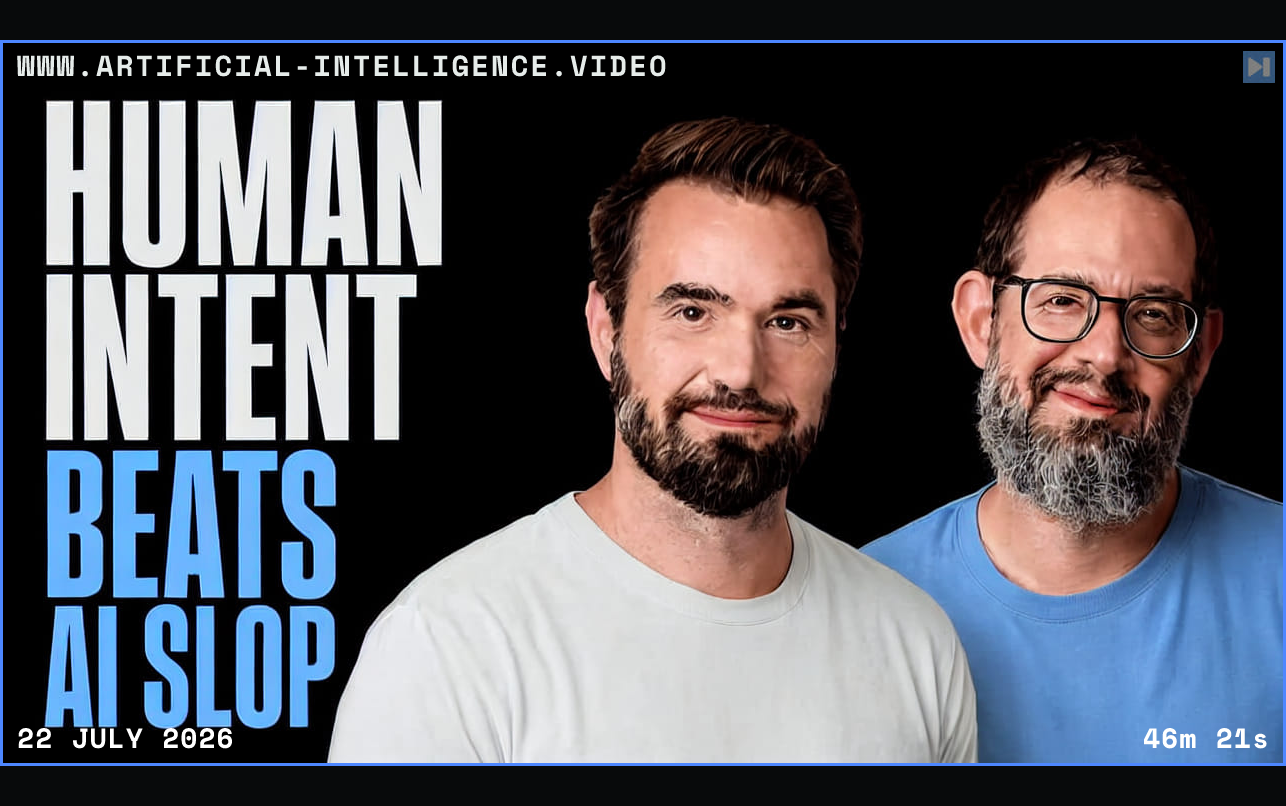
Nate B. Jones and Chris Best distinguish useful AI assistance from output that carries no visible human intent. Their concern is not simply whether a model touched the work, but whether a person made meaningful choices, accepted responsibility and gave the audience a reason to care.
Chris Best describes Substack's approach as increasing transparency rather than banning AI-assisted writing. Readers can request an estimate of likely AI involvement, while authors remain free to use tools in ways that support their own thinking and voice.
Nate B. Jones and Chris Best argue that cheaper generation raises the value of attention and relationships. Generic material clusters around ideas that models already represent well, while memorable work is more likely to come from people with unusual experience, taste or judgment outside that average.
The discussion predicts that norms will evolve differently across text, video and other media. Disclosure may become routine, but durable trust will still depend on whether audiences can recognize the creator's intent and hold someone accountable for the result.
 Watch on YouTube