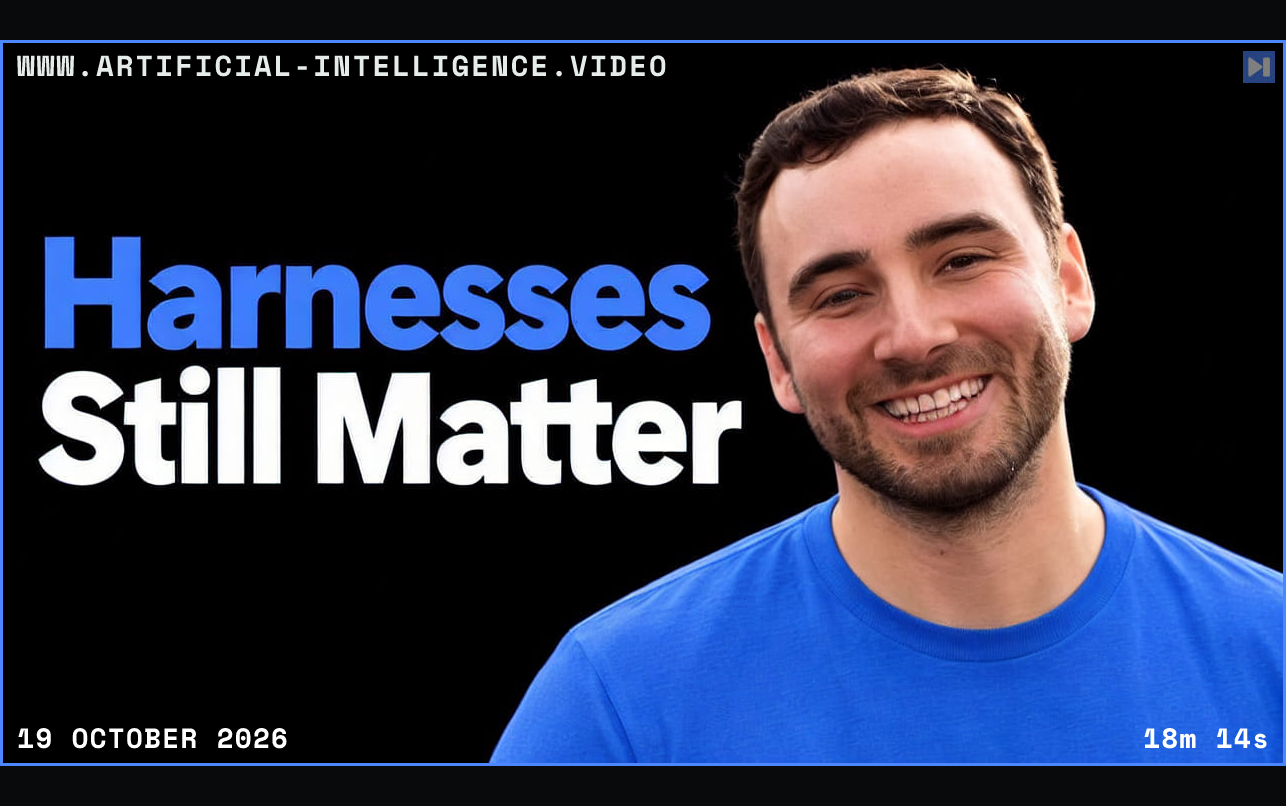
Jediah Katz separates an agent harness into its runtime and its context-and-orchestration layers. He describes how stronger coding models let teams remove prompts, special editing models and other scaffolding that once compensated for weak model behavior. His proposed data flywheel links better harnesses, harder tasks, user interactions and later model improvements; the benchmark comparisons he discusses are evidence within his argument, not proof that every harness is interchangeable.
Jediah Katz argues that harnesses open new task frontiers even as older techniques become redundant. His examples include persistent coordinator agents, worker agents, communication, memory and deciding when to act or ask. He also describes a software-factory workflow connecting bug reports, repair attempts, demonstrations and deployment monitoring. Product recommendations and promotional claims are omitted.
Jediah Katz identifies durable responsibilities outside raw coding intelligence: resumable infrastructure, scoped permissions, safeguards against costly or unintended actions, and efficient use of tokens and models. He notes that similar benchmark scores can conceal different costs per task. His examples of caching, selective tools and model mix illustrate engineering tradeoffs rather than independently verified savings.
Jediah Katz expects harnesses to become more composable and easier to revise. He describes event subscriptions, centrally tracked behavioral shims and higher-level orchestration built from agents rather than individual model calls. His prediction that most agent work will move off laptops is presented as a forecast, not an established outcome.
 Watch on YouTube