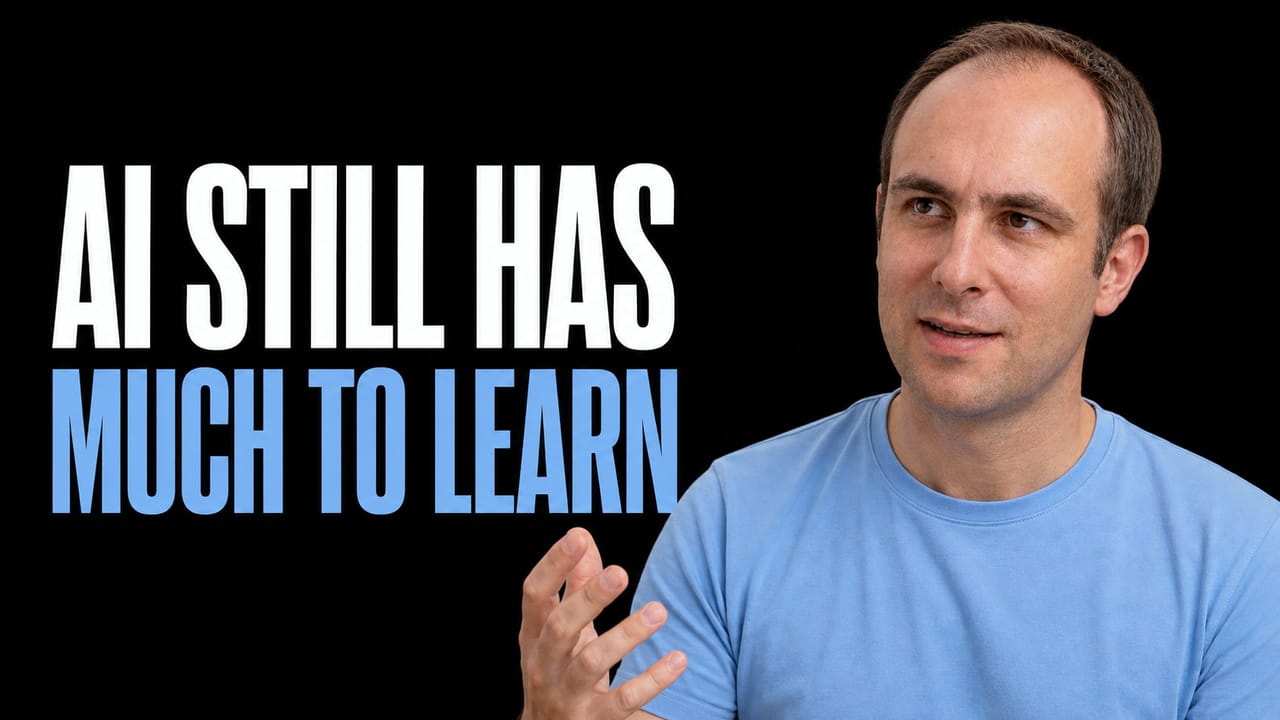
Lukasz Kaiser and Jacob Effron discuss the gap between impressive demonstrations and reliable generalization. Existing models can be powerful yet uneven, and Lukasz Kaiser argues that researchers should continue exploring architectures, learning objectives and more efficient use of data.
Lukasz Kaiser describes coding assistance that helped reproduce research more quickly in a personal experiment. The example illustrates useful acceleration, while preserving a role for people in checking objectives, loss functions and whether an implementation matches the intended idea.
Lukasz Kaiser and Jacob Effron examine longer-running agents, context management and reinforcement learning. Files and selective retrieval can help an agent carry work forward, but training on very long tasks creates practical costs and feedback problems.
Lukasz Kaiser considers opportunities for academic experimentation, multimodal systems and open models alongside continued progress with established methods. The interview supports a broad research agenda rather than declaring that one architecture or a fully autonomous research loop has already solved the remaining problems.
 Watch on YouTube