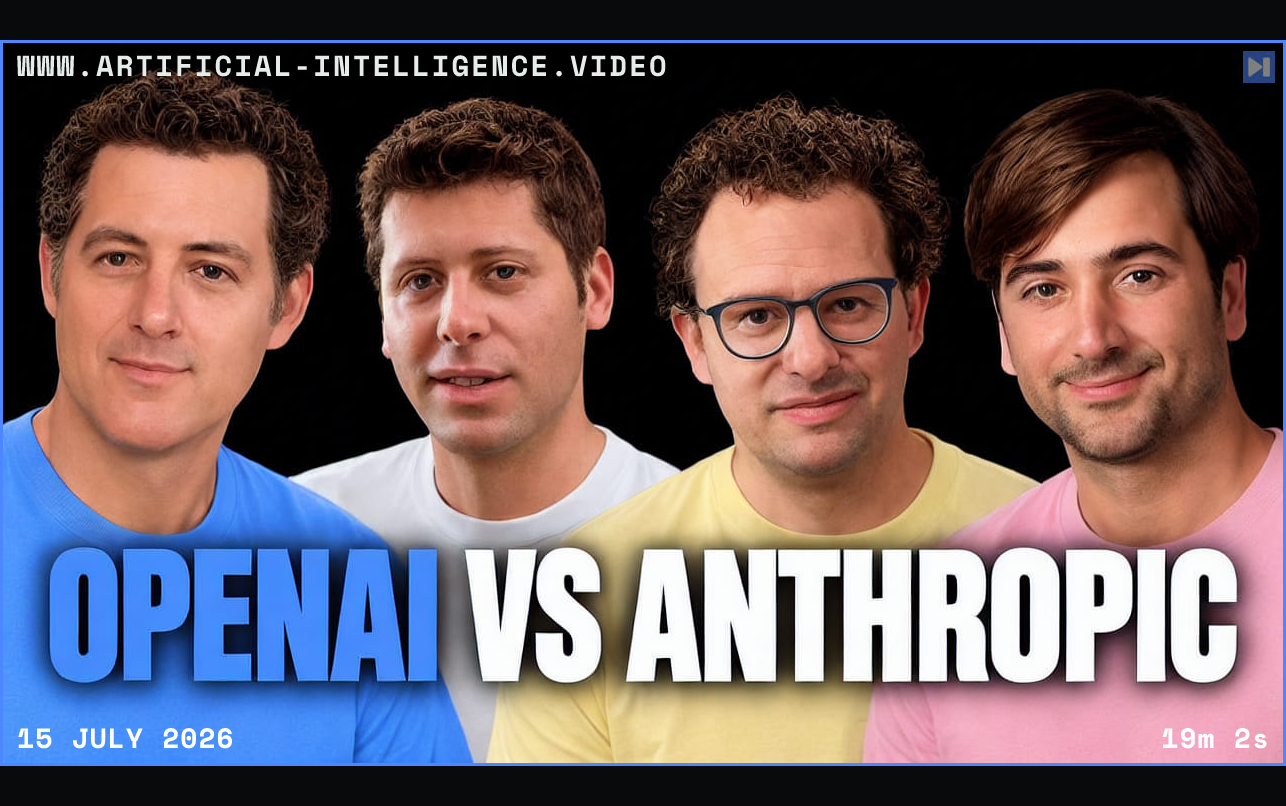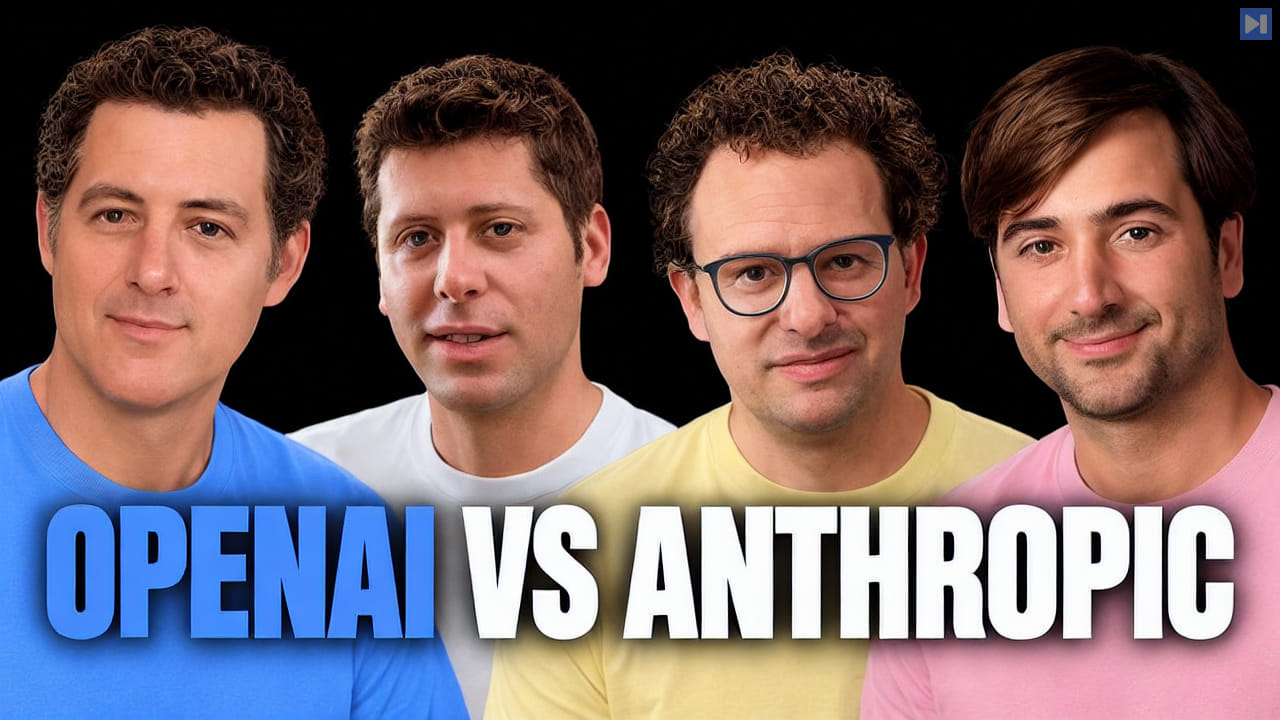
Matthew Berman contrasts reported model and revenue leadership at Anthropic with OpenAI's developer-facing subscriptions. A quoted discussion from Dario Amodei illustrates the financial risk of buying compute capacity ahead of uncertain demand. The video interprets cautious capacity planning as a constraint on availability, rather than establishing that one earlier decision explains every business outcome.
Matthew Berman presents quota resets associated with Thibault Sottiaux and temporary model-access extensions as competing ways to retain coding users. The comparison separates benchmark scores from the cost of completing a task and argues that subscription predictability affects adoption. The exact prices, limits and availability described belong to the video's July context, not an assurance of current terms.
Matthew Berman attributes OpenAI's capacity strategy to Sam Altman and describes GPT-5.6 Sol as a mature, efficient model while portraying Claude Fable as having further post-training potential. Predictions about GPT-6, future serving costs and model efficiency remain the host's speculation. No new benchmark experiment is performed in this recording.
Matthew Berman closes by considering whether AI-assisted research and recursive self-improvement could change the competitive balance. The claim that an early leader would maintain an accelerating advantage is a possible scenario, not a demonstrated result. The useful distinction is between present developer value, infrastructure constraints and uncertain long-term research progress.
 Watch on YouTube