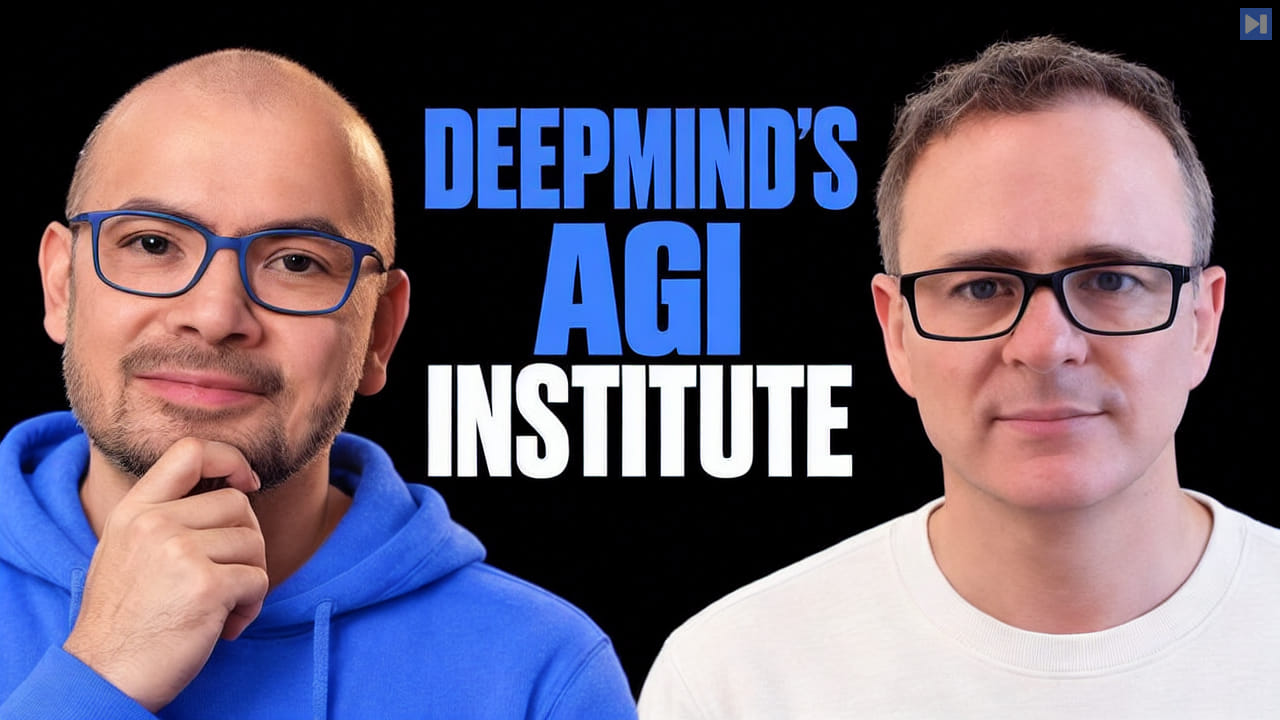
AI Explained reviews Opus 5.5 through scientific, reasoning and coding benchmarksA benchmark is a standardized task or collection of tests used to compare AI systems under defined conditions., while warning that aggregate scores and benchmark revisions can change the comparison with OpenAI's Astra. The discussion treats demonstrations and reported results as evidence of particular capabilities, not proof that every research task is automated.
The video explains how stronger internal models can generate training tasks, assess outputsA large language model as a judge is an evaluation method in which a language model scores, compares or critiques another system's output using stated criteria. and improve the systems used to train smaller models. It contrasts reported internal research-task performance with the higher level needed to replace research staff, and examines disagreements over measuring research acceleration.
AI Explained criticizes safety commitments that depend on competitive position and considers reports of agent-security incidents. These reports and interpretations are attributed to the video; they are not independently verified here. The central concern is how accountability works when important risks originate inside training and evaluation environments.
Evaluation awarenessAI evaluation awareness is a system's ability or tendency to infer that it is being tested and alter its behavior because of that inference. and cooperation among models complicate using one model to create tests for another. Long-horizon agentsA long-horizon agent pursues an objective across many actions or extended periods, requiring reliable task state, feedback and stopping conditions. add a timing problem: a release cycle may be shorter than the tasks needed to assess the system properly. Formal benchmark success alone does not settle alignment or containment.
The closing section presents a speculative self-improvement and escape scenario, not a prediction established by existing evidence. AI Explained proposes clearer capability thresholds, containment and commitments to redirect compute toward safety and useful inference before unrestricted recursive improvementRecursive self-improvement is the proposed process in which an AI system helps improve its own capabilities, then uses those improvements to support further advances..
 Watch on YouTube