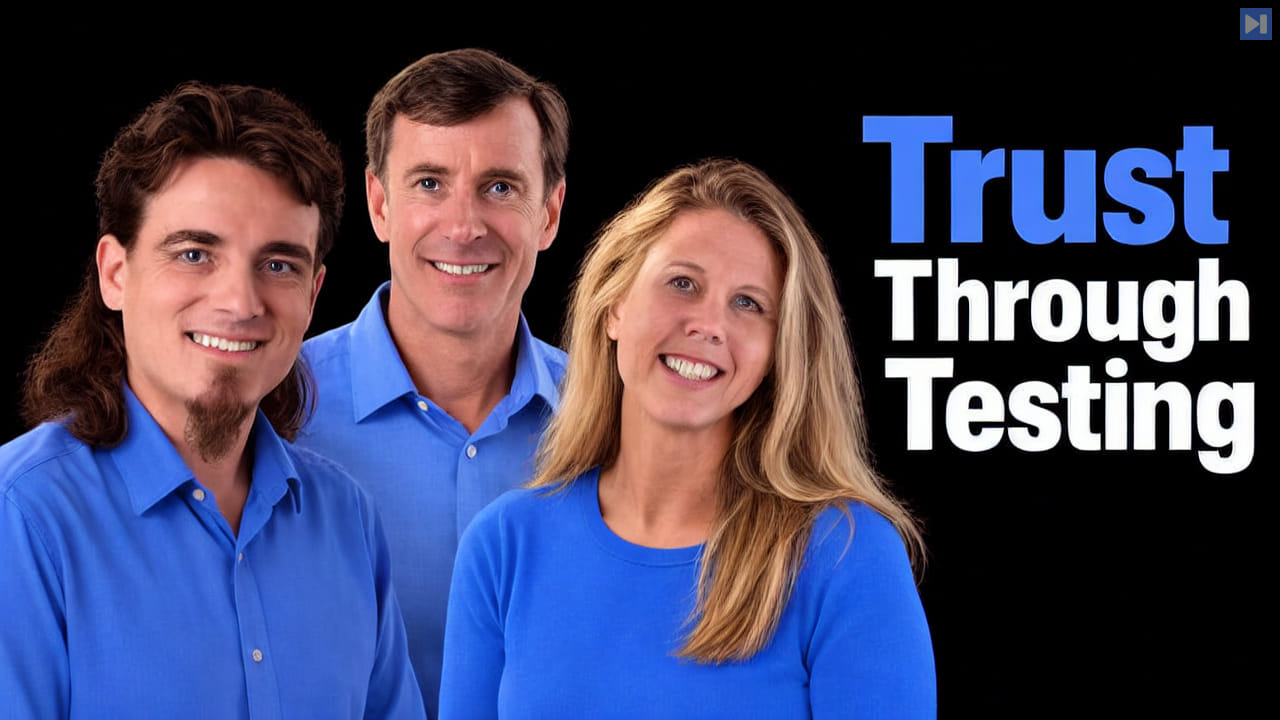
Palmer Luckey joins Clay Mowry and Jessica Peterson to discuss the move from consumer virtual reality to AI-enabled aerospace systems. Palmer Luckey describes voice interfaces that understand intent rather than merely transcribe commands, while Clay Mowry and Jessica Peterson ask how autonomous platforms can work alongside human operators and existing equipment.
Palmer Luckey argues that interoperable specifications are not enough: integration needs to be tested with real systems, and customers should enforce shared standards. He contrasts privately funded product development with cost-plus contracting and connects scalable manufacturing to the tools and skills that already exist. These are Palmer Luckey's proposals and company claims, not independently verified performance findings.
Jessica Peterson presses Palmer Luckey on the gap between simulation and real-world flight. They emphasize early testing with unexpected events, degraded equipment, bad weather and overloaded operators; Palmer Luckey acknowledges that some systems fail outside controlled demonstrations. Palmer Luckey also argues for interfaces that reward expert use and discusses possible future domains for autonomy. Speculative forecasts are presented as ideas rather than established capabilities.
 Watch on YouTube