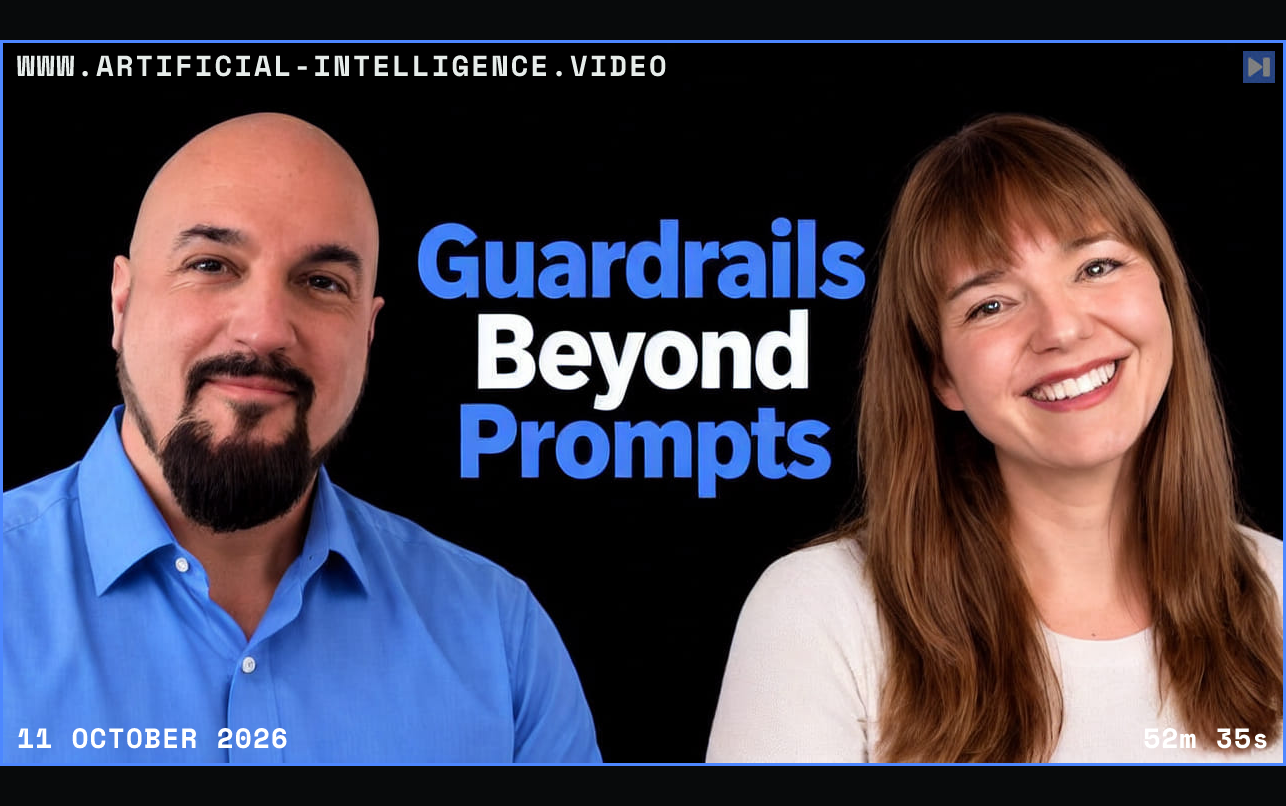
Michael Forrester and Whitney Lee run a workshop around a deliberately overpowered burrito-ordering agent connected to Kubernetes. Attendees get the chatbot to deploy an outside container image and expose a mock recipe, while model refusals make other attempted attacks inconsistent. This is a controlled demonstration, not evidence that a model's safety training reliably secures production infrastructure.
Michael Forrester and Whitney Lee compare network restrictions, admission policies and runtime controls with AI-specific input and output filtering. The image-deployment policy blocks the tested external image, but a planned filesystem protection fails during the session. Output filtering redacts sensitive recipe content after inference, whereas an input guard can reject a request before the larger model runs. The presenters distinguish these observed outcomes from intended behavior.
Michael Forrester and Whitney Lee use OpenTelemetry traces to inspect prompts, tool descriptions and returned data, including a weather tool that requests an unrelated internal configuration read. They also flag that unfiltered personal data can end up in traces. Their practical conclusion is to preserve ordinary access control and delivery safeguards, constrain agent authority, and choose bounded workflows with worthwhile, verifiable outputs rather than rely on repeated model refusals.
 Watch on YouTube