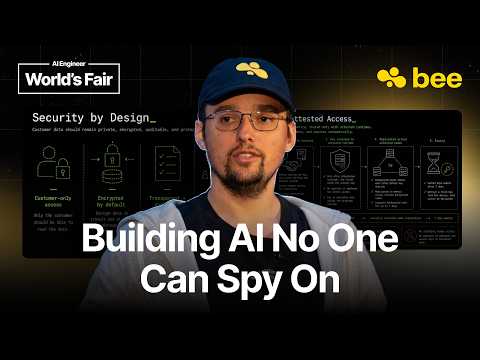
Personal agents built from wearable recordings must handle highly sensitive information while continuing to work when a phone is offline. Steve Korshakov describes the privacy requirements behind Bee's personal AI architecture, including protecting users from unauthorized access by the operating team.
His proposed trust boundary starts with a key generated on the user's phone. The phone verifies backend workload attestation before sharing that key with confidential-computing infrastructure. He describes a transparency log, replication only within the protected perimeter and a seven-day key lifetime intended to support ongoing tasks while limiting exposure.
Deployment controls separate the product team from an independent privacy team that controls release signing. Auditors can inspect historical images and manifests even where the log is not fully public. Steve Korshakov also argues for minimal custom security code and restricting an agent's capabilities through sandboxing rather than assuming a tested agent will always behave safely.
 Watch on YouTube