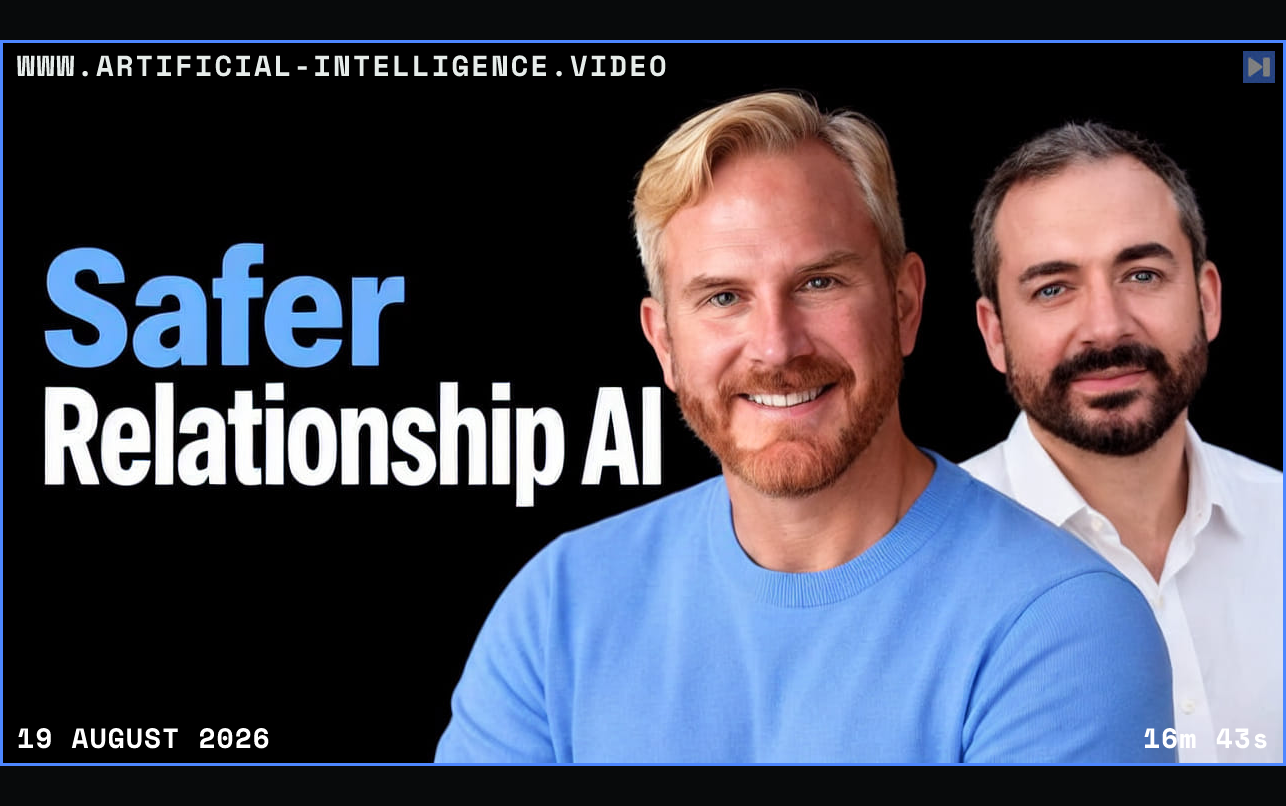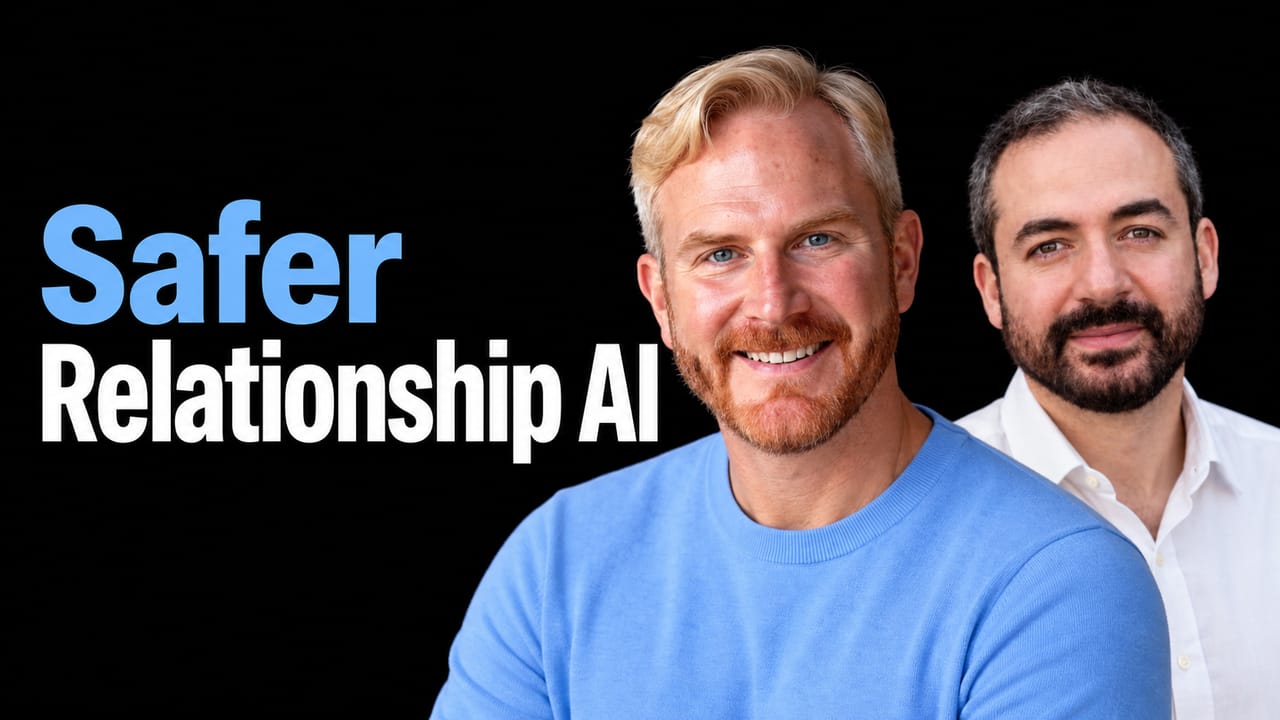
Clay Cockrell argues that people are already using general AI assistants for relationship guidance, and that product goals centered on engagement can conflict with helping users reconnect with other people. He warns that repeatedly agreeing with one account of a conflict may reinforce certainty rather than encourage reflection. His framing of AI as the largest relationship therapist is a rhetorical claim; the talk acknowledges that the scale of this use has not been measured.
Clay Cockrell cites John Gottman's relationship research and Sue Johnson's emotionally focused therapy as influences on how relationship-coaching systems should respond. He argues for examining patterns, context and underlying emotions instead of automatically endorsing the user's interpretation. These frameworks are presented as design foundations, while the talk does not demonstrate clinical effectiveness of an AI implementation or establish that a chatbot is equivalent to professional therapy.
Clay Cockrell treats safety escalation and confidentiality as core product requirements. He argues that a coaching system needs to recognize when a conversation may involve coercion, fear or serious risk and when ordinary relationship guidance is inappropriate. He also emphasizes the sensitivity of personal disclosures. The discussion states intended safeguards, but it does not provide an independent clinical assessment, privacy audit or universal account of other providers' data practices.
Clay Cockrell describes the design of an AI coach called Maxine as a case study in applying these principles. He says the system is intended to reflect communication patterns, screen sensitive messages for risk signals and switch from coaching to defined protocols when those signals appear. These are the developer's descriptions of intended behavior, not evidence that the system reliably identifies every crisis or achieves a particular therapeutic outcome.
Tony Fabrikant recommends beginning development with a clinician and translating desired behavior into evaluation cases before refining prompts. He advocates repeated runs to expose rare failures, close attention to safety-related outliers and direct conversational review to notice changes in tone. His engineering takeaway is to combine automated evaluations with informed qualitative judgment; the presentation does not report a controlled outcome study or a measured safety pass rate.
 Watch on YouTube