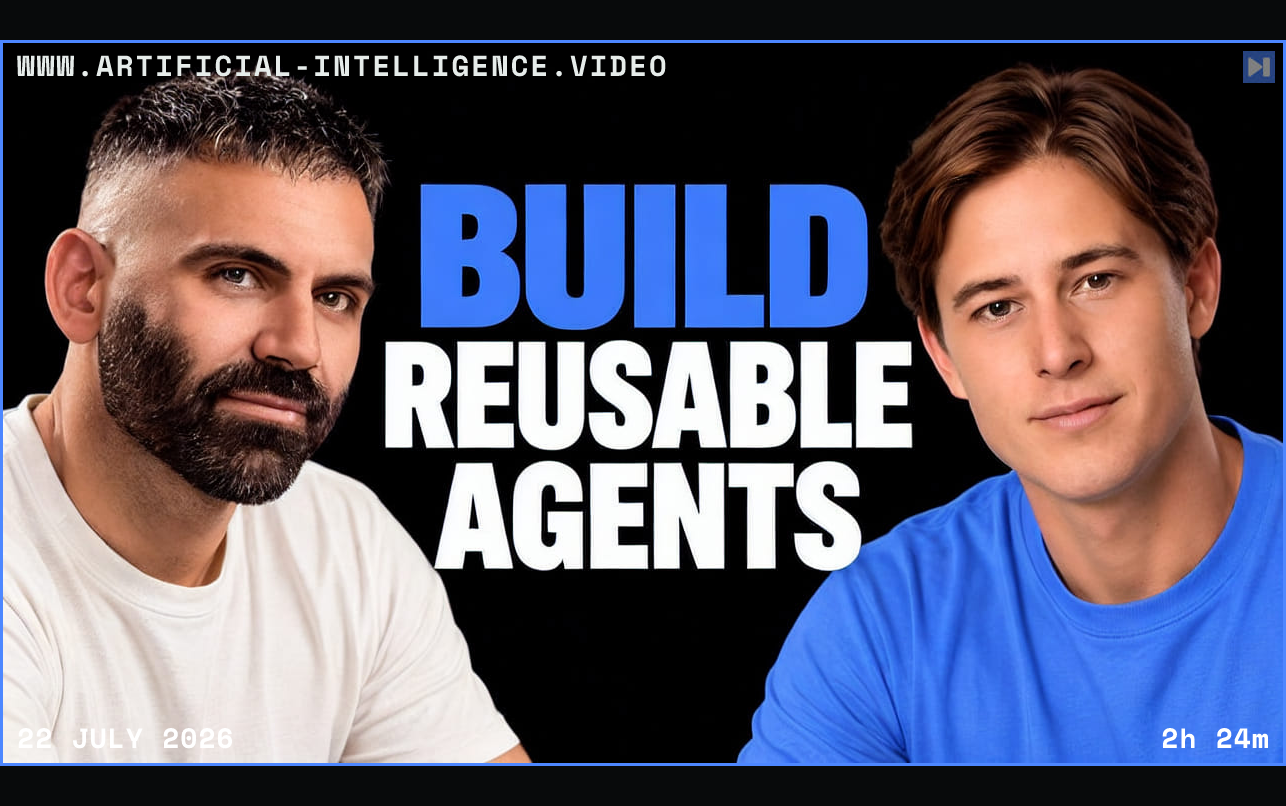
Remy Gaskell walks Mark Brazil through the difference between asking a chatbot questions and giving an agent a goal it can pursue through an observe, think and act loop. A social-content analysis example illustrates how agents find stored information, identify missing inputs and assemble a report. Reported productivity improvements are the speaker's experience, not an independently tested result.
Remy Gaskell treats business context as onboarding material for an employee: concise Markdown files describe the operator, customers, products and writing preferences. Routing files such as CLAUDE.md or AGENTS.md point to relevant instructions, while explicit memory captures corrections. He stresses human review because inaccurate context can contaminate every later output; files on a laptop do not imply that model inference happens offline.
Remy Gaskell explains MCP and other connectors as ways to reach external tools, then addresses the risks of granting access. Read-only or draft-only starting points, incremental permissions and human oversight provide a more cautious interpretation than blanket approval of every action. The discussion does not establish that any agent setup is secure.
Remy Gaskell builds reusable skills as task instructions, contrasting goal-first experimentation with documented procedures. Examples include advertising analysis, newsletter subject lines and workflows that coordinate several skills. He also distinguishes a personal AI workspace from persistent company agents and discusses folder organization, staff learning and retained human judgment. Sponsor reads, affiliate offers, numerical productivity promises and subscription promotions are omitted.
 Watch on YouTube