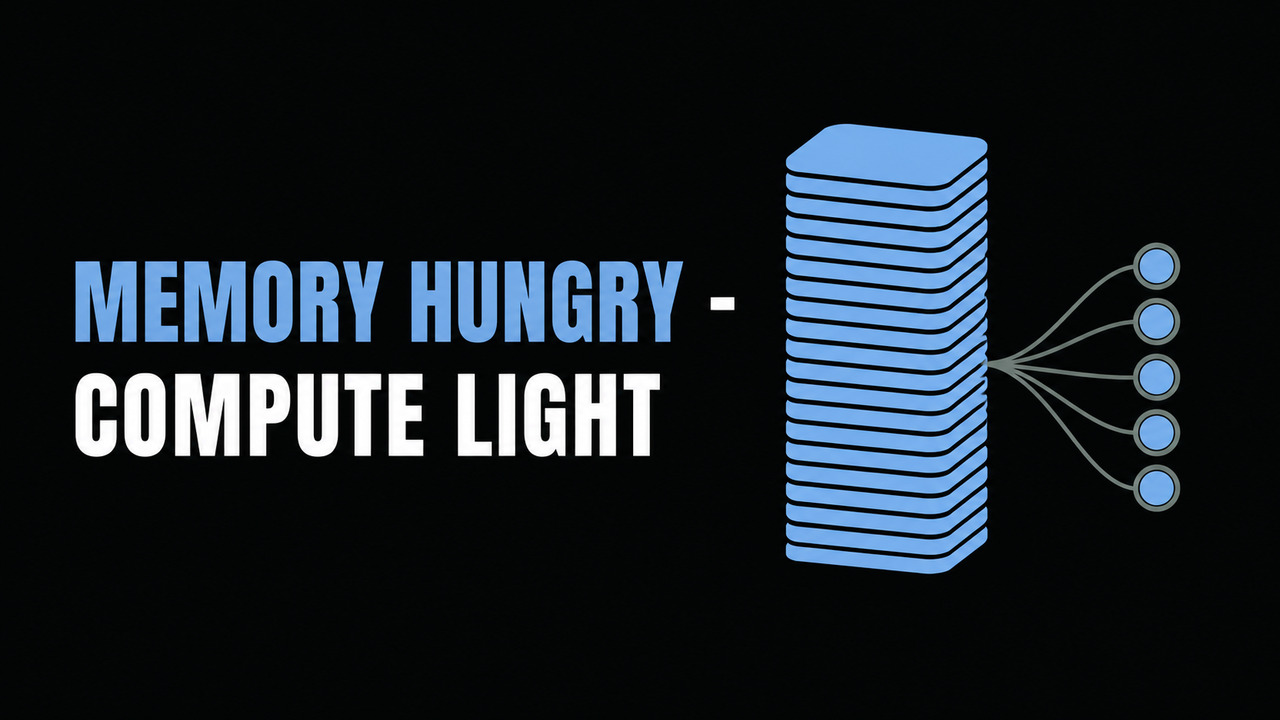
Nick Saraev and Jack Roberts discuss a reported 2.8-trillion-parameter Kimi release and its mixture-of-experts designA mixture-of-experts model contains multiple specialized subnetworks and activates a selected subset for each input instead of using every parameter every time.. They distinguish total parameters from those active for each token, rather than treating the model's headline size as its per-token workload.
Nick Saraev and Jack Roberts emphasize that enormous open-weight modelsAn open-weight model makes its trained parameter values available so others can run or adapt it under the release's licence. are not automatically practical on ordinary laptops. Hosted access and enterprise infrastructureAI compute infrastructure is the hardware, facilities, networks, power, cooling, storage, and software used to train and run AI models. may broaden their usefulness, but the discussion offers estimates rather than a verified deployment cost.
Nick Saraev and Jack Roberts do not establish the model's commercial licensing terms. The release is discussed as open weights, without assuming that downloadable weights imply unrestricted open-source rights or free commercial use.
Nick Saraev and Jack Roberts connect model competition with memory, chipsAI compute capacity is the available ability of hardware and supporting systems to perform AI training or inference work over time. and vendor financing. Their discussion includes corrected figures and unsettled reports, so the infrastructure implications are separated from claims of completed financial arrangements.
Nick Saraev and Jack Roberts finish by discussing AI credentials and open versus closed model risks. They favor assessing capabilities, distribution and safeguards rather than assuming one release model is inherently safe or dangerous.
 Watch on YouTube