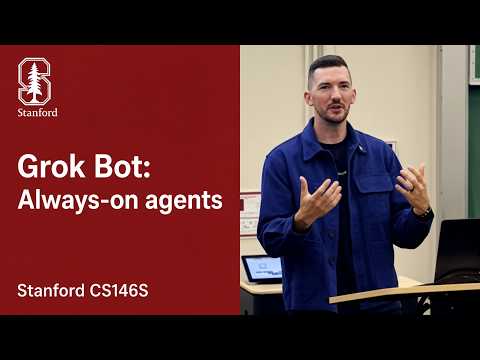
Lee Robinson explains how always-on agents extend a simple model-and-tools loop with persistent state, event routing and an independent cloud computer. Lee Robinson separates the durable agent service from its disposable working machine so infrastructure can sleep, restart or be rebuilt without erasing the conversation and work state.
Lee Robinson contrasts a basic job queue with durable workflows that resume from a completed step after failure. Lee Robinson describes message priorities, a thin client, helper agents and dynamic tool discovery as ways to coordinate long-running work while keeping the main conversation smaller.
Lee Robinson emphasizes prompt caching, stable tool definitions, deliberate compaction and layered memory. Lee Robinson also discusses protections against untrusted inputs, approvals for irreversible actions and keeping credentials outside model conversations, without claiming that agent security or lossy summarization is solved.
Lee Robinson describes an evaluation feedback loop in which product failures inform harness fixes and future model training. Lee Robinson closes with open problems in long-horizon evaluation, memory, security and deciding when a proactive assistant should interrupt its user.
 Watch on YouTube