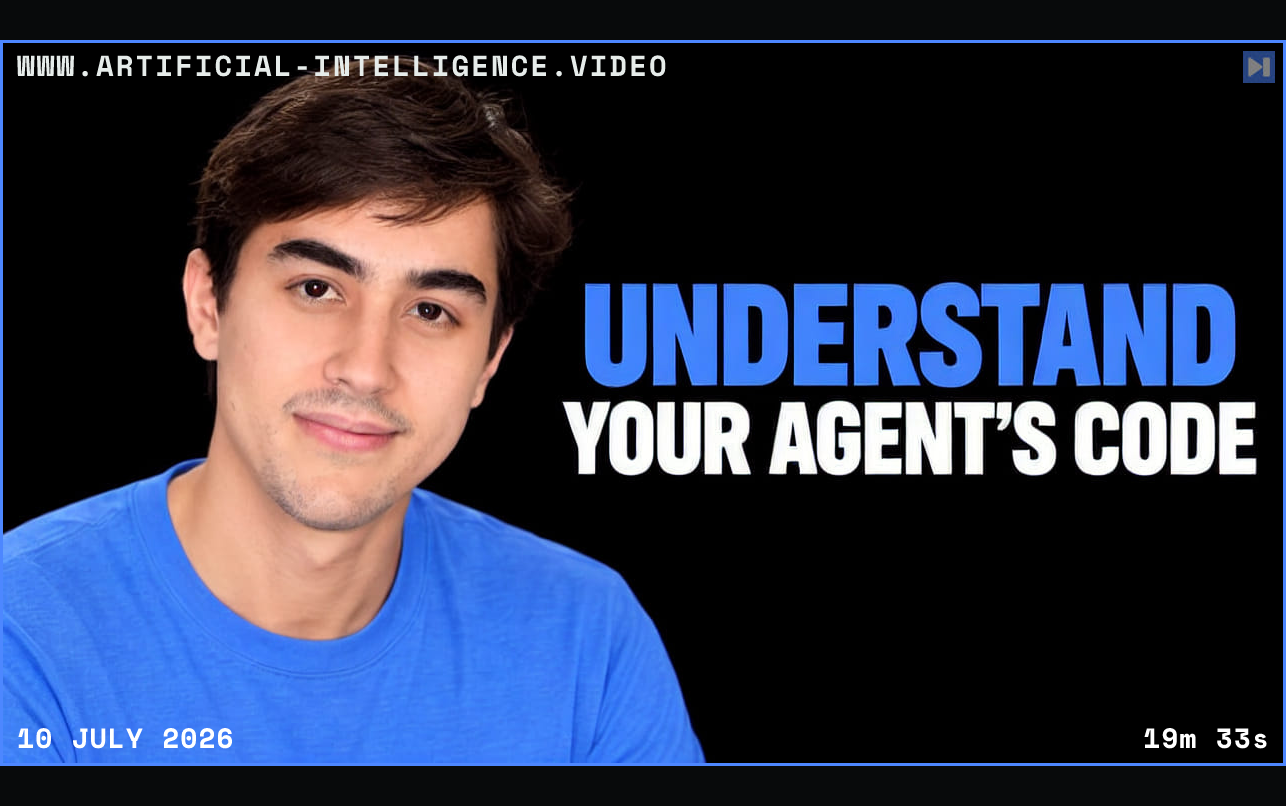
Geoffrey Litt distinguishes understanding to verify from understanding to participate. Even when an agent's output is correct, a person needs a working mental model to generate the next idea. He describes the risk of cognitive debt when rapid code generation outruns that understanding.
Geoffrey Litt demonstrates code explanations that begin with system background and intuition, add interactive figures where useful, and then present changes in a meaningful narrative order. Short quizzes test whether reading has produced actual understanding rather than a false sense of familiarity.
Geoffrey Litt uses temporary microworlds to expose interpreter state and step through a website migration. These tools help people develop an intuitive feel for a system instead of merely asking an agent to fix it. Shared conversations and collaborative documents extend that learning to a team, making agent activity and decisions visible to everyone.
 Watch on YouTube