Corey Gallon presents a browser-automation architectureComputer use lets an AI agent interact with software through interface controls such as screens, buttons, keyboards and pointers. that combines command-line tools, the Chrome DevTools Protocol and an observe-act-verify loop. The talk favors capturing repeatable interactions in code so an agent does not have to reason through every step again. Claimed cost and speed advantages over particular tool-call workflows are presented as comparisons from the talk, rather than proof that one interface is universally better.
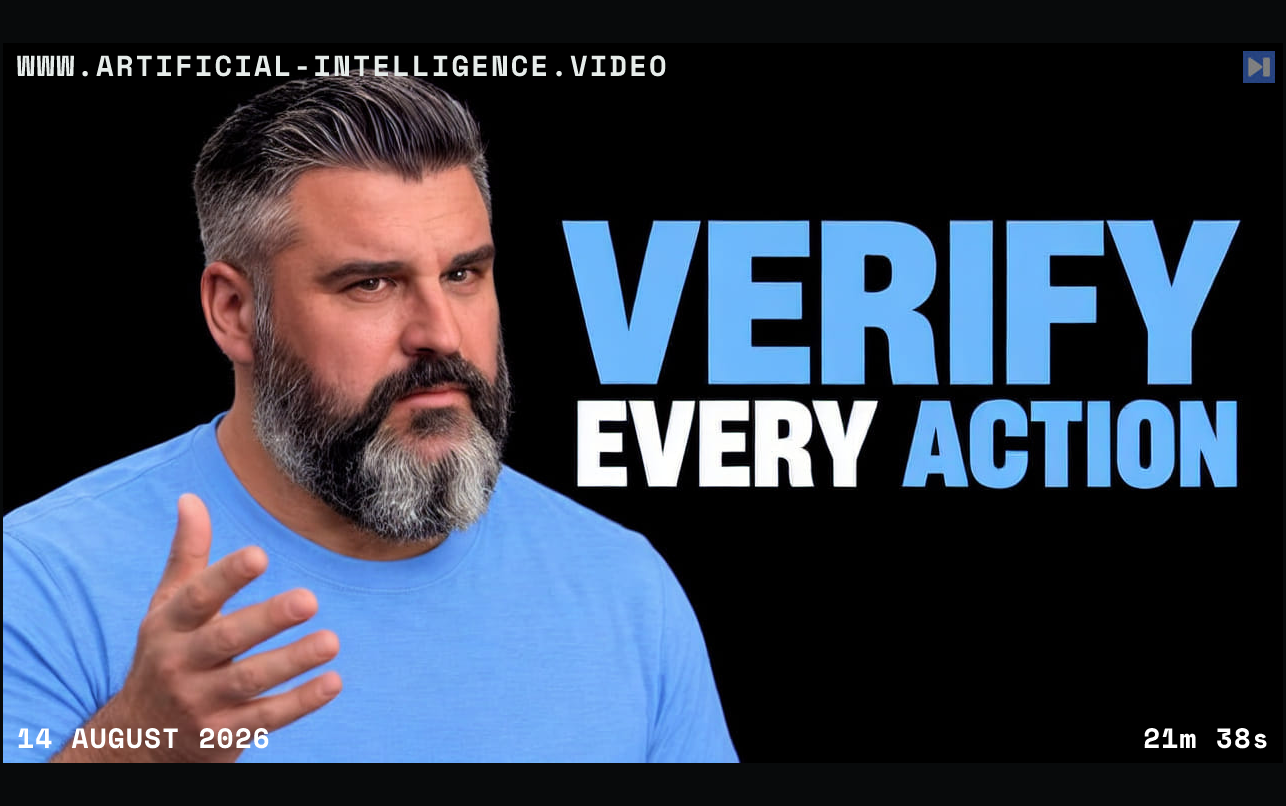
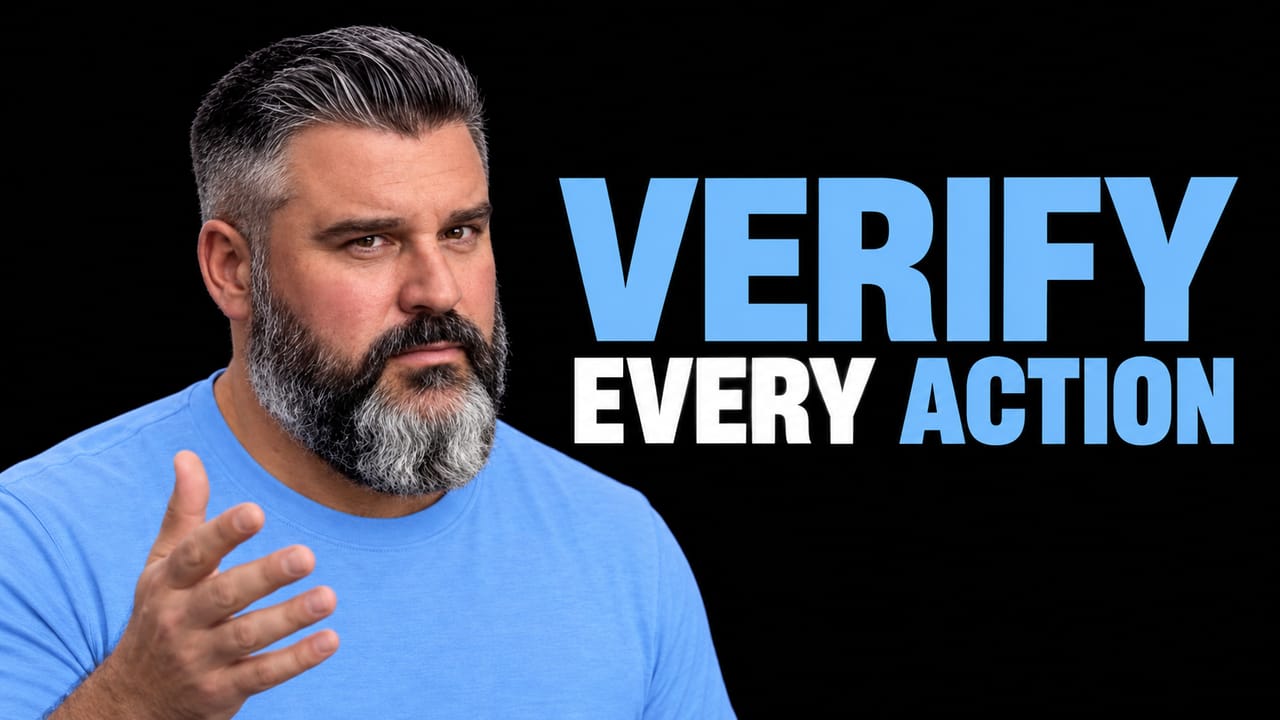
Corey Gallon emphasizes checking the result of an action independently from the action itselfAgent completion verification checks evidence that an agent achieved the requested outcome rather than merely producing intermediate work.. Browser structure, screenshots, network activity and logs provide different kinds of evidence about whether a task succeeded. The broader method is to investigate a workflow, verify its behavior and preserve the working sequence as reusable code or an agent skillAn AI agent skill is a reusable package of instructions, resources, and tool guidance for performing a bounded kind of work., while recognizing that different pages require different interaction strategies.
Corey Gallon uses email and browser-challenge demonstrations to illustrate a division between deterministic executionDeterministic software verification checks an output with a repeatable procedure that produces the same result for the same inputs and state. and model-based perception. The speaker states that the demonstrations run on infrastructure and accounts under his control. Their general engineering lesson is that repeated model round trips can make time-sensitive workflows slow, while focused model judgments can complement faster code. The talk's challenge-solving claims are source reports and were not independently tested.
Corey Gallon concludes that careful integration can enable behavior an agent does not deliver out of the box. The discussion highlights browser observation, outcome checks and reusable implementation rather than relying on a single prompt. The examples also illustrate that a workflow's apparent success depends on the surrounding interface and timing conditions, so the claimed repeatability is specific to the demonstrated setting.
 Watch on YouTube