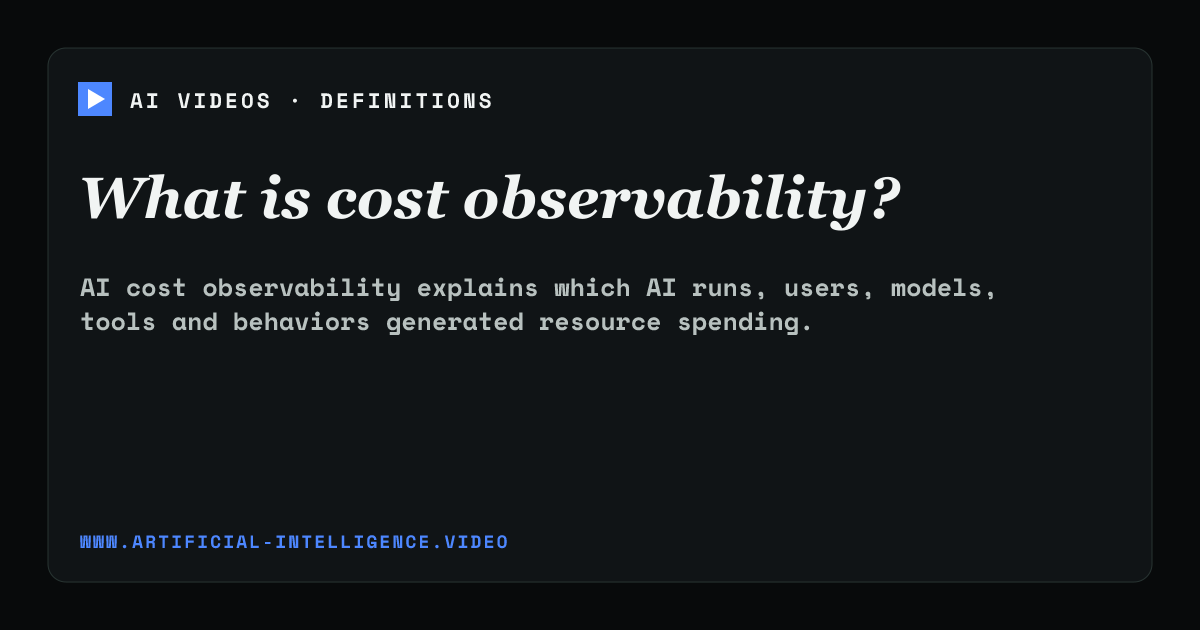
AI cost observability records resource use with enough context to explain it. Instead of a provider total, it can attribute model calls and related costs to a run, user segment, workflow, subagent and policy intervention.
This visibility helps teams find expensive loops, expanding context and inefficient tools. Cost data should be connected to completion and quality because reduced spending is not useful if the workflow fails more often.
ELI5
Cost observability shows where AI spending comes from instead of displaying only one large bill. It connects resource use to particular models, users, tasks, tools, or repeated steps.
For example, a team may discover that one agent loop repeatedly sends a long document to a costly model. That evidence helps them fix the loop while checking that the cheaper workflow still completes the task well.
What should AI cost observability attribute?
It should connect model and tool spending to runs, users, tasks, agents, subagents and the behavior that caused it.
Why combine cost and completion data?
A lower-cost run may be less efficient if it fails, repeats work or requires more human intervention.