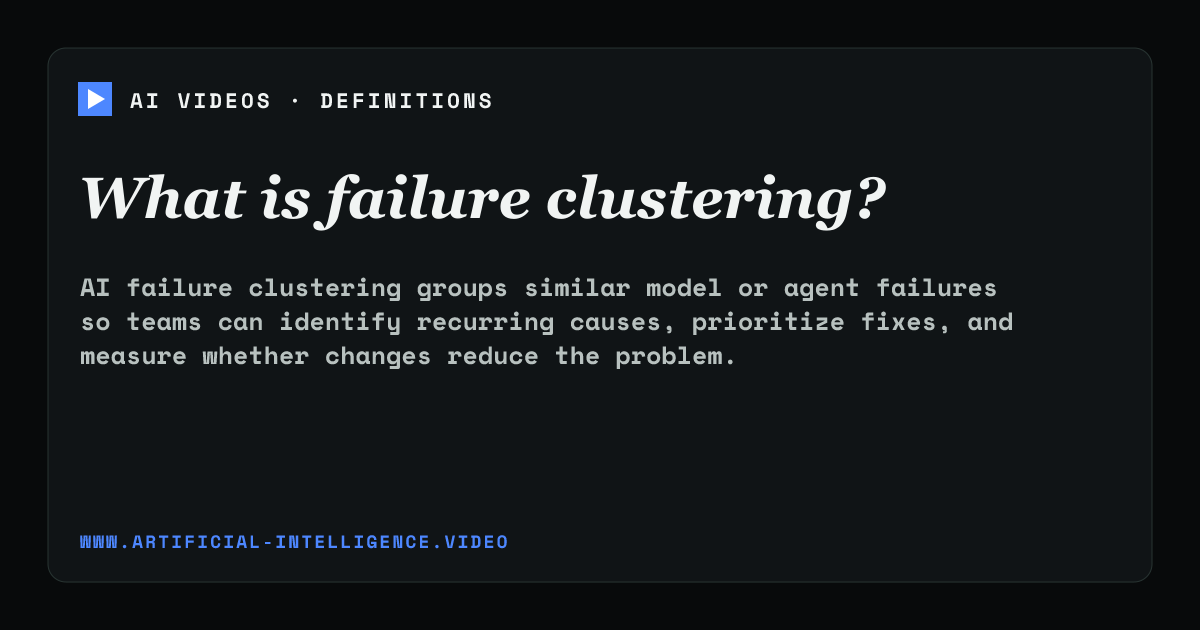
AI failure clustering can organize large volumes of logs or feedback by intent, symptom, tool, missing data, workflow stage, or likely root cause. Language models may help label and group examples, while representative records let product teams understand the real behavior behind each cluster.
Automated clusters are hypotheses rather than final diagnoses. Teams should inspect samples, protect sensitive data, distinguish user confusion from system error, and preserve raw evidence links. A useful process tracks cluster frequency and severity before and after a fix instead of relying on plausible labels alone.
ELI5
Failure clustering groups similar AI mistakes so teams can see recurring patterns. Instead of treating every complaint as unrelated, it organizes failures by symptom, task, missing data, tool, or likely cause.
For example, hundreds of support-agent errors might form one cluster caused by outdated refund rules. People still inspect examples because an automatically named cluster is a useful hypothesis, not proof of the root cause.
What can AI failure clustering reveal?
It can reveal repeated missing-data problems, tool errors, misunderstood requests, enablement gaps, regressions, and workflow stages that need redesign.
Can a language model diagnose failure clusters automatically?
It can help group and label examples, but people should inspect representative evidence and verify the likely cause before changing the product.