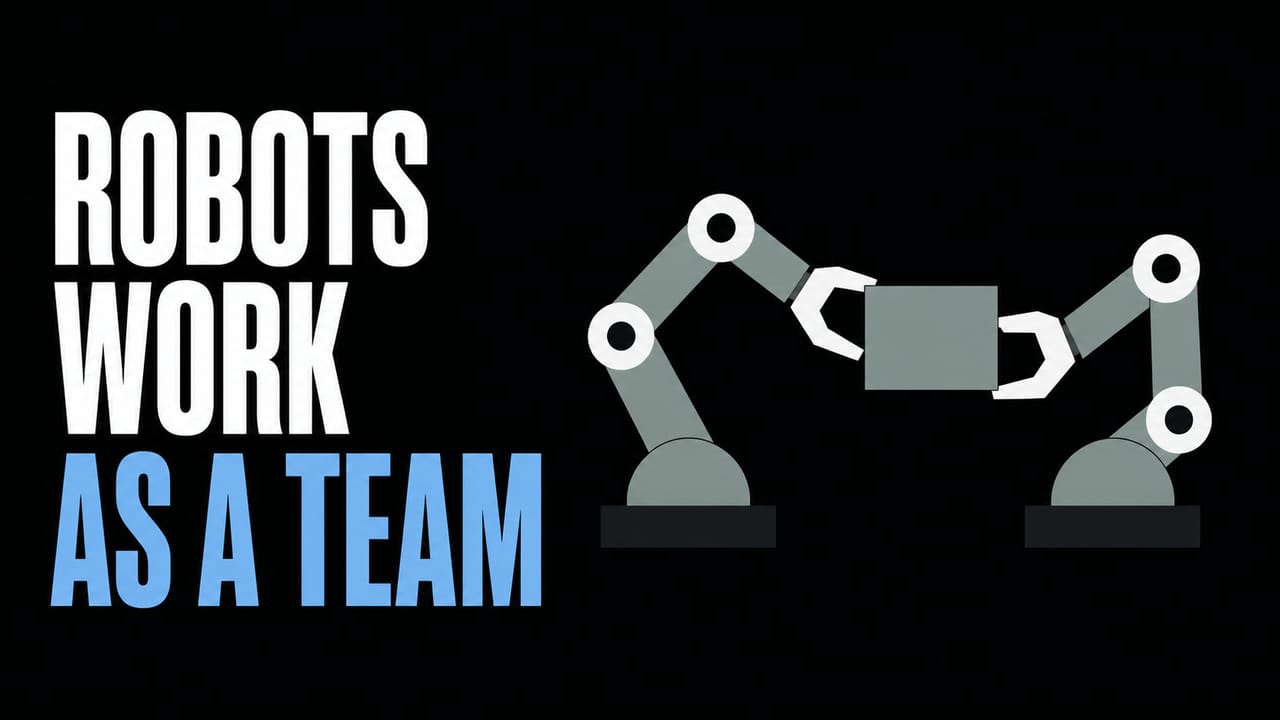
A heterogeneous robot team may include machines with different arms, mobility, sensors, payloads or operating ranges. Coordination lets the system choose the robot best suited to each action instead of requiring one general-purpose machine to do everything.
Diversity increases capability but complicates planning and communication because actions and constraints are not interchangeable. Shared task descriptions must map cleanly to what each robot can actually perform.
ELI5
A heterogeneous robot team combines different kinds of robots so each contributes its own movement, sensing or handling strengths. The team assigns work according to what each machine can actually do.
For example, a flying robot can inspect a roof while a wheeled robot carries tools and an arm robot performs a repair. Coordination is harder because their actions and limits differ, so shared plans must translate into suitable commands for each robot.
Why use a heterogeneous robot team?
Different machines can specialize in perception, transport, manipulation or access, allowing the team to complete a broader workflow efficiently.
What makes heterogeneous robot coordination difficult?
Robots differ in tools, movement, sensors, speed and communication, so the planner must account for non-interchangeable capabilities and constraints.