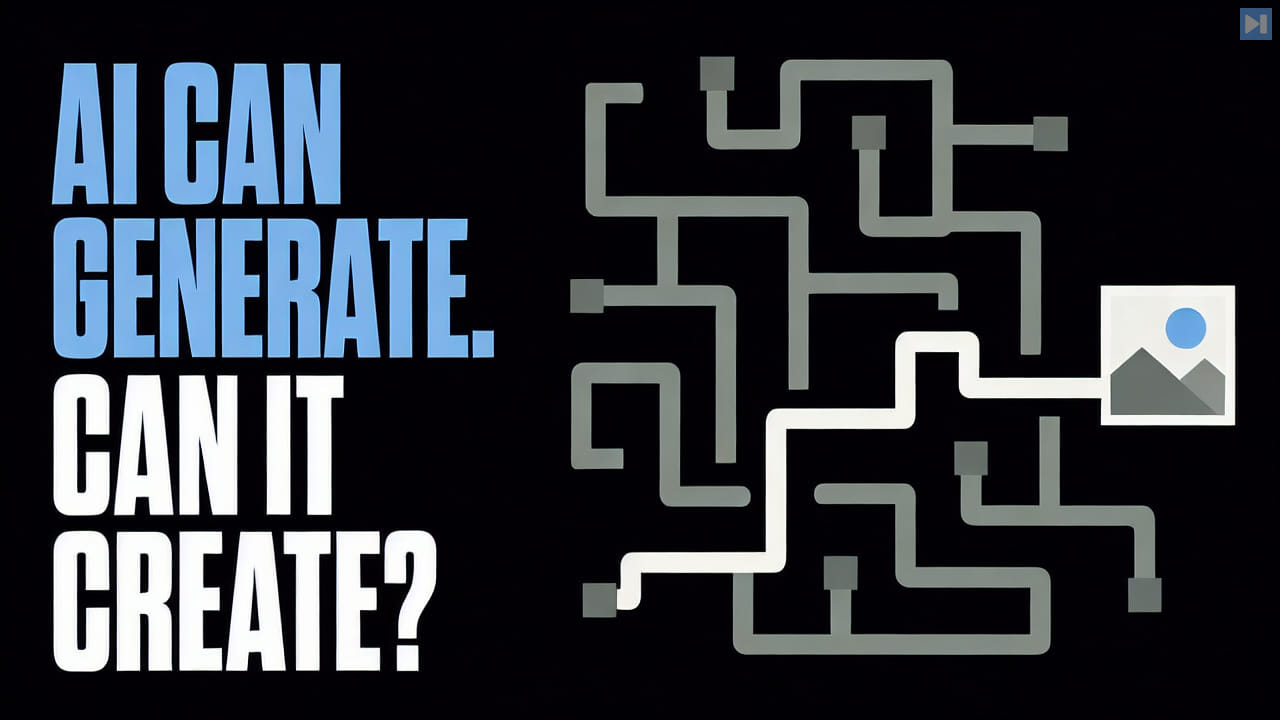
An AI image generation model maps an instruction or reference into visual content. It can propose compositions, styles, objects and scenes quickly, allowing creators to explore many alternatives before choosing a direction.
The model relies on learned visual associations, so familiar objects can introduce strong meanings that were not intended. Iteration may change objects, scale, perspective and negative space to move the result closer to the conceptual brief.
ELI5
An image generation model creates or changes pictures from instructions, reference images, or other guidance. It uses visual patterns learned during training to propose a new composition.
For example, a designer can ask for several poster concepts with a large subject and open space for a headline. The model may still add unintended objects or meanings, so the designer reviews and refines the results.
Why do generated images include unintended symbolism?
Objects carry cultural and visual associations learned from data, so a model may introduce meanings that conflict with the creator's broader intention.
How can an image model be directed more precisely?
Use clear constraints, references, composition guidance, negative instructions and repeated evaluation of what each generated element communicates.