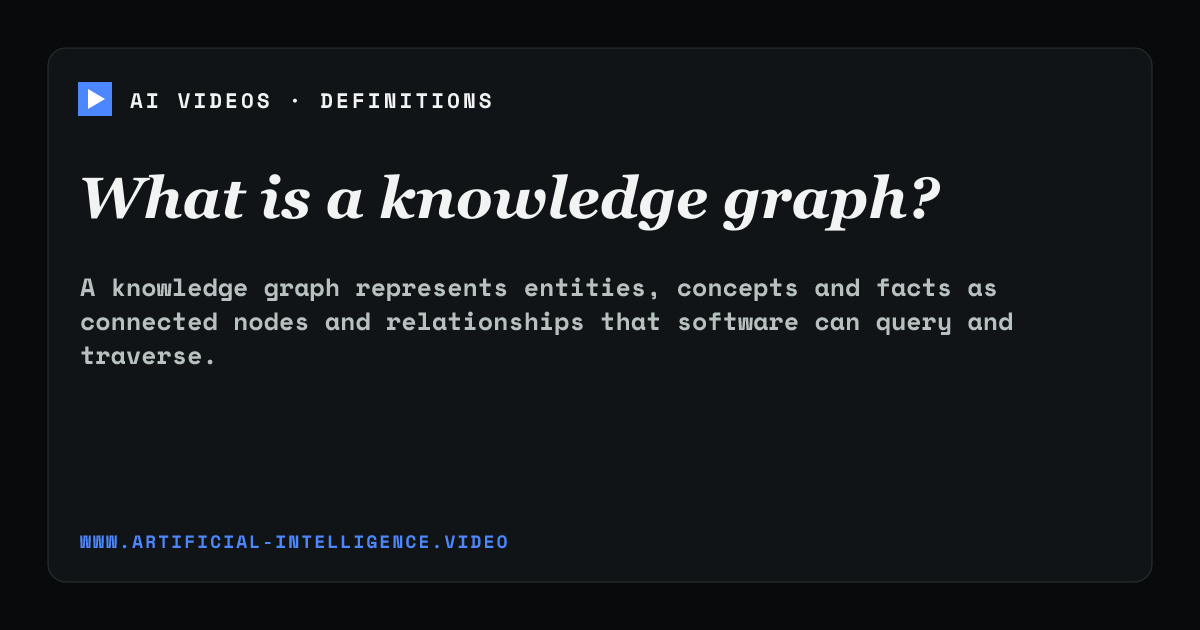
A knowledge graph organizes information around entities and the relationships between them. Nodes can represent people, systems, requirements or concepts, while edges describe links such as ownership, dependency, specialization or evidence.
AI systems can use a knowledge graph to retrieve structured context and follow relationships that plain text search may miss. Reliability depends on provenance, conflict handling, versioning and clear rules for who or what may change authoritative facts.
ELI5
A knowledge graph stores people, concepts, systems or facts as connected nodes and relationships. Software can follow the links to understand ownership, evidence, dependencies and specializations.
For example, a graph can connect a video to the terms it discusses and each term to related concepts and source evidence. Reliable graphs keep provenance and history so one uncertain update does not silently replace trusted facts.
How is a knowledge graph different from a document collection?
A knowledge graph explicitly models entities and relationships, while documents usually leave those connections embedded in text.
How can AI agents use a knowledge graph?
Agents can retrieve connected facts, constraints, owners and evidence to build more relevant context for a task.