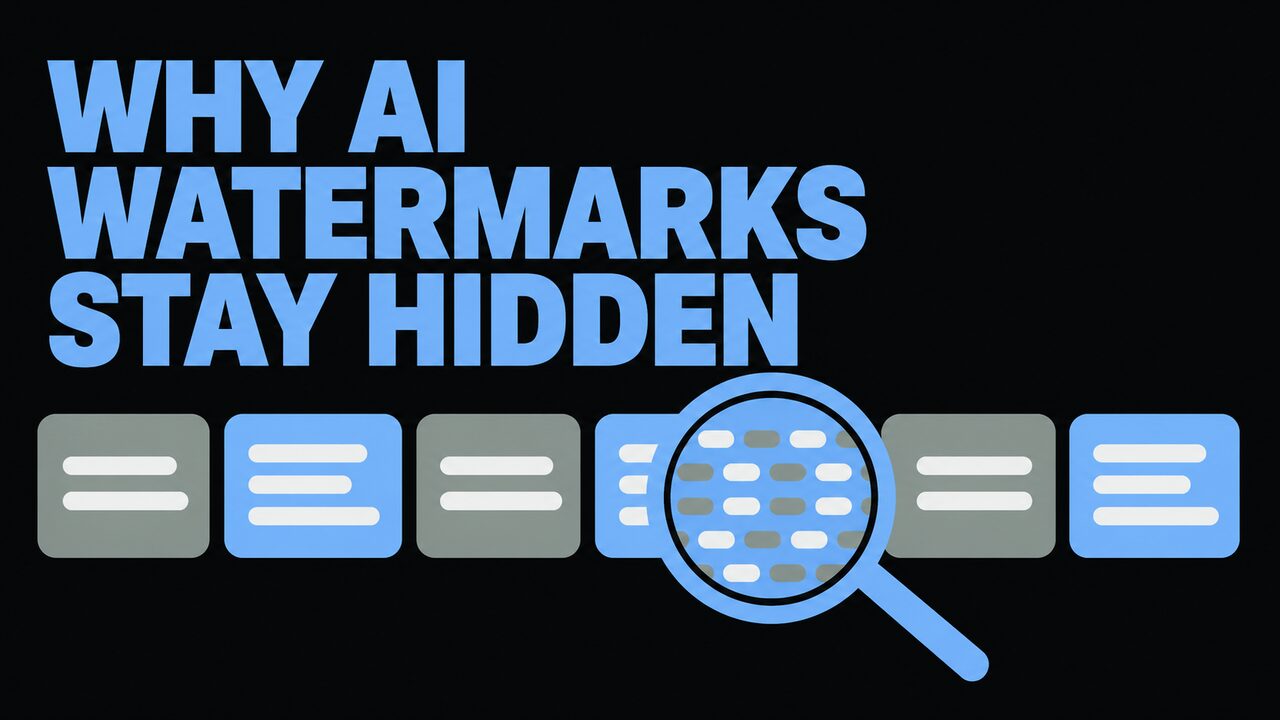
Language model watermarking influences which plausible tokens a model selects without inserting visible characters or metadata. A secret key and contextual information define preferred choices, and repeated preference across a passage creates a signal that can be distinguished from ordinary sampling.
The method trades off detectability, text quality, robustness, and access. Short or predictable outputs contain less room to encode a pattern, paraphrasing can weaken it, and key-based detection usually establishes compatibility with one watermarking system rather than proving authorship in every possible case.
ELI5
Language model watermarking quietly influences token choices so generated text contains a hidden statistical pattern. A detector with the right key can later test whether the pattern appears often enough.
For example, the generator can slightly prefer one secret group of plausible words over another across a long passage. Short factual answers provide less room for this signal, and paraphrasing can weaken it.
Is a language model watermark visible in the text?
Usually not. It is encoded through statistical token choices rather than a visible symbol, character sequence, or conventional metadata field.
Can language model watermarking prove who created a passage?
Not by itself. Detection can support provenance for a specific keyed system, but errors, editing, short text, and key access affect certainty.