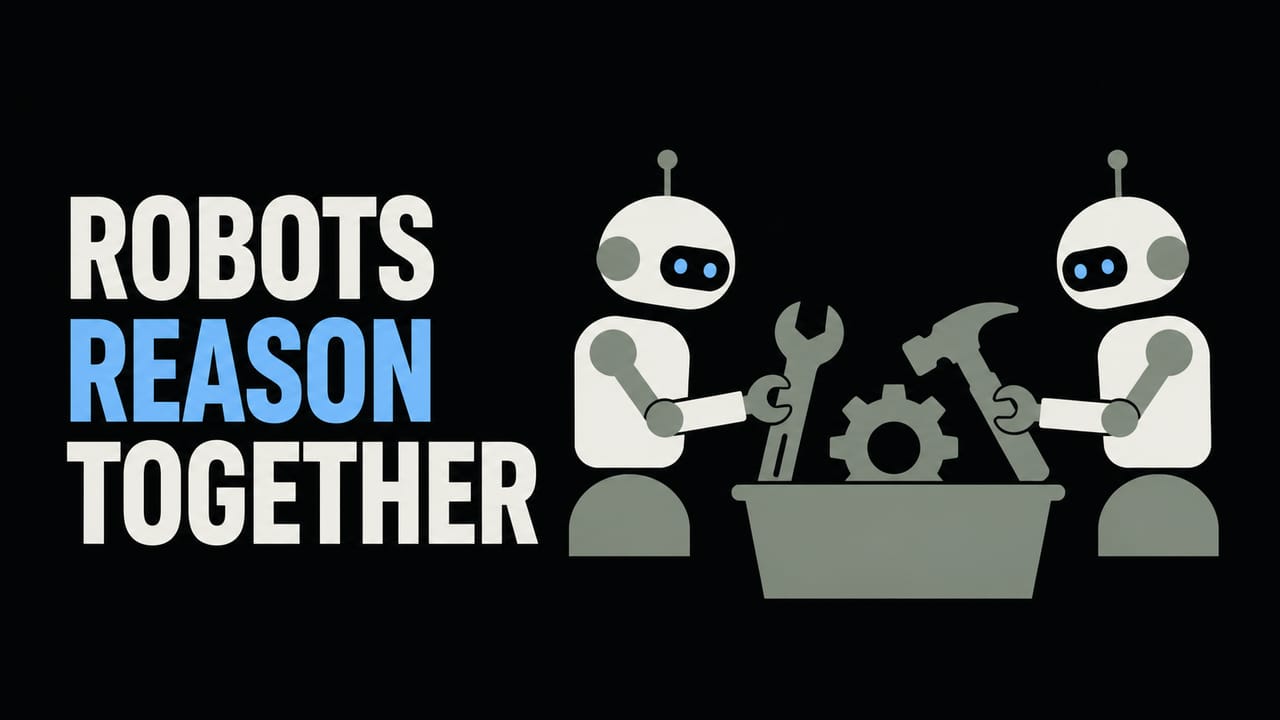
Multi-robot action orchestration organizes how independently controlled machines contribute to a shared goal. It assigns stages, tracks completion and initiates handoffs when another robot is better suited to the next action.
Orchestration operates above low-level motor control. It must keep environment and task state consistent, prevent conflicting actions and adapt the workflow when a robot or physical step fails.
ELI5
Multi-robot action orchestration organizes how separate robots share a larger job. It assigns responsibility, controls timing and starts a handoff when one robot has completed the stage needed by another.
For example, one warehouse robot can fetch a package and signal a second robot to deliver it after the package reaches a transfer point. The orchestrator prevents both robots from claiming the same step and adjusts if one becomes unavailable.
How is robot orchestration different from direct robot control?
Orchestration coordinates goals and dependencies across machines, while direct control determines the actuator commands that move an individual robot.
Can multi-robot orchestration work without one central neural network?
Yes. Each robot can reason locally while a shared protocol or distributed process coordinates task state and action handoffs.