An n-gram is a short sequence of neighboring tokens. A lookup-embedding layer maps common sequences to stored vectors, allowing the model to retrieve a learned representation when the same pattern appears again.
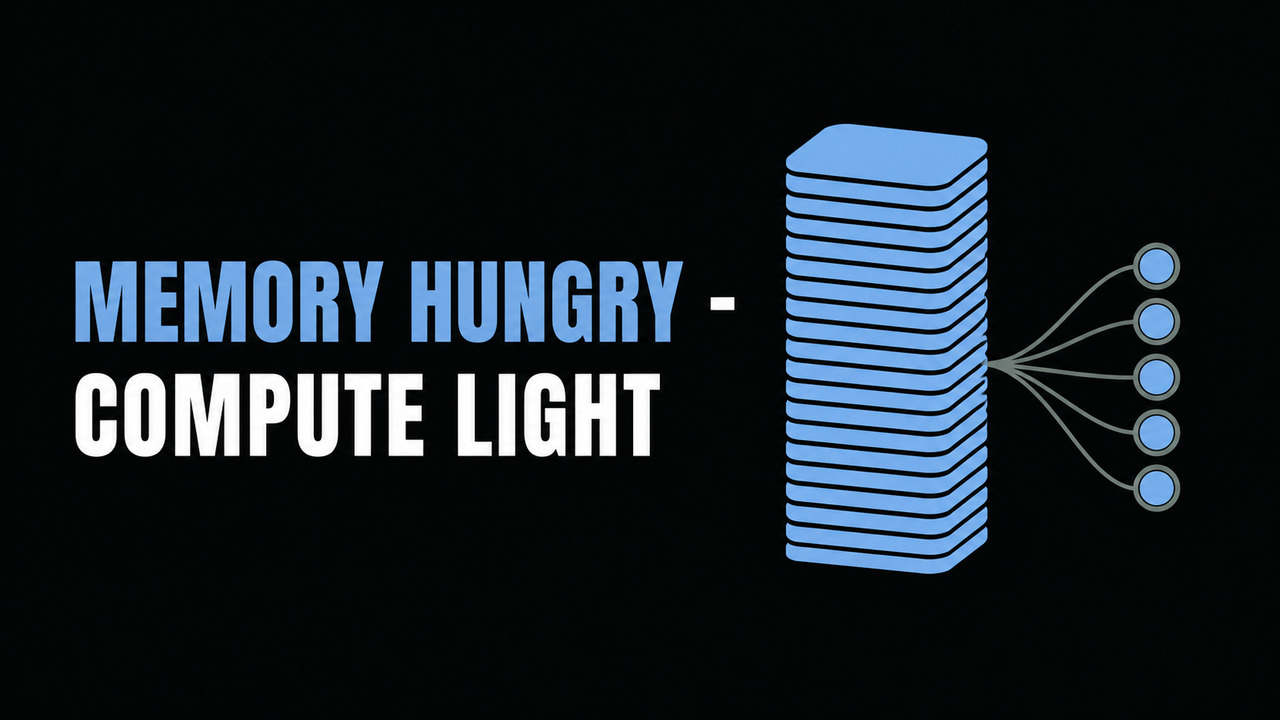
This design can reduce repeated computation, but the lookup table may contain many parameters and consume substantial memory. Its practical value depends on hit rate, storage layout, memory bandwidth and how the retrieved vectors interact with the rest of the model.
ELI5
An n-gram lookup embedding is a table of remembered representations for short token patterns. When the AI sees a familiar sequence, it can look up a stored vector instead of rebuilding all of that information from scratch.
For example, a common three-token phrase can point to one saved representation in memory. The lookup may save calculation, but a very large table needs plenty of RAM and enough bandwidth to retrieve entries quickly.
What does n-gram mean in an n-gram lookup embedding?
It means a sequence of n neighboring tokens, such as a two-token bigram or a three-token trigram.
Why can lookup embeddings increase memory demand?
They store learned vectors for many token sequences, so reducing repeated computation can require a large table in accessible memory.