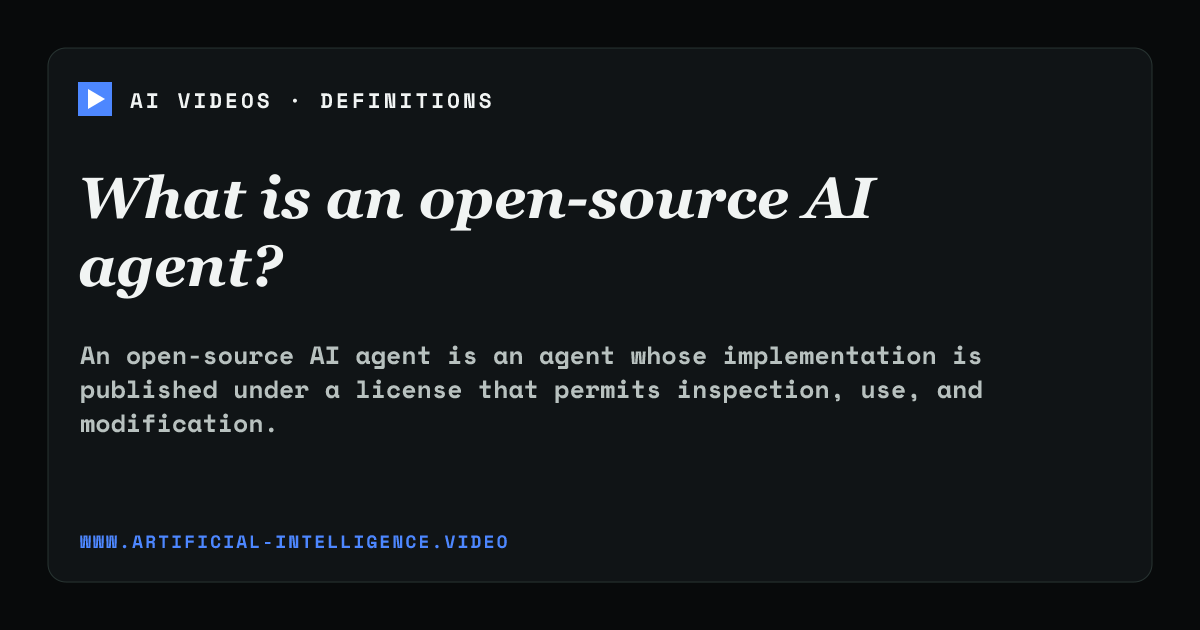
An open-source AI agent exposes the source code for its harness, tool integrations, workflow logic, or other implementation components. Users can inspect how it operates, adapt it, and contribute changes within the license terms.
Open source does not automatically make an agent safe or transparent in every respect. The model, hosted services, dependencies, data flows, and installed extensions may still have separate licenses and security boundaries.
ELI5
An open-source AI agent publishes its implementation under a license that allows people to inspect, use and modify it. Developers can see how the agent connects tools and organizes its workflow.
For example, a team can review an agent's source code before adapting it for repository work. They must still inspect the model, dependencies and hosted services because those parts may have different licenses and security risks.
Does open-source mean an agent’s model weights are open?
No. The agent software may be open source while the underlying model is hosted, proprietary, or distributed under a different license.
What are the benefits of an open-source AI agent?
Benefits can include inspectable implementation, customization, community contributions, local deployment options, and reduced dependence on one interface provider.