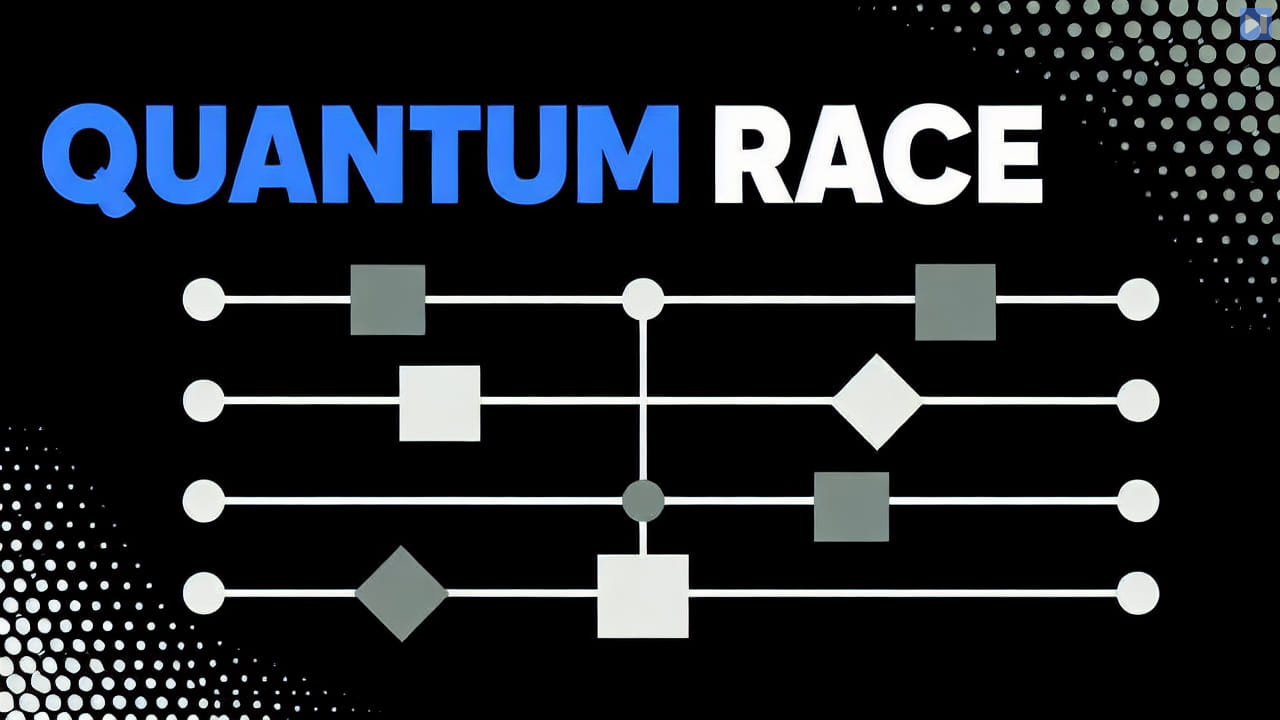
A quantum algorithm controls how quantum states evolve before a measurement produces a result. Useful algorithms arrange that process to make relevant outcomes more likely. This differs from simply trying every answer and reading them all at once.
For example, quantum computers are studied for simulating quantum physical systems. They do not automatically make every program faster. Noise and errors complicate calculations, so producing useful results depends on the algorithm, hardware and ability to control those errors.
ELI5
Quantum computing uses special physical systems to process information in a different way from ordinary computers. Carefully chosen operations shape the chance of measuring a useful answer.
For example, researchers can investigate using one quantum system to model another. That does not mean the same machine would speed up every everyday computing task.
Are quantum computers faster at every task?
No. Potential advantages concern particular problems and algorithms, rather than all computation.
Why are errors important?
Noise can change quantum states and spoil a calculation, making error control a major part of building useful machines.