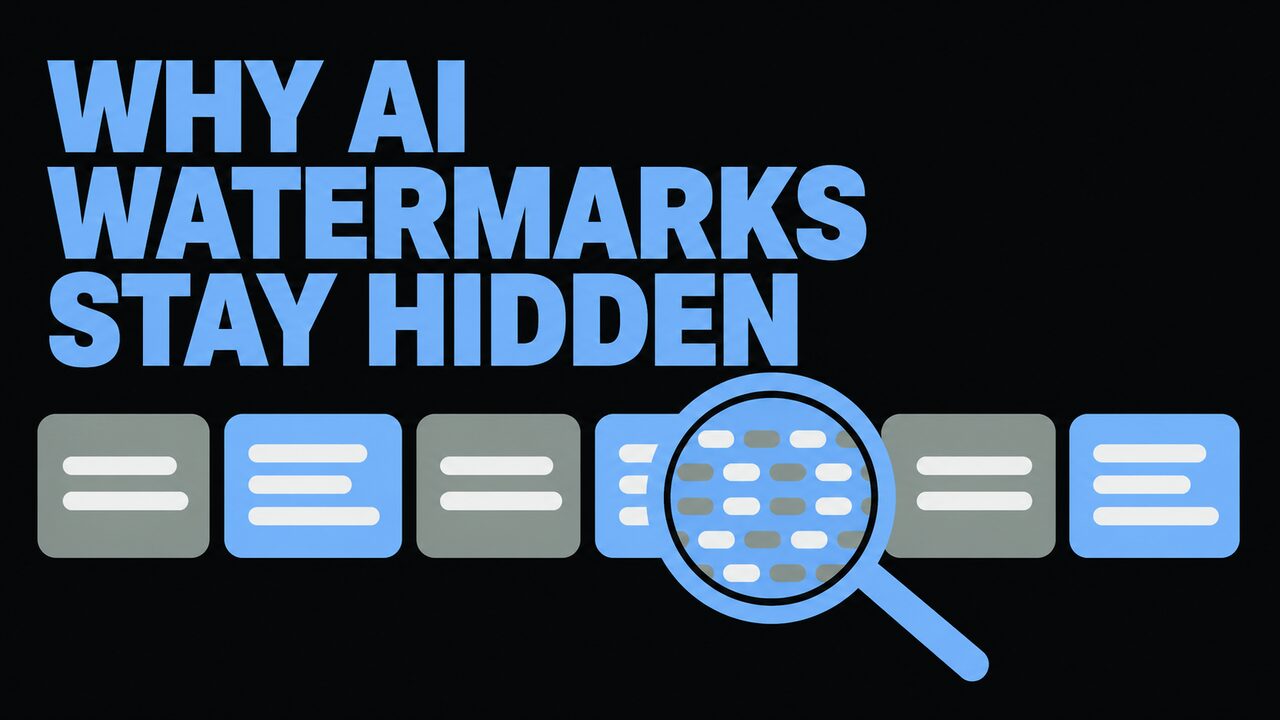
Secret-key language model watermark detection relies on key material shared with the generator or an authorized detector. The key seeds reproducible green-list or tournament decisions, allowing the detector to score the observed token sequence against the pattern expected from that watermarking system.
Keeping the key private makes deliberate evasion harder, but it limits universal verification and creates key-management responsibilities. Providers must protect, rotate, audit, and scope keys while offering a detector or verification service that does not expose enough information to reconstruct the secret.
ELI5
Secret-key language model watermark detection checks text for a hidden token pattern that only an authorized detector can reconstruct. A protected key controls which token choices count toward the watermark, making deliberate removal harder.
For example, a provider can run submitted text through its detector and calculate whether the expected pattern appears strongly enough. The key must stay private and be carefully stored, rotated, and audited because anyone who learns it may imitate or evade the watermark.
Why does a text watermark detector need a secret key?
The key reconstructs the hidden preferred-token decisions and prevents outsiders from easily predicting or erasing the watermark during generation.
Can a provider share watermark detection without sharing the key?
Yes. It can offer a controlled detector or verification service that returns results while keeping the key protected.