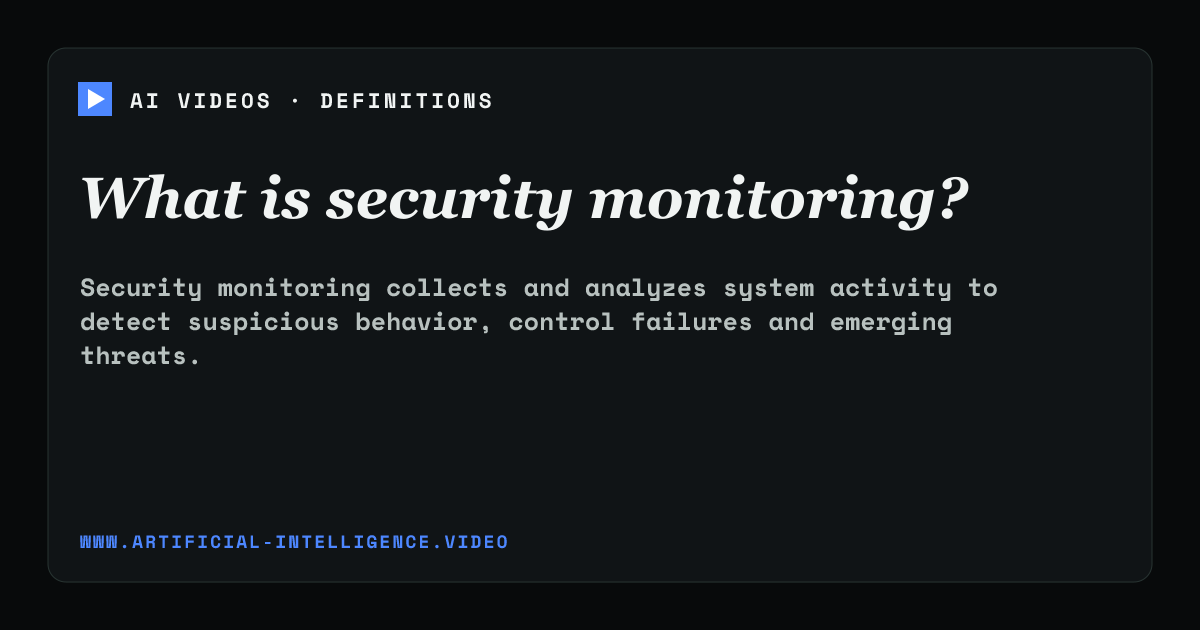
For AI research and deployment, monitoring can cover model access, agent actions, credentials, network activity, data changes and evaluation results. It provides evidence for detecting and investigating unsafe behavior.
Monitoring must lead to a response process and respect privacy. Alerts need ownership, prioritization and enough context to distinguish an actual problem from ordinary research activity.
ELI5
Security monitoring watches what a system and its environment are doing so unusual or dangerous activity can be noticed. For an AI agent, this can include its tool calls, network requests, data access, file changes, and attempts to reach protected services.
For example, monitoring could alert a security team when an agent suddenly tries to read credentials it has never needed before. The records should be difficult for the monitored system to change, and serious alerts should connect to a real response such as stopping access or investigating the event.
What should AI security monitoring observe?
It can observe identities, model access, agent actions, tools, networks, credentials, data changes and control failures.
Can security monitoring replace access controls?
No. Monitoring detects and explains behavior, while access controls limit what can happen in the first place.