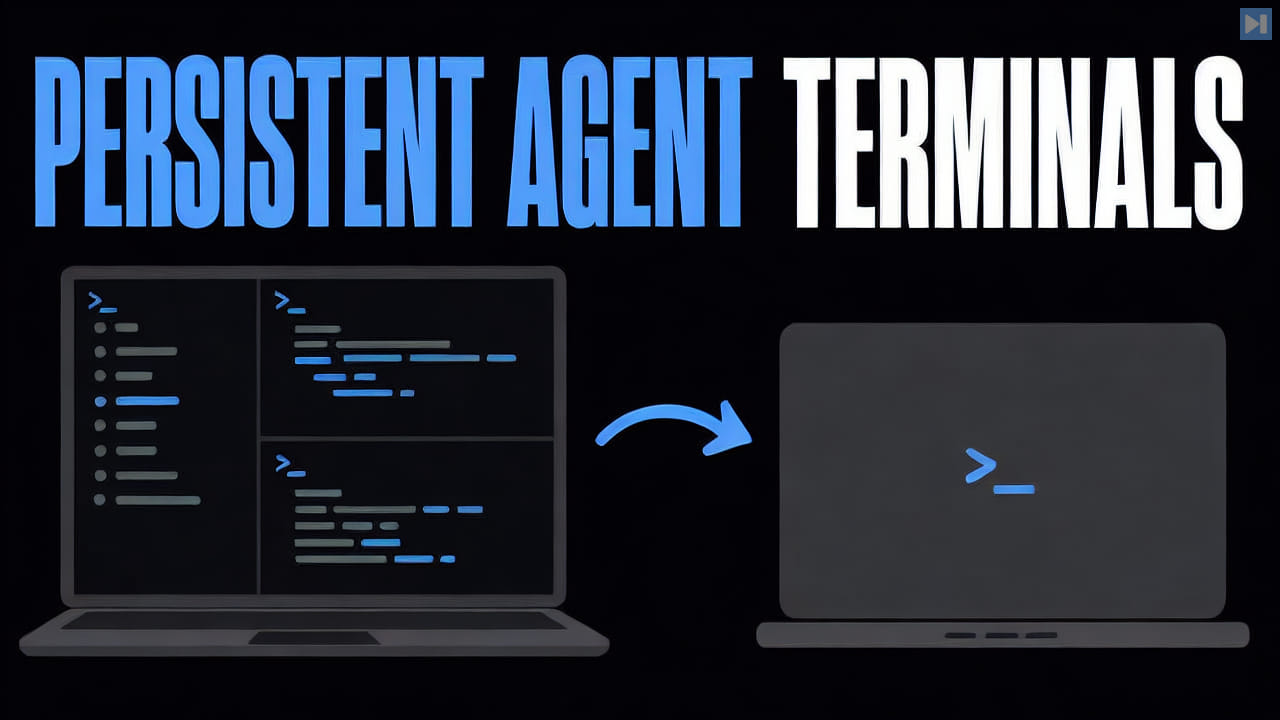
Session persistence separates the lifetime of underlying work from the lifetime of the visible application. A background service can retain processes, terminal screen state, identifiers, and layout information, then reconnect a later client to the same sessions.
Persistence boundaries must be stated clearly. Closing an app is different from shutting down a laptop, losing network access, expiring credentials, or ending a remote AI session, and each boundary may preserve or discard different parts of the overall agent context.
ELI5
Session persistence means your working session can still be there when you come back. The visible app may close, but another part of the system keeps the important process and state alive so you do not have to rebuild everything.
For example, a developer could close a terminal workspace and later reconnect to the same coding-agent command and server output. If the whole laptop powers off, recovery depends on whether the product saves enough state to restart rather than merely keeping a process alive.
Does session persistence survive a complete computer shutdown?
Not always. Process persistence may survive only an app closing, while restart recovery requires durable saved state and a way to recreate or reconnect the underlying processes.
What should a persistent session protect?
It should use scoped access, owner-only storage where appropriate, safe credential handling, clear expiration, and controls for listing, reconnecting, and terminating retained sessions.