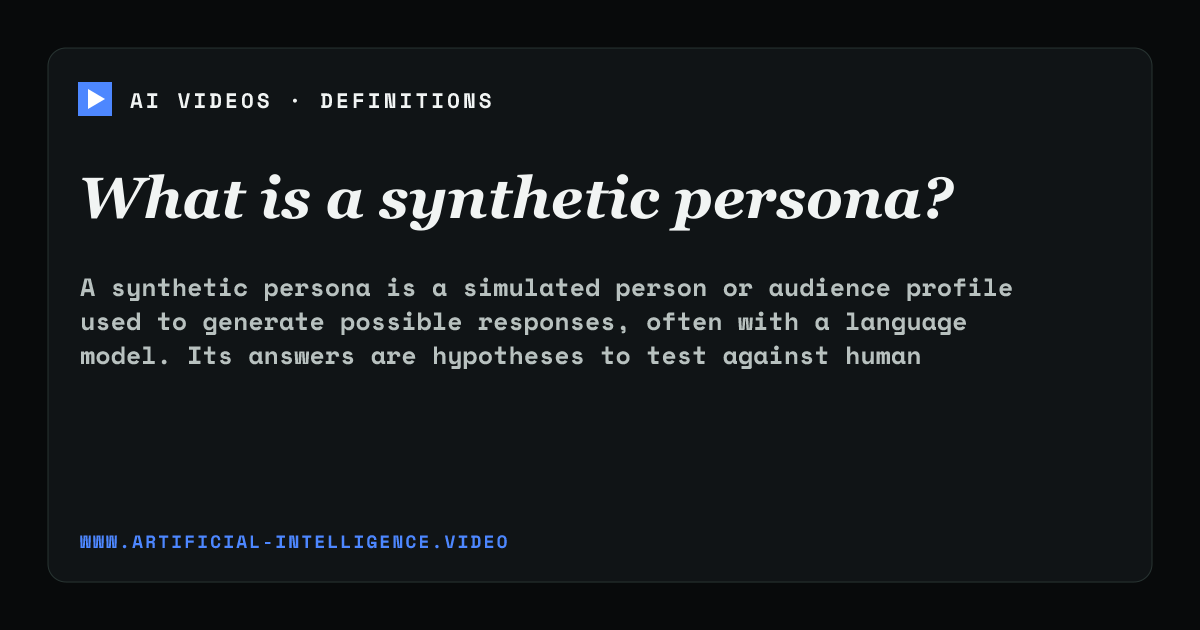
A synthetic persona supplies a model with a profile, situation and instructions so it can produce responses from a particular perspective. Researchers may use these responses to explore questions, compare product concepts or prepare a human study.
A plausible answer does not establish how actual people would respond. Profiles can omit important context, prompts can change the results, and repeated outputs from the same model do not automatically become independent observations.
For example, a team might ask a simulated budget-conscious shopper to comment on a checkout page. The feedback can suggest questions for real shoppers, while human observations remain necessary to check whether the simulation is useful.
ELI5
Imagine writing a character card for a pretend shopper, then asking a computer to answer as that character. That pretend shopper is a synthetic persona.
If the character says a shop is confusing, it gives you something to investigate. You still need to watch real shoppers to find out whether they have the same problem.
Can a synthetic persona replace customer interviews?
It can help explore ideas or prepare questions, but its responses alone do not demonstrate what real customers think or do.
How can a team check whether a persona is useful?
Compare its outputs with relevant human observations, test sensitivity to prompt changes and state the situations in which the comparison supports using it.