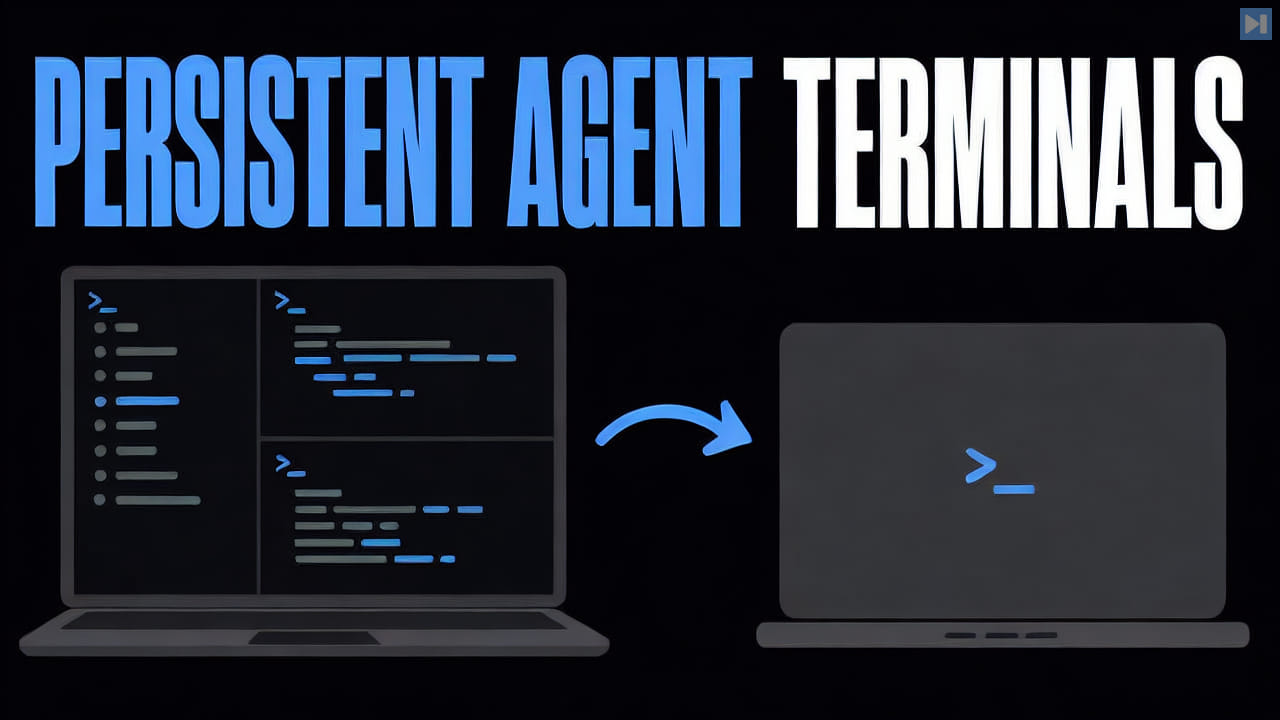
A terminal multiplexer lets a developer split work across tabs and panes while a background server owns the underlying shell sessions. Users can detach from the interface and reconnect later without stopping the processes running inside it.
For coding agents, the multiplexer can isolate parallel sessions and expose their status in one workspace. Rich integrations may add lifecycle tracking and commands, while unsupported tools continue as ordinary terminal processes.
ELI5
A terminal multiplexer lets one terminal interface manage many command-line sessions. It can arrange them into tabs or panes and disconnect the screen without necessarily stopping the programs running behind it.
For example, one pane can show a coding agent while another shows a development server. The user can detach, return later, and reconnect to both sessions instead of opening new commands from the beginning.
Why use a terminal multiplexer with coding agents?
It keeps separate agent sessions persistent and visible while allowing several tasks to run in parallel.
What happens when a multiplexer client disconnects?
The server can keep terminal sessions and their processes running so a client can reconnect later.