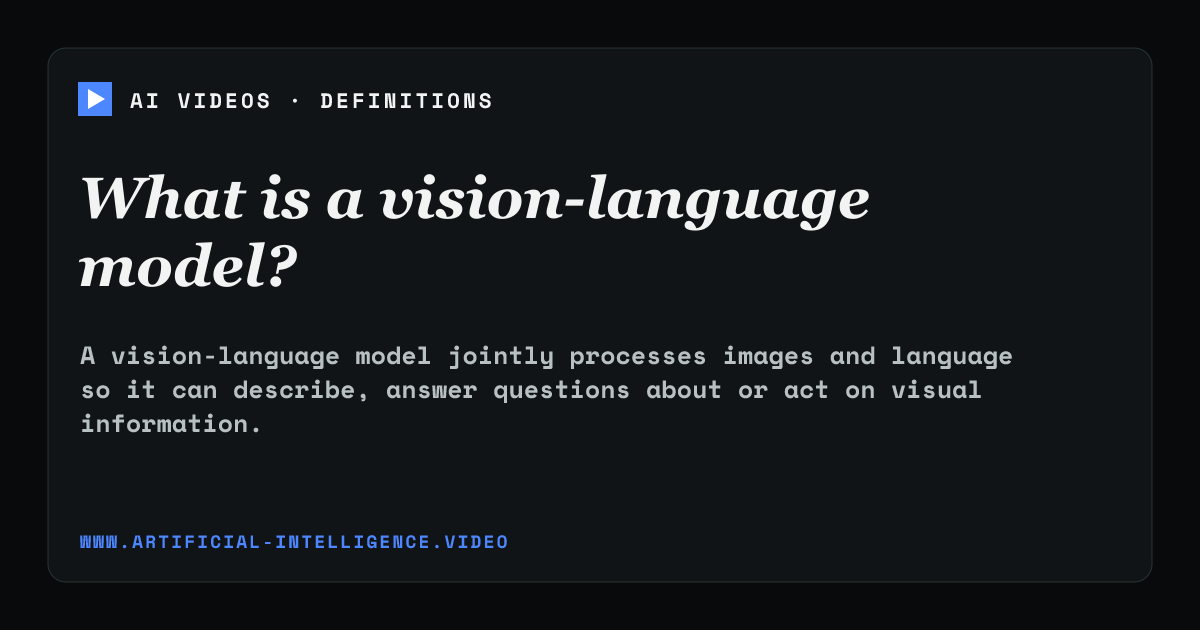
A vision-language model connects visual representations with text representations. It can receive an image with an instruction, identify relevant visual features and produce language or another action informed by both the picture and the request.
This makes the model useful for interface inspection, document understanding, visual coding and image-grounded agents. Its output can still miss details or misunderstand spatial relationships, so visual examples should be tested against the exact workflow rather than treated as proof of general reliability.
ELI5
A vision-language model can work with pictures and words together. It can look at an image, follow a written question, and answer using details it detects in the picture.
For example, someone could show the model a screenshot and ask which button opens the settings page. The model may still miss small text or misunderstand where objects are, so important visual results need to be checked.
What can a vision-language model do with a screenshot?
It can describe the interface, answer questions, identify elements, suggest changes or help generate code based on visible structure and styling.
Is a VLM the same as an image generator?
No. A vision-language model primarily connects visual understanding with language, while an image generator primarily creates or edits images, although one system may combine both.