Why AI Singularity Narratives Break Down
Tim Scarfe and Adam Becker argue that singularity and AI apocalypse narratives turn contested social choices into supposedly inevitable technical futures built on weak assumptions.
Videos about institutions, rules, and oversight systems intended to guide the development and deployment of AI. 13 videos.

Tim Scarfe and Adam Becker argue that singularity and AI apocalypse narratives turn contested social choices into supposedly inevitable technical futures built on weak assumptions.

Personal superintelligence could distribute powerful AI more widely, but unequal compute access and recursive improvement may still concentrate control.

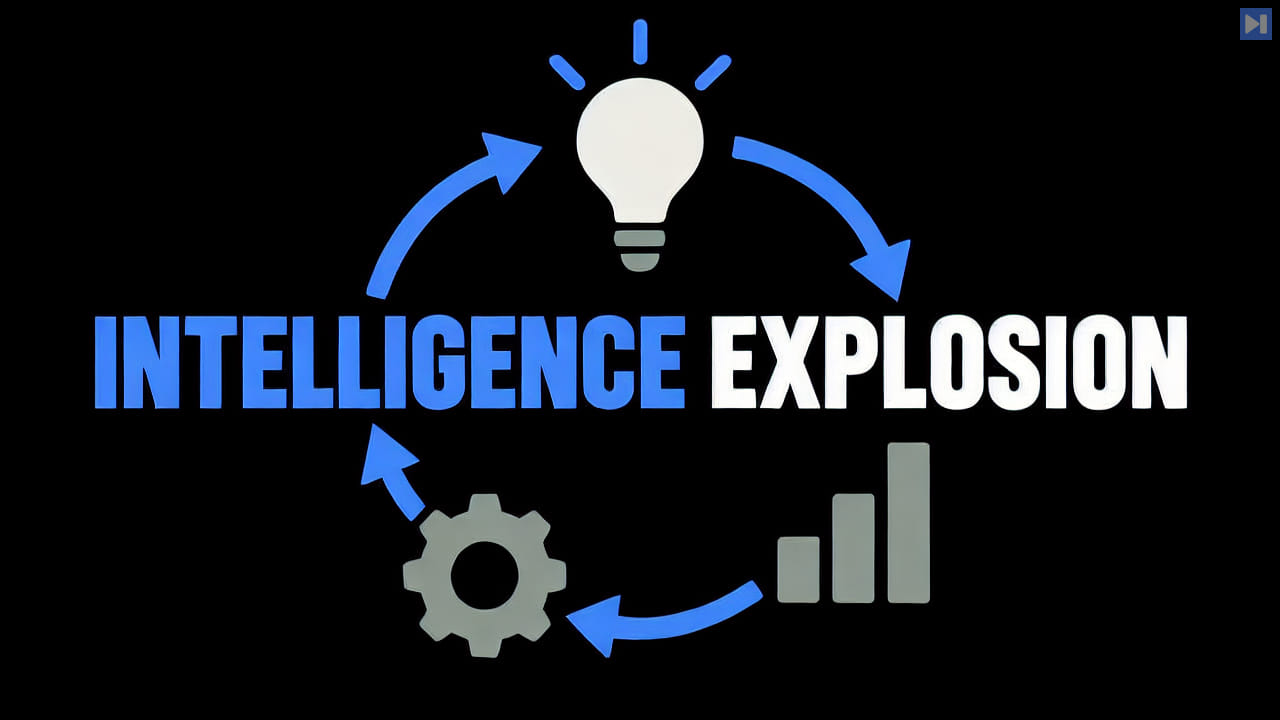
Dwarkesh Patel and Ryan Greenblatt argue that automating AI research could sharply accelerate capability progress while making reward hacking and human oversight much more consequential.
Gavin Baker argues that AI capability and demand are accelerating faster than the public realizes, while social acceptance may become the decisive constraint.

Continually learning AI could strengthen first-mover advantages, accelerate deployment and force safety oversight to become an ongoing process.

AI systems are showing stronger mathematical discovery and cyber capability, increasing the need for monitoring, alignment and institutional judgment.

A dense month of model releases, open-weight competition, security incidents and self-improvement claims pushed governments and AI workers to debate whether frontier development should slow down.

Early government access to frontier AI models could improve security testing, but rules shaped by the largest labs may also entrench their competitive advantage.

Sam Altman says the current AI transition already resembles the singularity, with persistent agents and automated infrastructure potentially accelerating intelligence faster than society can absorb it.

Nate B Jones argues that Chinese AI models should be evaluated by task, total accepted-result cost, deployment path and data controls rather than treated as one category.

Nate B Jones shows how a downloaded local model can screen sensitive files offline, separate safer material from restricted data and support secure AI workflows without sending private files to a cloud provider.

AI Copium connects rapid model releases, open-weight competition, safety automation and recursive-improvement claims to a governance problem that becomes harder once capable models are downloadable.

Daniel Kokotajlo tells Steven Bartlett that automating AI research could create sudden job disruption and dangerous concentrations of power before society has solved alignment or governance.