Nathaniel Whittemore examines Mark Zuckerberg’s proposal for a positive AI future centered on broad access, individual capabilities and a balance of power. The episode describes an argument that new skills and opportunities could develop alongside automation, rather than assuming job displacement must dominate. These are competing possibilities for how AI changes work, not settled employment forecasts.
Nathaniel Whittemore explains Mark Zuckerberg’s suggested relationship between AI labs and government: ongoing cooperation and access to intermediate models, alongside broad public access. The discussion also asks whether communities hosting data centers receive concrete benefits. The analysis treats the quality of implementation and the credibility of the messenger as separate from the appeal of the stated goals.
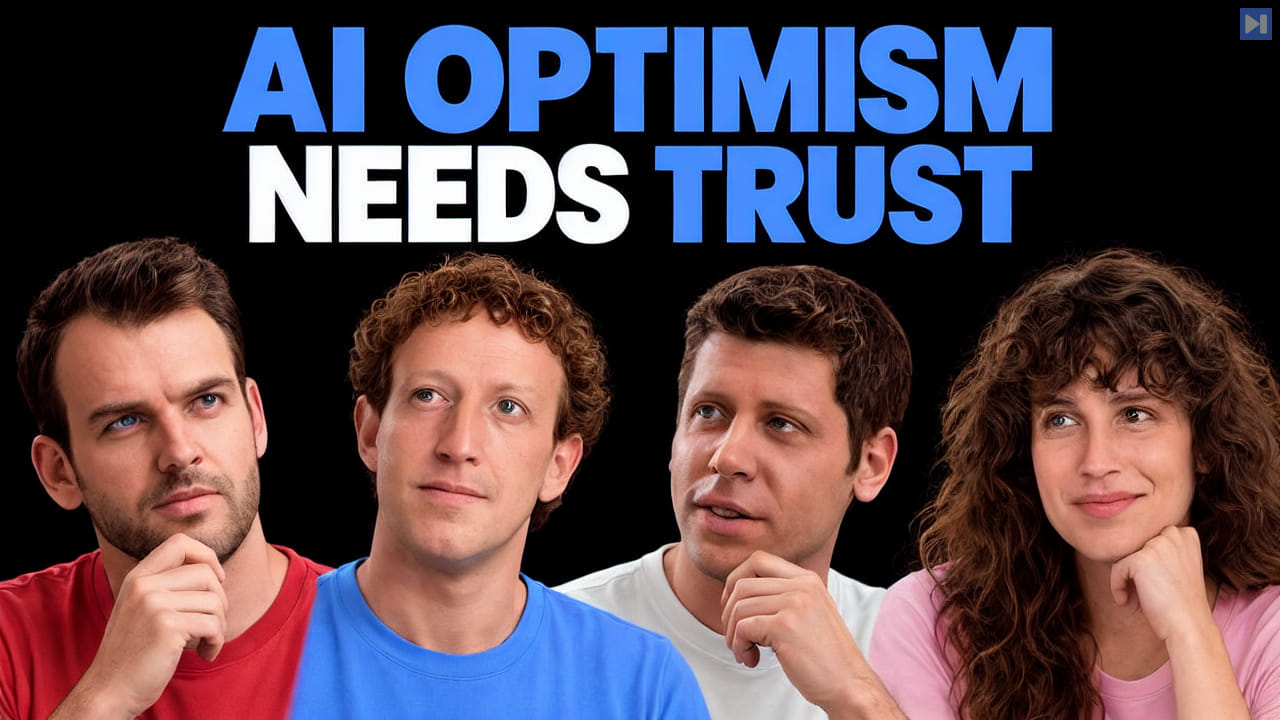
Elizabeth Lopatto’s criticism of Mark Zuckerberg’s personal-agent examples becomes a central test of that credibility. As presented in the episode, her concern is that optimizing relationships or hobbies can displace the attention and participation that make them worthwhile. Nathaniel Whittemore also discusses the reception of Sam Altman’s family-podcast example, while rejecting the broader idea that every family use of AI necessarily avoids parental responsibility.
Nathaniel Whittemore welcomes a more constructive public conversation but acknowledges that distrust of technology companies and concern in opinion polls remain substantial. His suggestion that a more nuanced middle ground may be emerging is explicitly an interpretation of the discussion, not a demonstrated reversal in public sentiment.
 Watch on YouTube