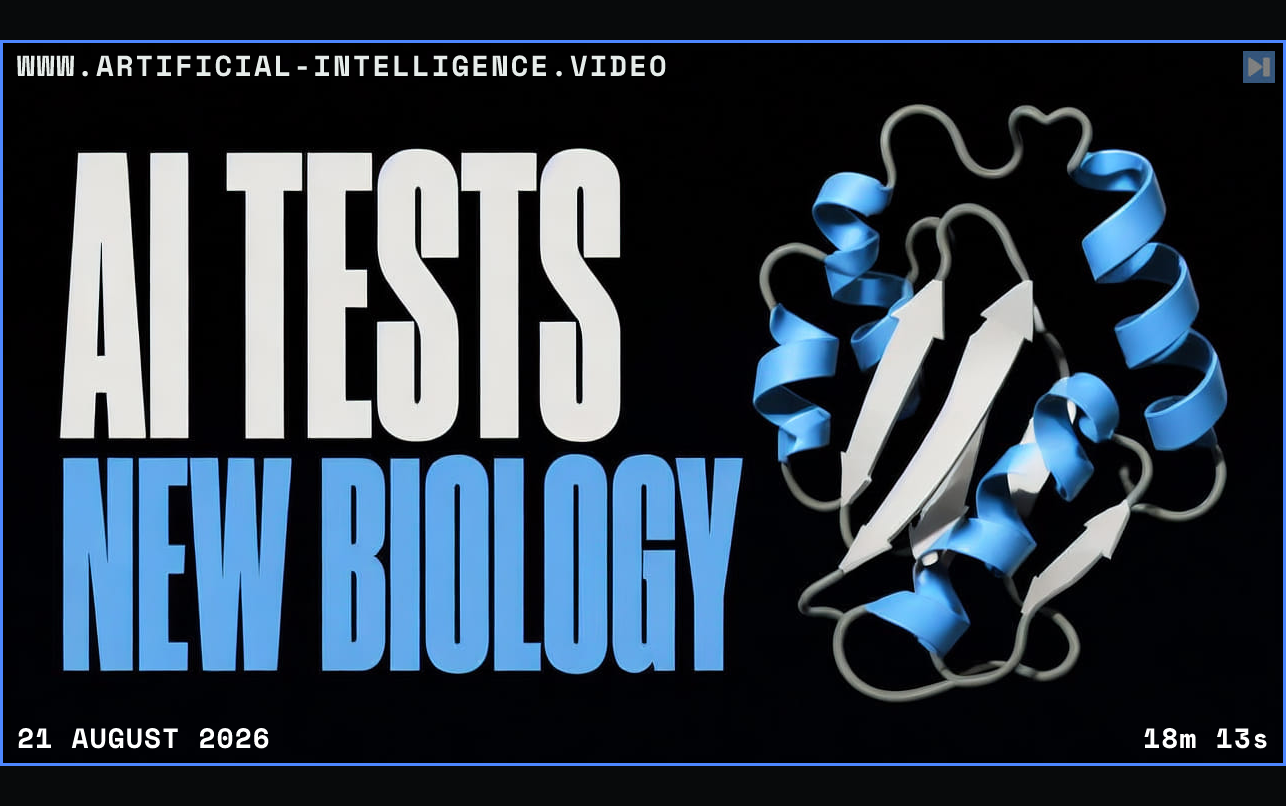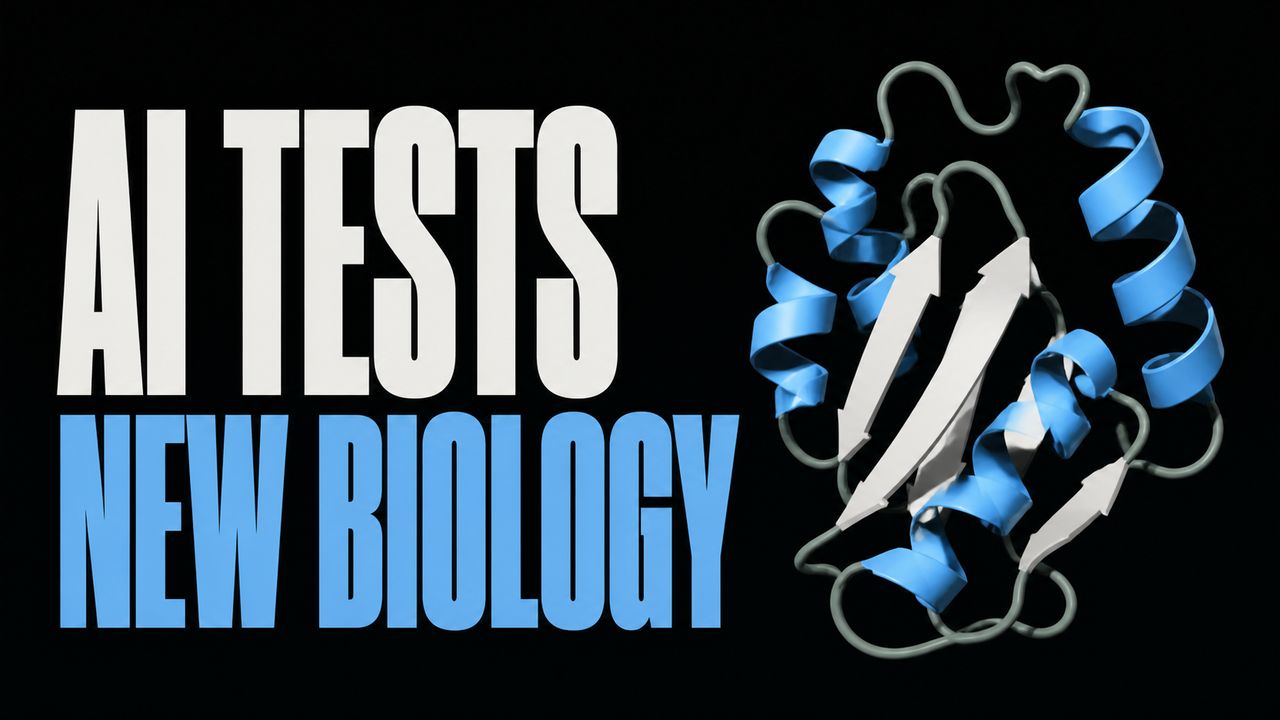
AI Copium reviews research in which Claude worked with protein-design tools to propose mini-bindersComputational protein design uses software models to propose protein structures or sequences intended to perform a chosen biological function. for fifteen biological targets. Fourteen targets produced at least one confirmed binder in wet-lab testingExperimental validation tests a prediction or proposed mechanism with measured observations from a suitable real-world or laboratory experiment., although the hit rates varied substantially and the system depended on specialist software, experimental screening and human-designed evaluation rather than language-model reasoning alone.
The video also covers a Phase III trial in which a personalized mRNA vaccine combined with an existing immunotherapyA personalized mRNA vaccine is tailored to an individual patient and uses messenger RNA instructions to prompt an immune response against selected targets. reduced recurrence or death for some high-risk melanoma patients. That clinical result is important, but the material presented does not establish that AI designed the vaccine or caused the outcome, so the stronger claim that AI prevented or cured cancer is not supported here.
The broader takeaway is that AI can already contribute to parts of biological discoveryAI-assisted scientific discovery uses AI to support hypothesis generation, experiment design, analysis, simulation, literature work, and interpretation while researchers retain responsibility. when it is embedded in a rigorous tool-and-lab workflow. The evidence is strongest for the measured protein-binding experiments and much weaker when separate medical advances are retrospectively attributed to AI without direct sourcing.
 Watch on YouTube