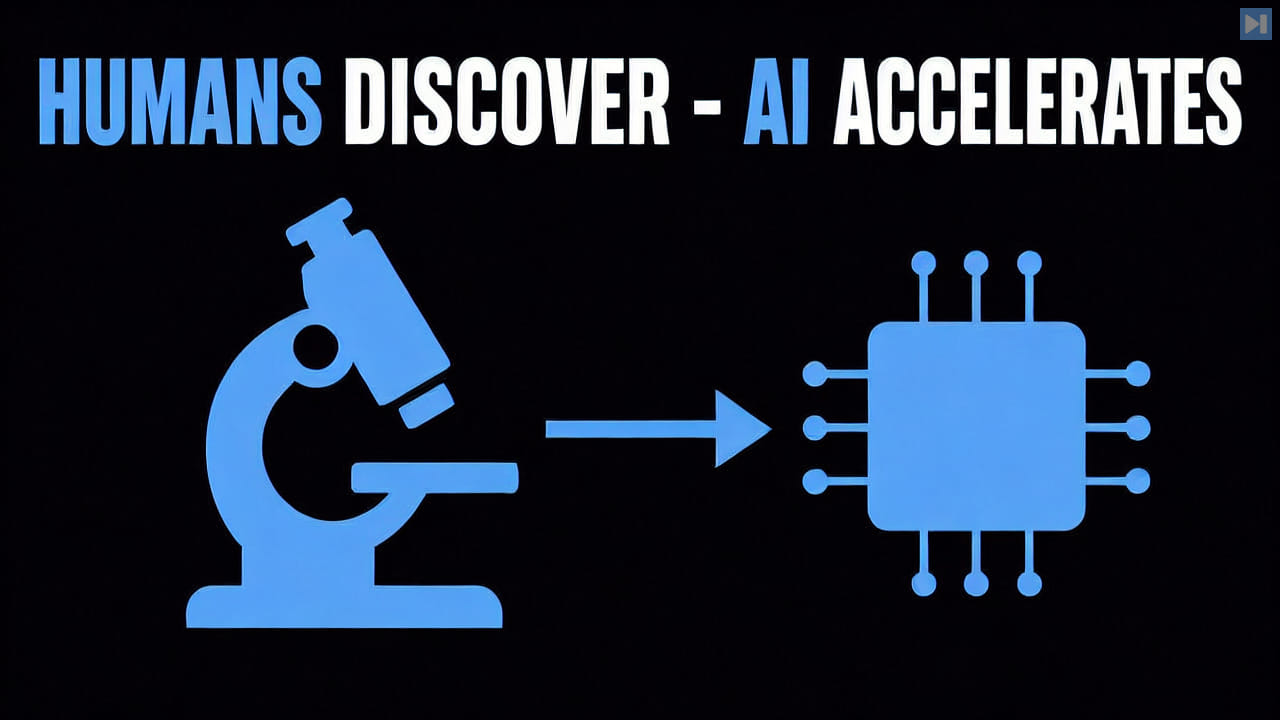
AI-assisted scientific discovery can help researchers search evidence, propose hypotheses, design experiments, write or inspect code, analyze results, and connect findings across domains. It can accelerate parts of a research loop without independently owning the scientific claim.
Progress depends on reliable evidence, valid experiments, domain judgment, reproducibility, uncertainty, and independent review. Faster generation of ideas or code does not prove that a model can replace senior researchers or double the pace of real discovery.
ELI5
AI-assisted scientific discovery uses AI tools to help researchers find patterns, generate possibilities, or choose promising experiments. The AI can search large spaces quickly, while scientific evidence still determines whether an idea is true.
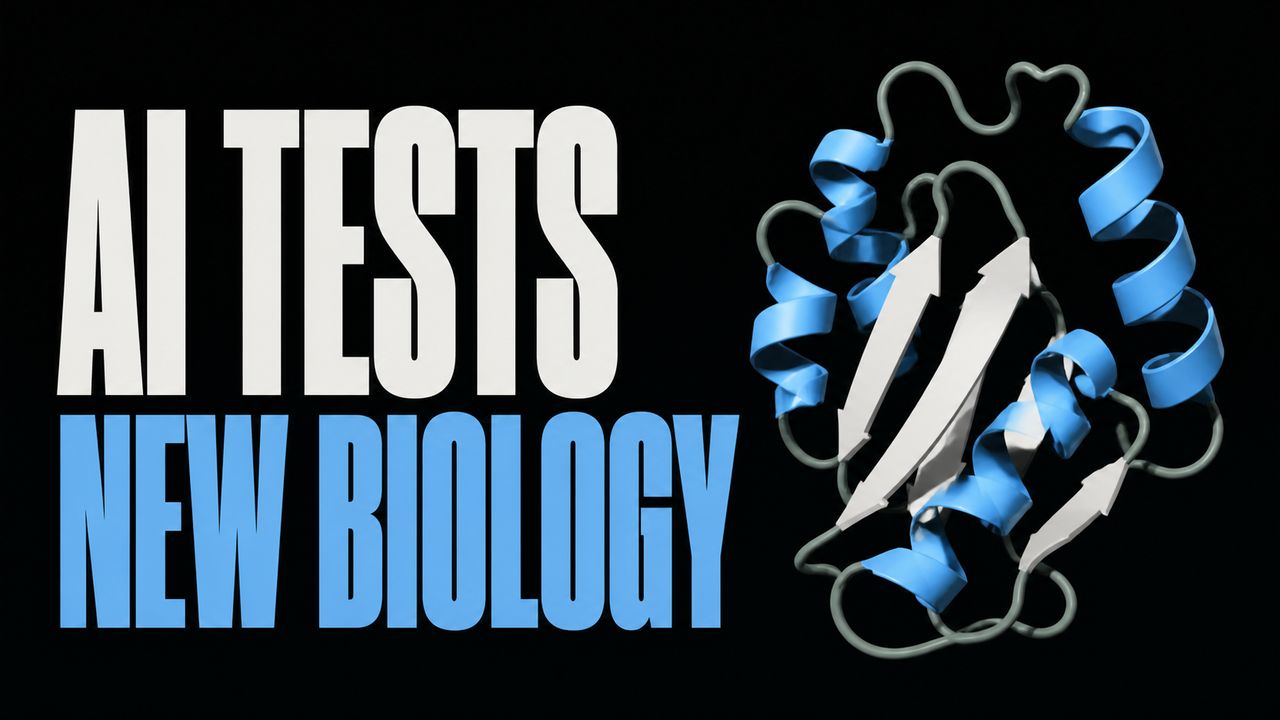
For example, a model might propose protein shapes that could bind to a disease target. Researchers must still create and test those candidates in the laboratory, because a prediction is not the same as a confirmed discovery.
Which parts of research can AI assist with?
AI can assist with literature, hypotheses, experiment design, coding, simulation, data analysis, visualization, writing, and evidence organization.
Why does faster research assistance not equal autonomous discovery?
Autonomous discovery also requires reliable judgment, experiments, evidence, interpretation, correction, safety, coordination, and responsibility across the full loop.